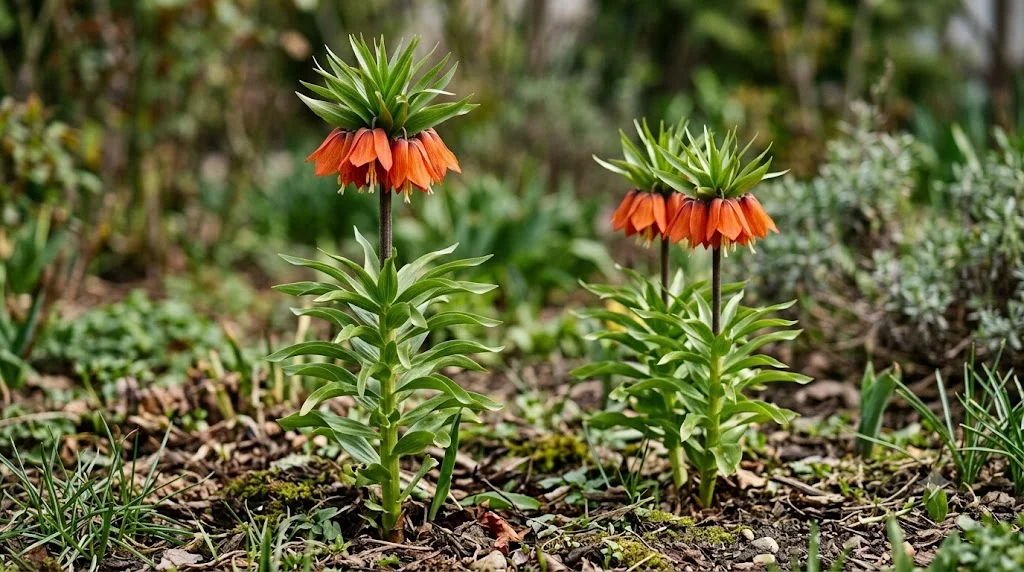

Crown imperial grows rapidly in spring, so its water and nutrient requirements change considerably during the year. Moisture is most valuable while shoots, leaves, and flowers are developing, whereas excessive watering during dormancy can seriously damage the bulb. Fertilization should support strong leaves and future bulb development without encouraging soft, nitrogen-heavy growth. A seasonal approach to irrigation and feeding is therefore far more effective than applying the same treatment throughout the year.
Water requirements during spring growth
Emerging crown imperial shoots need access to moisture as growth accelerates. In many climates, natural spring rainfall supplies much of this requirement. Supplemental watering becomes important when prolonged dry weather coincides with active growth. The soil should remain moderately moist rather than constantly saturated.
Deep watering is preferable to frequent superficial sprinkling. Moisture that penetrates the root zone encourages deeper and more stable root development. Shallow watering often evaporates quickly and can encourage roots to remain near the soil surface. Allowing the upper soil layer to dry slightly between applications can also improve aeration.
Newly planted bulbs may require closer attention than established specimens. Their root systems have had less time to spread through the surrounding soil. A dry autumn or unusually rainless spring can therefore limit establishment. Careful irrigation helps bridge these periods without creating persistent wetness.
Container-grown crown imperials require particularly close monitoring. Potting mixes dry faster than open garden soil, especially in sunny or windy positions. At the same time, containers can become dangerously waterlogged if drainage holes are blocked. Pots should therefore combine regular moisture checks with unrestricted drainage.
More articles on this topic
Watering during flowering and after bloom
Adequate moisture during flowering helps maintain leaf function and stem quality. Severe drought at this stage may accelerate flower decline and shorten the effective growing period. Watering should be directed toward the soil rather than repeatedly soaking the foliage. This practice also reduces prolonged leaf wetness.
After flowering, the plant still needs some moisture while the foliage remains green. Photosynthesis continues to replenish the bulb even though the flowers have faded. Abruptly withholding all water can cause premature leaf senescence during dry weather. Moderate irrigation should continue until natural yellowing is well underway.
As foliage begins to die back, watering frequency should decline. The bulb’s physiological activity is decreasing and its demand for moisture becomes much lower. Continuing spring-level irrigation into dormancy creates unnecessary risk. Natural rainfall is usually sufficient once the leaves have disappeared.
Dormant bulbs tolerate relatively dry soil far better than saturated conditions. Summer irrigation systems designed for nearby annuals can therefore create problems in mixed borders. If possible, crown imperial should be positioned where summer watering can be controlled. Alternatively, highly permeable soil can reduce the risk from unavoidable irrigation.
More articles on this topic
Choosing appropriate fertilizers
Crown imperial benefits from balanced fertility because it must produce a substantial stem and rebuild a large underground bulb each year. A balanced granular fertilizer can be applied as growth begins in spring. Formulations designed for flowering bulbs are also suitable. The important principle is to provide adequate phosphorus and potassium without excessive nitrogen.
Nitrogen supports leaf development, but excessive amounts can produce lush, soft growth. Such growth may be more vulnerable to lodging, pests, and certain diseases. Heavy nitrogen feeding can also favour foliage over flower formation. Fertility should therefore encourage balanced development rather than maximum leaf size.
Well-rotted compost contributes nutrients more gradually while improving soil structure. A thin annual application around established plants can support long-term soil health. Fresh manure should not be placed directly around bulbs because it may be too concentrated and retain excessive moisture. Mature organic amendments are safer and more predictable.
Soil fertility should always be considered in context. A rich garden bed that receives regular compost may require relatively little additional fertilizer. Sandy or nutrient-poor soils can need more deliberate feeding. Observation of plant vigour and, when necessary, soil testing provide better guidance than automatic annual overfertilization.
Timing fertilizer applications
An early spring application supports the period of rapid shoot and leaf expansion. Fertilizer should be spread around the plant rather than piled against the stem. Light incorporation into the soil surface can help nutrients become available as moisture moves through the root zone. Care should be taken not to damage shallow roots.
A second lighter feeding after flowering can support bulb replenishment. Potassium-rich fertilizers are often useful at this stage because they support plant strength and storage processes. Feeding is most beneficial while foliage remains green and physiologically active. Applying fertilizer after complete dormancy provides little immediate advantage.
Liquid feeds can be useful for container-grown plants because nutrients leach from pots more rapidly. Applications should follow moderate concentrations rather than repeated strong doses. High salt levels can damage roots and interfere with water uptake. Regular observation of leaf colour and growth is preferable to rigid feeding schedules.
Fertilization should stop as the plant enters dormancy. Dormant bulbs cannot use nutrients in the same way as actively growing plants. Late feeding may also encourage inappropriate soft growth if conditions trigger new activity. The annual feeding program should therefore follow the natural growth cycle.
Recognizing watering and feeding problems
Overwatered crown imperial may show yellowing foliage, weak stems, or sudden collapse. These symptoms can resemble nutrient deficiency, which sometimes leads gardeners to add fertilizer and worsen the problem. Checking soil moisture and bulb condition is therefore important before feeding a struggling plant. Root and bulb health must come before nutrient correction.
Underwatered plants may develop drooping foliage, prematurely drying leaf margins, or shortened flowering. Prolonged drought after bloom can reduce the amount of energy returned to the bulb. Repeated stress may eventually produce smaller stems and fewer flowers. Deep, timely irrigation is more effective than frequent emergency watering.
Nutrient deficiency can appear as weak growth, pale foliage, or gradually declining performance in depleted soil. However, poor drainage, low light, or damaged roots can produce similar symptoms. Fertilizer cannot compensate for fundamentally unsuitable growing conditions. Diagnosis should therefore consider the entire planting environment.
The most reliable approach combines moderate feeding with careful water management. Crown imperial does not need extreme quantities of either fertilizer or irrigation. It responds best to moisture when actively growing, fertility while leaves are functioning, and relatively dry conditions during dormancy. Following this rhythm supports durable bulbs and consistent flowering.