
A lemon tree brings glossy evergreen foliage, fragrant blossom and brightly coloured fruit to a garden, terrace or conservatory. Despite its Mediterranean appearance, it is not a plant that thrives on neglect, especially when grown in a container or in a cool climate. Consistent light, careful watering, balanced nutrition and seasonal protection are the foundations of long-term success. When these requirements are understood, a lemon tree can remain productive and attractive for many years.
Understanding the natural growth of a lemon tree
Lemon trees are evergreen woody plants that continue to carry leaves throughout the year when conditions remain favourable. Their growth often occurs in several distinct flushes rather than at one constant rate. New shoots may emerge in spring, early summer and again later in the season, depending on temperature, light and nutrition. Flower buds can develop alongside fresh leaves, which means that vegetative growth and fruit production often overlap.
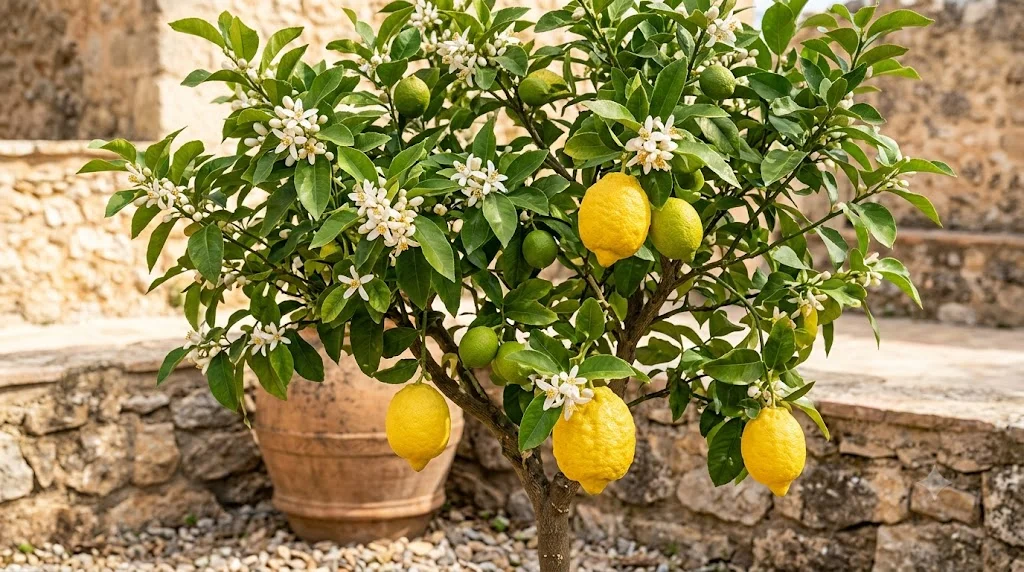
Unlike many temperate fruit trees, a lemon tree may carry flowers, immature fruit and nearly ripe lemons at the same time. This extended reproductive cycle places a considerable demand on the root system. The plant must continuously supply water, nitrogen, potassium and micronutrients while also maintaining evergreen foliage. Any prolonged stress can therefore affect several stages of production at once.
Young lemon trees initially invest much of their energy in roots, framework branches and leaf area. Heavy fruiting should not be encouraged before the plant has developed a strong structure. Removing some flowers or tiny fruit from a weak young specimen can improve establishment and lead to better yields in later years. A mature, well-branched tree can support a much larger crop without becoming exhausted.
Growth rates vary according to cultivar, rootstock, climate and container size. Grafted plants usually begin flowering and fruiting sooner than seedlings, while vigorous rootstocks may produce stronger but larger trees. Container-grown lemons remain more compact because their roots are restricted, yet they also require closer attention. Understanding how the tree grows makes it easier to recognise whether slow development is natural or caused by unsuitable care.
More articles on this topic
Choosing the best growing position
A lemon tree performs best in a warm, bright and sheltered position. Outdoors, a south-facing or south-west-facing site usually provides the longest period of direct sunlight. Protection from cold wind is valuable because wind increases moisture loss and can damage tender shoots, flowers and developing fruit. A sunny wall can create a favourable microclimate by absorbing heat during the day and releasing it gradually at night.
Good air movement is still necessary, even though strong draughts should be avoided. Stagnant air around dense foliage encourages fungal problems and allows scale insects or mealybugs to remain unnoticed. Position the tree where air can circulate through the canopy without exposing it to persistent wind. Adequate spacing also makes inspection, watering and pruning easier.
A container-grown lemon should not be placed directly beside a radiator, heating vent or hot glass wall indoors. These locations can produce very dry air and rapid fluctuations in root-zone moisture. The leaves may curl, develop dry margins or fall even when the room appears comfortably warm. Brightness and temperature stability are more important than intense artificial heat.
Moving a tree between indoor and outdoor environments should be done gradually. A plant kept indoors over winter can suffer leaf scorch when suddenly exposed to strong spring sunshine. Begin with a protected position and provide morning or late-afternoon sun for several days before increasing exposure. This acclimatisation allows the leaves to adjust their protective tissues and reduces unnecessary stress.
More articles on this topic
Maintaining suitable temperature and humidity
Lemon trees grow most actively in warm conditions, generally when daytime temperatures are comfortably above cool spring levels. They can tolerate considerable summer heat when their roots have access to sufficient moisture. However, high temperatures combined with a dry root ball can cause flowers and small fruit to drop. Shade around the container itself may help prevent overheating while the canopy remains in full light.
Cool temperatures slow growth and nutrient uptake. A lemon tree may remain healthy during winter at a cool but frost-free temperature, provided watering is reduced accordingly. Problems often develop when the roots are cold and wet while the leaves remain in warm, dry air. Keeping the whole plant in a reasonably balanced environment is preferable to creating a large difference between root and canopy conditions.
Humidity is particularly important for trees overwintered indoors. Very dry air favours spider mites and can lead to brittle leaf edges. A broad tray filled with damp gravel can moderately improve local humidity, although the base of the pot should remain above the water. Grouping plants together also helps create a slightly more humid microclimate.
Regular misting is not a complete solution and should be used carefully. Fine droplets may raise humidity only briefly, while repeatedly wet leaves in a cool room can increase the risk of disease. It is generally better to improve room humidity, provide ventilation and keep the tree away from direct heat sources. Leaves can also be wiped occasionally to remove dust and make pests easier to detect.
Caring for the foliage and canopy
Healthy lemon leaves should normally be glossy, firm and evenly green. New leaves are often lighter in colour and may remain soft until they mature. Pale foliage can indicate nutrient deficiency, waterlogging, root damage or insufficient light. The pattern of discolouration provides useful clues, especially when comparing young and older leaves.
Dust accumulation reduces the amount of light reaching the leaf surface and can conceal pests. Indoor plants benefit from occasional gentle cleaning with lukewarm water and a soft cloth. Avoid leaf-shine products because they can block stomata and leave residues. Supporting each leaf while wiping prevents tearing or bending the petiole.
Leaf drop is a common response to sudden environmental change. A shift in temperature, light level, watering frequency or humidity may cause apparently healthy leaves to fall. The tree often recovers when stable conditions are restored, provided the roots remain healthy. Repeatedly moving the plant should therefore be avoided unless seasonal relocation is necessary.
Dense internal growth should be monitored because shaded leaves contribute less energy to the plant. Crossing shoots and vigorous inward-growing branches can create a crowded canopy. Selective thinning improves light penetration and ventilation without removing excessive foliage. Since evergreen leaves store and produce energy throughout the year, major defoliation should never be treated as routine maintenance.
Supporting flowering and fruit development
Lemon flowers are usually white, often with a pink or purple tint on the outer petals. Their fragrance is strong and attractive to pollinating insects when the tree is outdoors. Many lemon cultivars are self-fertile, so a single plant can set fruit. Indoor flowers may benefit from gentle hand pollination with a soft brush if insects are absent.
Flower drop is not always a sign of failure. A lemon tree naturally produces more blossom than it can support as mature fruit. Changes in temperature, dry compost, low humidity or weak light can increase the amount of shedding. Stable care during flowering is more effective than trying to force every flower to remain attached.
Small fruitlets may also fall during the weeks after pollination. This natural thinning allows the tree to balance its crop with available leaf area and root capacity. A weak or recently repotted tree should not be allowed to carry too many lemons. Removing part of the crop can prevent branch breakage and preserve the plant’s reserves.
Developing lemons require months to reach full size and colour. Ripening speed depends on cultivar, temperature, sunlight and the season in which flowering occurred. Fruit can remain green for a long time even when it is internally mature, especially in consistently warm conditions. Colour change is often encouraged by cooler nights rather than by a sudden increase in fertiliser.
Repotting and managing container-grown trees
Container-grown lemon trees should be checked regularly for root congestion. Roots circling densely around the pot, rapid drying and poor nutrient response can indicate that more space is needed. Repotting is normally most successful near the beginning of active growth. The new container should be only moderately larger because an oversized pot retains moisture for too long.
Choose a sturdy pot with several unobstructed drainage holes. Terracotta allows evaporation through its walls and offers useful weight, although it dries more quickly than plastic. Lightweight containers are easier to move but may become unstable when the canopy is large. A broad base is especially important for a top-heavy specimen carrying fruit.
Use a free-draining growing medium formulated for citrus or other long-lived container plants. A suitable mixture must hold moisture while still allowing oxygen to reach the roots. Coarse mineral material, fine bark or horticultural grit can improve structure when mixed appropriately. Heavy garden soil should not be used alone because it compacts and drains poorly in pots.
During repotting, handle the root ball carefully and remove only damaged, dead or severely circling roots. Position the tree at the same depth at which it previously grew, keeping the graft union well above the compost. Water thoroughly after planting to settle the medium around the roots. Delay strong feeding until signs of fresh growth show that the root system has resumed normal activity.
Seasonal care throughout the year
Spring is the period for gradually increasing water, restarting regular feeding and inspecting the tree after winter. Dead twigs can be removed, and repotting may be carried out before rapid growth begins. Indoor plants should be acclimatised slowly before being moved into direct outdoor sunlight. Early pest detection is especially important because rising temperatures encourage rapid reproduction.
Summer care focuses on moisture consistency, nutrition and heat management. Containers may need frequent checking during hot or windy weather, but watering should still be based on the condition of the growing medium. Flowers and fruit require reliable water supply without permanent saturation. Strong shoots can be lightly pinched to maintain a balanced canopy.
Autumn is a transition period rather than an abrupt end to growth. Feeding should be reduced as light levels fall and the tree’s demand for nutrients decreases. Outdoor plants should be inspected, cleaned and treated for pests before being moved inside. Bringing the tree under protection before severe cold arrives prevents both root injury and sudden environmental shock.
Winter care depends on the available overwintering space. A cool, bright, frost-free room allows the tree to rest with reduced watering, while a warm room demands much stronger light and more careful humidity management. Fertiliser is usually unnecessary when growth has slowed significantly. The most successful winter routine keeps conditions stable and avoids the damaging combination of low light, excessive warmth and wet compost.