
Pruning is a specialized horticultural practice that, when done correctly, can significantly improve the health, structural integrity, and productivity of an eggplant. By selectively removing parts of the plant, you can direct its energy away from excessive foliage and toward the development of high-quality fruit. While it may seem counterintuitive to cut away healthy parts of a plant, professional pruning is essential for managing air circulation and light penetration. Mastering these techniques allows you to shape your crop for maximum performance throughout the entire growing season.
Early season pinching and structural shaping
The goal of pruning in the early stages of growth is to create a strong, well-balanced framework that can support a heavy crop later in the season. When the plant reaches about twenty-five to thirty centimeters in height, many gardeners “pinch out” the central growing tip. This simple action breaks the plant’s apical dominance and encourages the growth of strong lateral branches from the leaf axils. The result is a more compact, “bushy” plant that is less likely to become top-heavy and prone to breaking in the wind.
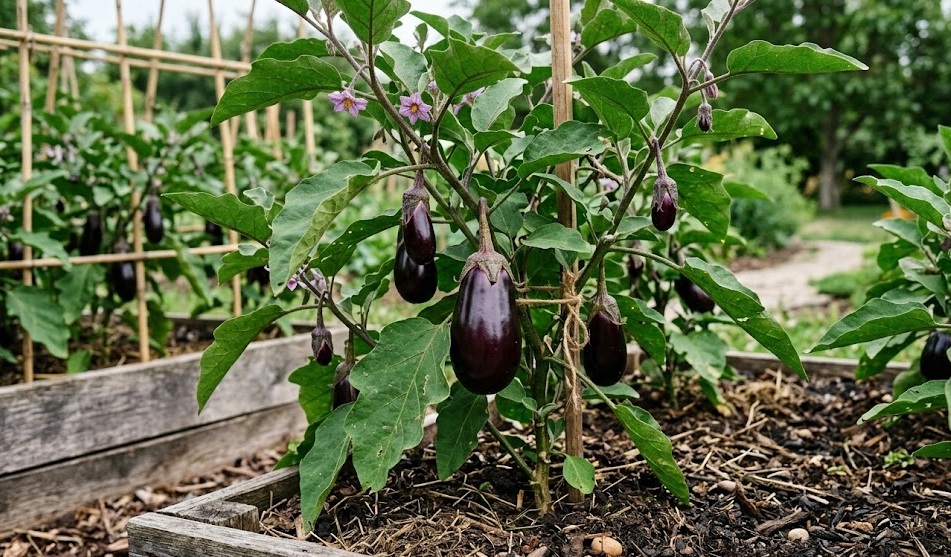
Selecting three to four main structural branches and removing any smaller, weaker shoots is the next step in shaping your eggplant. This “open-center” approach ensures that each of the primary branches has enough space to grow without competing for light or air. Having fewer, stronger branches leads to larger fruits and makes it much easier to manage the support system as the season progresses. This structural clarity also simplifies the process of inspecting the plant for pests or signs of disease during your daily rounds.
Removing any leaves or shoots that are touching the ground is a critical preventative measure that should be done early and often. Foliage in contact with the soil provides a direct pathway for soil-borne pathogens and pests to climb onto the plant. By maintaining a “clean” stem for the first ten to fifteen centimeters above the soil line, you significantly reduce the risk of fungal infections like blight. This practice also improves the effectiveness of mulching and makes it easier to water the base of the plant without wetting the leaves.
It is important to use clean, sharp tools for all your pruning tasks to ensure that you make clean cuts that heal quickly. Tearing the stem or leaving jagged edges creates an entry point for bacteria and fungi that can lead to systemic infections. Dipping your shears in a mild disinfectant between plants is a professional habit that prevents the accidental spread of viruses. Timing your pruning for a dry, sunny morning allows the “wounds” to dry and callous over rapidly, further protecting the internal tissues of the plant.
More articles on this topic
Removing suckers and managing the canopy
As the eggplant continues to grow, it will produce many small shoots, often called “suckers,” in the crotches between the main stem and the leaf branches. If left to grow, these suckers will produce a vast amount of foliage but very few useful fruits, effectively stealing energy from the main crop. You should check your plants weekly and snap or snip these suckers off while they are still small and tender. This ongoing maintenance keeps the plant’s energy focused on the primary branches and the developing flowers and fruits.
Thinning out the inner canopy is another important task that improves air circulation and ensures that sunlight can reach the center of the plant. If the foliage becomes too dense, it creates a humid, stagnant microclimate where powdery mildew and spider mites can thrive. Removing a few of the larger leaves that are shading the interior of the plant can make a dramatic difference in its overall health. Be careful not to over-prune, however, as the plant still needs a significant amount of leaf area to produce the sugars needed for fruit growth.
Pruning also plays a vital role in managing the size of the plant, especially if you are growing in a confined space like a greenhouse or a container. You can “top” the main branches once they reach the desired height to stop vertical growth and encourage the plant to put its energy into ripening its existing crop. This is particularly useful later in the season when you want to ensure that all the small, late-developing fruits have a chance to reach a harvestable size. By controlling the architecture of the plant, you remain the master of your garden space.
If you notice any leaves that are yellowing, spotted, or otherwise showing signs of distress, they should be removed immediately. These “unproductive” leaves are no longer contributing to the plant’s energy budget and may be acting as a reservoir for pests or diseases. Removing them helps keep the plant looking tidy and prevents a small problem from spreading to the healthy parts of the foliage. Always discard these clippings far away from the garden or burn them to ensure that any pathogens they carry are permanently eliminated.
More articles on this topic
Late season maintenance and fruit thinning
As the end of the growing season approaches, the focus of pruning shifts toward ensuring that the final crop of fruits has enough time and energy to ripen. You should remove any new flowers that appear within four to six weeks of the first expected frost, as they will not have enough time to develop into mature vegetables. By removing these “distractions,” you force the plant to direct all its remaining resources into the fruits that are already on the vine. This late-season discipline can significantly improve the quality and flavor of your final harvest.
Fruit thinning is another advanced pruning technique used to ensure that the eggplant produces the largest and most uniform specimens possible. If a branch is overloaded with too many fruits, they may all end up being small and poorly developed, and the weight could even break the stem. Removing one or two of the smallest or misshapen fruits in a cluster allows the remaining ones to grow to their full potential. This practice is especially important for large-fruited varieties where the plant’s resources can easily be spread too thin.
After a heavy harvest, you might notice that the plant looks a bit tired or has several empty, unproductive branches. You can do a light “refreshment pruning” by cutting back some of the older wood to encourage a final flush of new growth and flowers. This can be very effective in regions with long, warm autumns where the plant might have time for one last small crop. Just be sure to provide a little extra water and a balanced fertilizer to support the plant as it responds to this late-season stimulation.
Finally, at the very end of the season, a complete cutting back is necessary if you intend to overwinter the plant or simply clear the garden for the winter. For those not overwintering, pulling the entire plant, including the roots, is the best way to prevent the carryover of pests and diseases. If you are keeping the plant, follow the specific overwintering pruning guidelines to reduce it to a manageable and resilient size. This final act of pruning closes the loop on the season and prepares the way for the future successes of your garden.