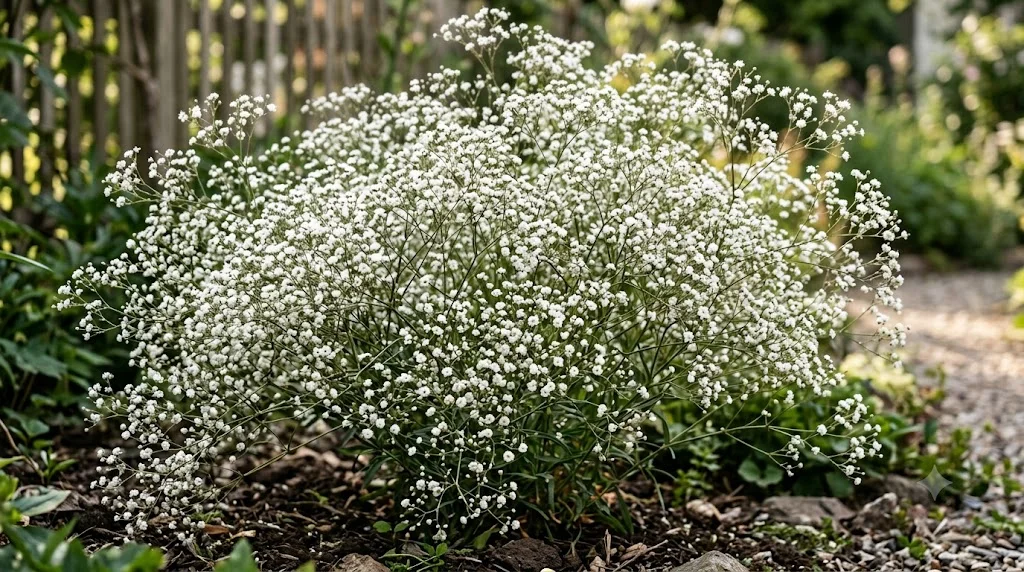

Perennial baby’s breath is generally dependable in a sunny, well-drained garden, but poor soil conditions and prolonged humidity can expose it to serious problems. Root and crown disorders are usually more destructive than leaf damage because the plant depends on a long-lived, fleshy taproot. Several sap-feeding and leaf-feeding pests may also weaken young or stressed specimens. Early recognition, good sanitation, and correction of environmental causes provide the strongest basis for control.
Crown and root rots
Crown rot is among the most serious problems affecting perennial baby’s breath. It is encouraged by waterlogged soil, deep planting, compacted ground, and organic mulch pressed against the plant base. Early symptoms may include reduced vigor, yellowing foliage, and stems that wilt despite moist soil. As decay advances, the crown becomes discolored, soft, and structurally weak.
Root rot can develop below ground before obvious symptoms appear above the surface. The plant may stop growing, produce fewer flowers, or collapse during warm weather because damaged roots cannot supply water. Digging around the crown often reveals darkened or soft root tissue. Severely affected mature plants are difficult to save because the taproot cannot be replaced.
Prevention begins with selecting a naturally free-draining site. Raised beds, gravelly soil, and careful crown positioning reduce the length of time moisture remains around vulnerable tissues. Irrigation should be directed away from the crown and applied only when needed. Tools used on diseased roots should be cleaned before they contact healthy plants.
A badly rotted plant should usually be removed along with as much affected root material as possible. Replanting another baby’s breath immediately in the same poorly drained location is unwise. The soil structure and drainage problem must be corrected first. Where disease has been severe, choosing a different planting position is often safer.
More articles on this topic
Fungal leaf and stem diseases
Leaf spots may appear as brown, gray, or dark lesions during humid weather. Dense growth, overhead watering, and poor air circulation allow infected foliage to remain wet for extended periods. Individual spots may merge, causing larger areas of tissue to die. Although leaf spotting is not always fatal, repeated infection weakens the plant and reduces its ornamental value.
Stem blight can cause sections of the branching framework to darken and die back. The problem may begin at wounded tissue, old pruning cuts, or areas repeatedly splashed with contaminated soil. Infected branches should be removed back to healthy tissue using clean tools. Cut material should not be left beneath the plant.
Powdery mildew sometimes develops as a pale, flour-like coating on leaves and stems. It is favored by warm days, cooler nights, and restricted air movement, although free water is not always required for infection. Mild cases may remain mainly cosmetic. Severe infection can reduce photosynthesis and cause early leaf decline.
Good spacing, morning watering, and prompt removal of infected tissue reduce fungal pressure. Plants should not be overfed with nitrogen because soft growth is more susceptible to disease. Chemical treatment, where appropriate and permitted, works best when combined with cultural correction. Spraying cannot compensate for persistently wet soil or overcrowded planting.
More articles on this topic
Aphids and other sap-feeding pests
Aphids gather on tender shoots, flower buds, and the undersides of young leaves. They remove sap and may cause curling, distorted growth, or sticky honeydew deposits. Ants moving repeatedly over the stems often indicate an aphid colony. Large populations can reduce flower quality and weaken newly established plants.
Small colonies can often be dislodged with a controlled stream of water, provided the soil and crown are not soaked. Beneficial insects such as ladybirds, lacewing larvae, and hoverfly larvae frequently provide natural control. Broad-spectrum insecticides can disrupt these predators and lead to renewed infestations. Regular inspection is therefore preferable to automatic treatment.
Leafhoppers and other small sap feeders may cause pale stippling or scattered discoloration. Their rapid movement can make them difficult to observe unless the stems are disturbed. Damage is usually more serious during hot, dry periods when the plant is already under stress. Maintaining balanced moisture helps the plant tolerate limited feeding.
Some sap-feeding insects can transmit plant pathogens as they move between hosts. Unusual mottling, persistent distortion, or severe decline without an obvious environmental cause should be treated cautiously. Suspected infected plants should not be used for propagation. Clean stock material is essential when maintaining named cultivars.
Slugs, snails, and chewing insects
Slugs and snails mainly threaten young plants and fresh spring growth close to the soil surface. They create irregular holes and may remove entire emerging shoots overnight. Shiny slime trails around the crown are a useful diagnostic sign. Mature flowering stems are generally less vulnerable, although damp, crowded borders can still support damage.
Reducing hiding places around the plant makes the area less favorable to mollusks. Thick organic mulch, boards, stones resting on moist soil, and dense weeds provide daytime shelter. A clean mineral surface around the crown is easier to inspect. Watering in the morning rather than evening also reduces nighttime moisture.
Caterpillars and other chewing larvae may occasionally feed on foliage or flower buds. The pattern of missing tissue and the presence of droppings help distinguish them from sap-feeding pests. Hand removal is practical when only a few insects are present. Biological controls should be selected according to the correctly identified pest.
Root-feeding larvae can cause more confusing symptoms because the damage remains hidden. Young plants may wilt, loosen in the soil, or fail to establish despite adequate surface moisture. Examining the root ball can reveal feeding injury or larvae. Preventive inspection of purchased plants and clean growing media reduces introduction risk.
Integrated prevention and plant recovery
Healthy plants are better able to tolerate minor pest feeding and recover from limited disease. Full sun, excellent drainage, moderate fertility, and sufficient spacing form the foundation of resistance. Stressed plants should be assessed for environmental problems before pesticides or fertilizers are considered. Treating the cause often stops recurring symptoms.
Sanitation should be maintained throughout the growing season. Dead stems, diseased leaves, and fallen flower debris should be removed when they create damp hiding places or infection sources. Pruning tools should be kept sharp and cleaned after cutting suspicious tissue. Avoid unnecessary wounds to the crown and root system.
New plants should be inspected before they are added to established borders. Check the crown for softness, the roots for discoloration, and the shoots for insects or unusual distortion. Temporarily isolating valuable new specimens can prevent pests from spreading. Propagation material should come only from vigorous, symptom-free plants.
Recovery depends on the severity and location of the damage. A plant with mild leaf spotting or a small aphid colony usually responds well to improved care. A specimen with extensive crown decay or systemic distortion may not recover reliably. Prompt removal of such plants can protect healthy neighbors and preserve the quality of the planting.