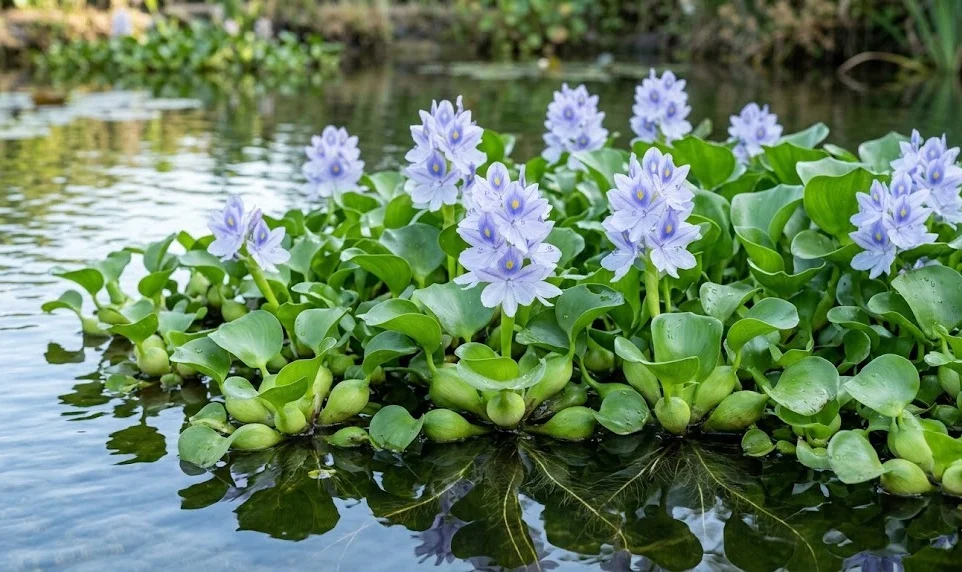

Water hyacinth is generally vigorous, but it is not immune to health problems. Most visible decline is linked less to mysterious disease and more to stress from cold water, poor light, overcrowding, nutrient imbalance, or decaying organic matter. Pests can also appear, especially in warm protected environments or on plants kept indoors. Accurate diagnosis begins by separating environmental stress from true pest or disease pressure.
Environmental stress that mimics disease
Yellowing leaves are one of the most common concerns with water hyacinth. They may suggest nutrient deficiency, but they can also result from cold nights, transplant shock, old foliage, or low light. Older outer leaves naturally decline as new central leaves develop. A few yellow leaves are not a crisis if the crown remains firm and new growth is healthy.
Cold stress often looks like disease because leaves become limp, spotted, or discolored. Water hyacinth is a warmth-loving plant, and cool conditions slow its metabolism. When cold persists, roots may become less functional and older foliage deteriorates. Moving plants into warmer conditions or waiting for stable summer weather often solves the issue better than treatment.
Overcrowding can also produce symptoms that resemble disease. Dense mats block light from smaller rosettes and trap decaying leaves beneath the canopy. Crowns may become distorted, and roots can collect sludge. Thinning the plants usually improves appearance and reduces the risk of secondary rot.
Poor water quality creates another layer of stress. Stagnant, foul-smelling, or heavily polluted water can damage roots and encourage decay. In containers, water can deteriorate quickly when dead leaves are left in place. Regular cleaning and partial water renewal are often more effective than applying plant treatments.
More articles on this topic
Root rot and crown decay
Root rot usually begins when roots are damaged by cold, low oxygen, contaminated water, or accumulated organic debris. Healthy roots may be dark and feathery, but they should not smell rotten. Decaying roots may become slimy, detach easily, or release an unpleasant odor. Once root health declines, leaf quality often follows.
Crown decay is more serious than ordinary leaf loss. The crown is the central growing point, and it should remain firm above the water surface. If the crown becomes mushy, brown, or collapsed, recovery is unlikely. Affected plants should be removed promptly to prevent decaying material from polluting the water.
Prevention is the best approach to rot. Keep water moving gently or aerated where appropriate, but avoid violent currents that damage plants. Remove dead foliage before it sinks and decomposes. Maintain enough open water to support oxygen exchange and reduce stagnant pockets under dense mats.
When rot appears, avoid trying to save every affected plant. Water hyacinth multiplies easily, so removing weak or decaying specimens is usually the cleanest solution. Retain only firm, healthy rosettes with active new growth. This improves the overall planting and reduces the organic load in the water.
More articles on this topic
Insect pests on foliage and roots
Aphids can occasionally colonize water hyacinth leaves, especially in protected ponds or indoor overwintering setups. They feed on tender tissue and may cause curling, sticky residue, or distorted new growth. Small populations can often be washed off or removed by hand. In outdoor ponds, natural predators may keep them under control.
Spider mites may appear when plants are kept indoors in warm, dry air. Their feeding can create fine speckling, dull foliage, and delicate webbing. Although water hyacinth is aquatic, the leaf surface can still suffer in dry indoor conditions. Increasing humidity around overwintered plants and rinsing foliage can help reduce pressure.
Snails may graze on softened or aging tissue. In many ponds, they are more attracted to decaying leaves than to strong healthy growth. Heavy chewing on tender foliage can occur if populations are high. Removing old leaves and managing snail numbers helps limit visible damage.
Fish can also affect the plant, although they are not pests in the usual sense. Koi and goldfish may nibble roots, disturb young plants, or pull at hanging root masses. Minor grazing is usually tolerable, but heavy root damage weakens growth. Floating barriers can protect plants in ponds with active fish.
Fungal and bacterial problems
True fungal and bacterial diseases are often secondary in water hyacinth. They commonly follow mechanical damage, cold injury, poor water quality, or overcrowding. Spots, soft patches, and collapsing tissue should be evaluated alongside environmental conditions. Treating the environment usually matters more than naming the exact organism.
Leaf spots may appear on aging or stressed foliage. Small blemishes are not unusual and do not always require intervention. If spotting spreads rapidly and leaves collapse, remove affected foliage and improve spacing. Better air exposure above the water surface can reduce persistent dampness around leaves.
Soft bacterial decay can develop when crowns or petioles are injured and remain wet in stagnant conditions. Tissue may become mushy and foul-smelling. Affected plants should be discarded rather than composted near waterways. Keeping crowns above water and avoiding rough handling reduces risk.
Chemical disease control is rarely the best choice in ornamental ponds. Many fungicides and bactericides are unsuitable for aquatic systems or risky around fish and amphibians. Cultural control, sanitation, thinning, and water-quality improvement are usually safer. When a product is considered, it must be specifically appropriate for aquatic use and local regulations.
Integrated prevention and monitoring
A healthy water hyacinth planting is maintained through routine observation. Look at leaves, crowns, and roots during thinning rather than waiting for a severe problem. Early yellowing, pest colonies, or root decline can be addressed quickly. Small corrections prevent larger pond-quality issues.
Sanitation is one of the strongest preventive tools. Remove dead foliage, damaged rosettes, and trapped debris before they decay. Do not leave piles of removed plants beside a pond where rain can wash them back into water. Responsible cleanup protects both the ornamental system and nearby environments.
Balanced growth also reduces pest and disease pressure. Plants that receive enough light, warmth, and moderate nutrition are naturally more resilient. Overfed, overcrowded, or cold-stressed plants are more vulnerable to decline. The best defense is a growing environment that supports steady but controlled vigor.
Monitoring should continue into autumn and indoor overwintering. Declining temperatures often trigger yellowing and rot, while indoor warmth may encourage aphids or mites. Adjust care as conditions change rather than using one routine all year. Water hyacinth is forgiving when actively growing, but it deteriorates quickly when stress and neglect combine.