
The peace lily is one of the most dependable flowering houseplants, but it performs best when its care is steady rather than excessive. Its glossy leaves and white spathes respond strongly to light, moisture, temperature, and root-zone conditions. A plant that looks elegant and effortless usually receives a carefully balanced routine behind the scenes. Understanding that balance is the key to long-lived foliage and repeat flowering.
Understanding the peace lily’s natural growth habits
Peace lilies originate from warm, shaded tropical forest environments where light is filtered and humidity is relatively high. This background explains why they dislike harsh direct sun but still need enough brightness to grow vigorously. In homes, they are often described as low-light plants, yet that phrase can be misleading. They tolerate lower light, but they rarely thrive or flower well in a dim corner.
Their leaves are broad, smooth, and efficient at capturing soft light under a canopy. This makes the plant well suited to bright rooms where the sun does not strike the foliage directly for long periods. When the light is too strong, the leaves may scorch, fade, or develop dry brown patches. When the light is too weak, growth slows, stems stretch, and flowers become scarce.
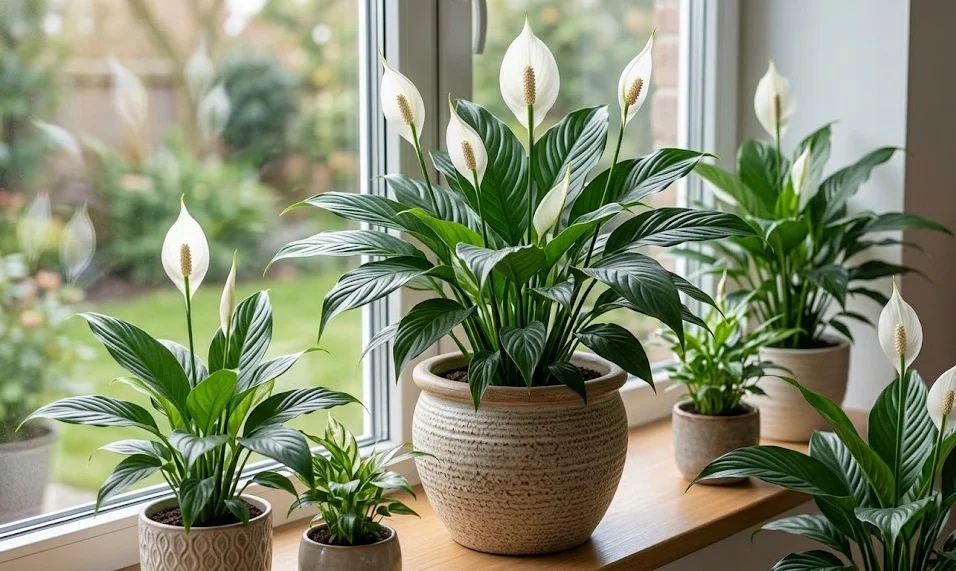
The visible “flower” of a peace lily is actually a white spathe surrounding a central spadix. This structure can last for several weeks when the plant is healthy and not exposed to stress. As the spathe ages, it often turns green before browning. Removing spent blooms helps the plant redirect energy into roots and new leaves.
Peace lilies grow from a crown with roots that prefer moisture but also need air. This detail matters because many care problems begin in the potting mix rather than on the leaves. A dense, constantly saturated medium can suffocate roots and invite rot. A good care routine always supports both hydration and oxygen around the roots.
More articles on this topic
Choosing the right position indoors
The best indoor position for a peace lily is usually near an east-facing window or a short distance from a bright south- or west-facing window. The plant should receive plenty of indirect daylight without being exposed to intense midday sun. A sheer curtain can make a bright location safer and more consistent. This setup supports stronger foliage and a better chance of flowering.
Peace lilies can also grow in offices and rooms with artificial lighting, but the quality and duration of light matter. A plant under strong full-spectrum grow lights can remain compact and productive. A plant under weak ceiling lights may survive but lose density and flowering ability. If natural light is limited, supplemental lighting can make a noticeable difference.
Avoid placing peace lilies in drafty areas, directly beside heating vents, or close to frequently opened exterior doors. Sudden temperature shifts stress the leaves and can cause wilting even when the soil is moist. Hot dry air also increases water loss and encourages brown leaf tips. A stable room with moderate warmth is far better than a dramatic location with fluctuating conditions.
The plant’s response should guide placement over time. Upright leaves, steady new growth, and occasional blooms suggest the position is suitable. Pale leaves, leaning growth, or long gaps between new leaves suggest the light may be insufficient. Scorched edges, bleached patches, or curled leaves suggest the plant is too close to direct sun.
More articles on this topic
Watering for strong roots and balanced growth
Peace lilies prefer evenly moist soil, but they should not sit in stagnant water. The upper layer of the potting mix can be allowed to dry slightly before watering again. A reliable method is to check the top few centimeters with a finger rather than watering on a strict calendar. The plant’s needs change with season, light level, pot size, and indoor temperature.
When watering, apply enough water to moisten the entire root ball rather than only the surface. Excess water should drain freely from the bottom of the pot. After drainage, the saucer should be emptied so the roots are not submerged. This simple habit prevents many root problems.
Wilting is a common peace lily signal, but it should not become the main watering strategy. Repeated severe wilting weakens leaf tissue and stresses the root system. A slight softening of the leaves can indicate thirst, but dramatic collapse means the plant has already gone too dry. Consistent moisture is better than a cycle of drought and rescue watering.
Water quality can also affect peace lilies. Some plants develop brown tips when exposed to high levels of salts, chlorine compounds, or minerals. Letting tap water stand overnight may help with chlorine, while filtered or rainwater can reduce mineral accumulation. Periodic flushing of the potting mix also helps remove excess salts from fertilizer and hard water.
Soil, containers, and drainage
A good peace lily mix should hold moisture while still draining well. A standard indoor potting mix can work if it is not too heavy, but it is often improved with perlite, orchid bark, or coco chips. These amendments create air pockets that support healthy roots. The goal is not a dry cactus-style mix, but a balanced medium that stays damp without becoming compacted.
Containers must have drainage holes. Decorative cachepots can be used, but the grow pot inside should drain fully after every watering. A pot without drainage creates a hidden reservoir of water around the root zone. Even if the top looks normal, the lower roots may be deprived of oxygen.
Pot size should match the root system. A pot that is much too large holds excess moisture for too long and can increase the risk of rot. A pot that is too small dries quickly and may restrict growth. Moving up one pot size during repotting is usually safer than making a large jump.
Over time, potting mix breaks down and becomes denser. This reduces drainage and oxygen movement, even if the watering routine has not changed. Repotting every one to two years is often enough for a healthy household plant. Older, compacted soil should be loosened or replaced to refresh the root environment.
Feeding and seasonal growth management
Peace lilies are moderate feeders rather than heavy feeders. During active growth in spring and summer, a balanced houseplant fertilizer can support leaf production and flowering. A diluted application every few weeks is usually safer than strong, frequent feeding. Excess fertilizer often causes brown tips, salt buildup, and weak growth.
In autumn and winter, growth usually slows because indoor light levels decrease. Fertilizer should be reduced or paused during this period unless the plant is under strong grow lights and actively producing new leaves. Feeding a slow-growing plant can leave unused salts in the soil. The roots may then suffer even though the intention was to help.
Blooming is influenced by plant maturity, light, nutrition, and overall health. A peace lily kept in very low light may have lush leaves but few flowers. Increasing indirect light often does more for flowering than adding extra fertilizer. A healthy root system is also essential because blooms require stored energy.
Signs of underfeeding include pale new growth, reduced leaf size, and slow development during the growing season. Signs of overfeeding include crispy tips, crusty deposits on the soil surface, and sudden root decline. When in doubt, dilute fertilizer more than the label suggests. Peace lilies usually respond better to restraint than excess.
Humidity, temperature, and indoor air conditions
Peace lilies appreciate moderate to high humidity, but they can adapt to normal household conditions if other care factors are stable. Very dry air often leads to brown leaf tips and edges, especially in winter. Grouping plants together, using a humidity tray, or running a humidifier can improve the local environment. Misting gives only brief relief and should not replace proper humidity management.
Ideal room temperatures are warm and steady. Peace lilies generally perform well in comfortable indoor conditions used by people. Cold windowsills, unheated rooms, and sudden drafts can damage leaves and slow root function. Temperatures that remain consistently mild encourage reliable growth.
Air movement should be gentle rather than harsh. Stale air can encourage fungal problems on overly wet soil, while strong blasts from vents can dry leaves quickly. A balanced room with mild circulation is ideal. This helps the plant transpire normally without excessive stress.
Cleaning the leaves is also part of environmental care. Dust reduces light capture and can make the plant look dull. Wiping leaves with a damp cloth keeps the foliage functional and attractive. Leaf shine products are usually unnecessary and may interfere with normal leaf surfaces.
Routine maintenance and long-term plant health
Regular inspection is the best way to prevent small issues from becoming serious. Check the leaves, stems, soil surface, and underside of foliage every few weeks. Early signs of pests, yellowing, or root stress are easier to correct than advanced damage. A peace lily often communicates problems clearly if observed closely.
Remove yellow or brown leaves at the base with clean scissors. This improves appearance and reduces decaying material around the crown. Old flowers should also be cut near the base of the flower stem when they fade. Clean cuts reduce the chance of tissue damage and infection.
A peace lily can live for many years indoors when care remains consistent. Mature plants may form dense clumps that benefit from division during repotting. Dividing should be done carefully so each section keeps enough roots and growing points. After division, plants need stable moisture and moderate light while they recover.
The most successful care strategy is preventive rather than reactive. Avoid overwatering, protect the plant from harsh sun, maintain suitable warmth, and feed lightly during active growth. These simple principles support strong roots, glossy leaves, and reliable blooms. With steady care, the peace lily remains one of the most elegant and rewarding indoor plants.