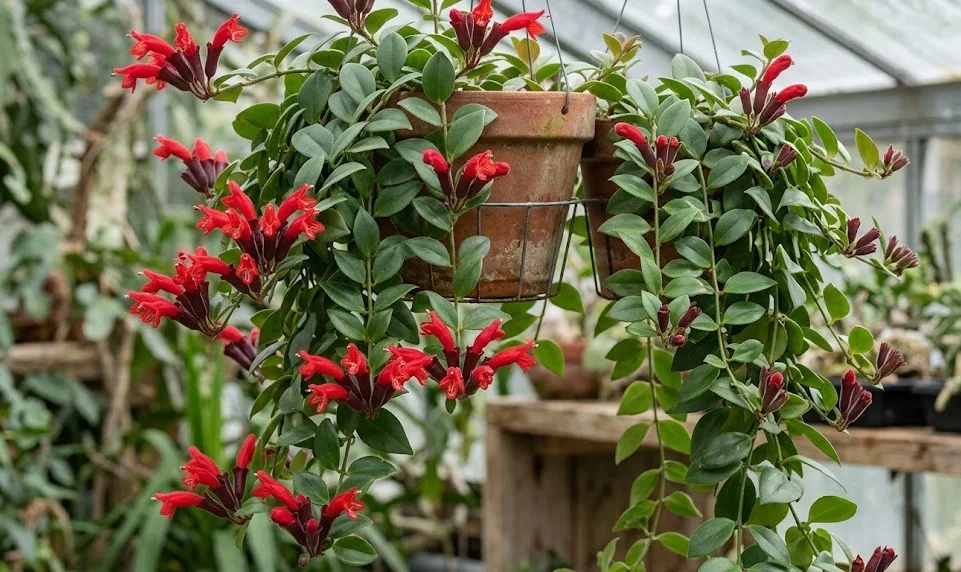

The trailing lipstick plant needs bright, filtered light to grow densely and flower well. It can survive in moderate indoor light, but survival is not the same as performance. Too little brightness leads to long stems, sparse foliage, and poor bud formation. Too much direct sun, especially in summer, can scorch the glossy leaves and stress the plant.
Finding the ideal brightness
The best light is bright but indirect. This means the plant receives a clear, luminous position without being exposed to harsh sun for many hours. An east-facing window is often excellent because morning light is gentle. A south- or west-facing window can also work if the plant is set back or protected by a sheer curtain.
The plant’s flowering depends strongly on light quality. Without enough brightness, it may grow leaves but fail to form buds. Stems may also become longer and weaker as they stretch toward the window. Compact growth and regular flowering usually indicate that the light level is close to ideal.
A simple visual test can help assess indoor brightness. If the plant casts a soft but visible shadow during the day, the light is often suitable. If there is almost no shadow, the position may be too dim. If the shadow is very sharp and the leaves feel hot, the sun may be too intense.
Seasonal changes should be considered. A position that is perfect in winter may become too sunny in midsummer. Likewise, a spot that works in summer may become too dark in December. Moving the plant slightly through the year can maintain better balance.
More articles on this topic
Recognising light stress
Insufficient light usually produces gradual symptoms. The stems become longer between leaves, and the plant begins to look open rather than full. New leaves may be smaller or paler. Flowering becomes rare or stops entirely.
Excessive direct sun creates a different pattern. Leaves may develop pale, bleached, or brown scorched patches. The damage often appears on the side facing the window. Once a leaf is burned, it will not fully recover, although the plant can produce healthy new growth.
Bud drop can happen at either extreme. In poor light, the plant may lack the energy to develop flowers properly. In hot direct sun, buds can dry or abort before opening. Stable filtered brightness is therefore more reliable than intense exposure.
Sudden light changes are another common problem. A plant grown in shade should not be placed immediately into strong sun. Gradual acclimatisation reduces shock and prevents leaf damage. This is especially important after winter or after bringing home a plant from a nursery.
More articles on this topic
Using artificial light effectively
Artificial light is useful when natural daylight is limited. A full-spectrum grow light can support growth in apartments, offices, or darker rooms. The plant should receive consistent daily exposure rather than occasional intense lighting. A timer makes this routine simple and dependable.
The light should be placed so it reaches the top and sides of the trailing stems. If only the upper foliage receives light, lower stems may become bare. Rotating the basket occasionally can help even out growth. This is particularly useful when the plant hangs near a wall.
Distance from the lamp matters. If the light is too far away, the plant may still stretch. If it is too close, heat or intensity may damage leaves. The correct distance depends on the strength of the fixture, so the plant’s response should guide adjustments.
Artificial lighting does not replace good overall care. Watering must still be adjusted to actual growth and drying rate. A plant under strong grow lights may use more water than one in natural winter shade. Light, moisture, temperature, and nutrition always work together.