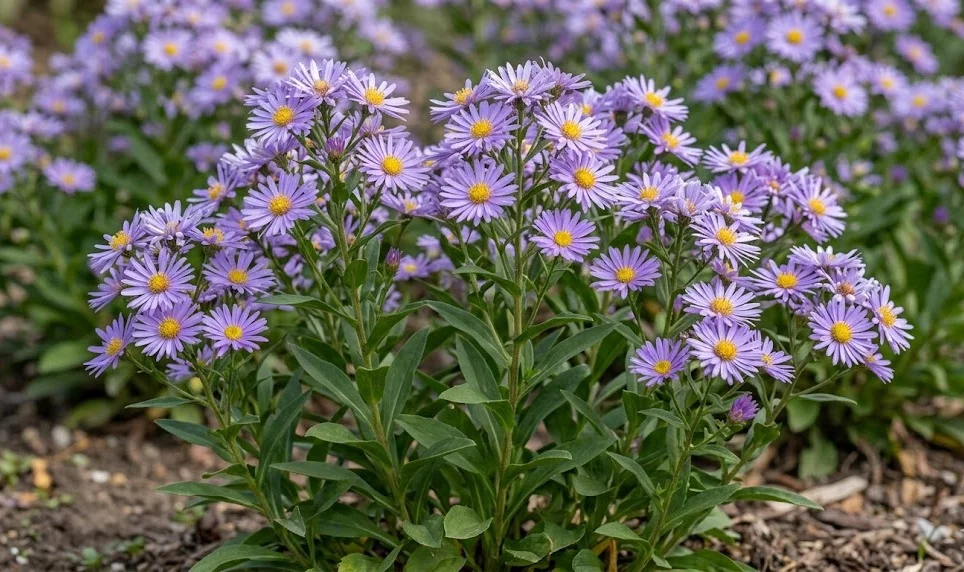

Italian aster establishes best when planting is done with patience, good soil preparation, and realistic spacing. This perennial may look delicate in bloom, but it develops into a sturdy clump when its roots are given the right start. Planting and propagation are not difficult, yet small details make a clear difference in long-term performance. A well-planted specimen will flower more freely, resist stress better, and require less correction later.
The best time and place to plant
Spring is often the safest season for planting Italian aster. The soil is warming, roots begin active growth, and the plant has a full season to settle before winter. Autumn planting can also work in mild regions if the soil is not waterlogged. In colder or wetter gardens, spring planting gives the young plant a stronger start.
Choose a location with full sun for the best flowering. A position with at least six hours of direct light usually produces compact growth and stronger stems. Light shade may be tolerated, but flowering can become weaker. Deep shade is unsuitable because the plant will stretch and lose vigour.
The planting site should drain freely. Italian aster is far more forgiving of dry conditions than of standing winter moisture. If water remains on the surface after rain, the site should be improved or avoided. Raised beds, slopes, and gravelly borders can all be suitable.
Spacing is important from the beginning. Young plants may look small, but they need room to develop into healthy clumps. Crowded planting reduces airflow and can increase disease pressure. Give each plant enough space to expand without being smothered by neighbours.
More articles on this topic
Preparing and setting the plant
Before planting, clear the area of weeds and loosen the soil thoroughly. Roots establish faster when they can move into open, crumbly ground. Mix in mature compost if the soil is poor, but avoid making the planting hole too rich compared with the surrounding soil. A sudden pocket of soft compost can hold excess moisture and discourage outward root growth.
Water the plant in its pot before planting if the root ball is dry. This reduces stress and helps the root ball hold together during handling. Gently tease out circling roots if the plant has been in the container too long. Damaged or congested roots should be loosened carefully rather than torn harshly.
Set the plant at the same depth it was growing in the pot. Planting too deeply can bury the crown and increase the risk of rot. Firm the soil gently around the roots to remove air pockets. Do not compact the soil heavily, as roots still need oxygen.
After planting, water thoroughly to settle the soil. A single deep watering is more useful than several shallow splashes. Add a light mulch if conditions are dry, keeping it away from the crown. Check the plant regularly during its first season, especially in hot or windy weather.
More articles on this topic
Propagating by division
Division is the most reliable way to propagate Italian aster. It produces plants that match the parent and usually establishes faster than seed-grown plants. Mature clumps can be divided when they become crowded or flower less freely. Spring is generally the best time because new growth is beginning and recovery is quick.
Lift the whole clump with a garden fork, taking care not to slice through too many roots. Shake or wash away loose soil so the crown structure can be seen clearly. The healthiest pieces are usually found around the outer edge of the clump. Old, woody, or exhausted centres are best discarded.
Each division should have several strong shoots and a healthy root portion. Very tiny pieces may survive, but they take longer to become garden-worthy. Replant divisions promptly so the roots do not dry out. If there is a delay, keep them shaded and lightly moist.
Water the new divisions well after replanting. Keep the soil evenly moist while they re-establish, but avoid saturating it. Remove weak or damaged shoots if necessary to reduce stress. By the following season, strong divisions often behave like established plants.
Raising plants from seed and cuttings
Italian aster can be grown from seed, though results may vary slightly between seedlings. Seed propagation is useful when producing many plants for naturalistic plantings. Sow seed in a fine, free-draining compost and cover lightly. Keep the medium moist but not wet until germination occurs.
Seedlings need good light once they emerge. Too little light causes weak, stretched growth that struggles later. Prick out young plants when they are large enough to handle. Grow them on in small pots until they have a firm root system.
Basal cuttings can also be taken from fresh spring shoots. Choose short, vigorous shoots from the base of the plant before they become hollow or woody. Insert them into a gritty propagation mix and keep them humid but not waterlogged. Gentle warmth and bright indirect light help rooting.
Young propagated plants should be hardened off before planting outdoors. Sudden exposure to wind, sun, and cold nights can check their growth. Gradual acclimatisation produces tougher plants. Once planted, they should be treated like young perennials and watered carefully through their first season.