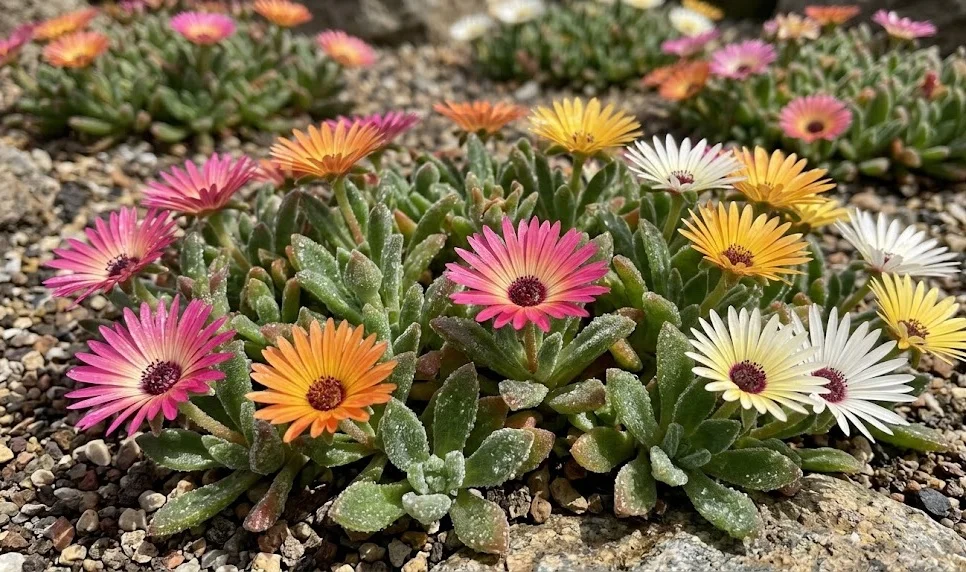

Livingstone daisy is a sun-loving annual whose flowering performance depends directly on light intensity. Its colorful blooms open most fully under bright sun and often close or remain half-open in dull weather. This makes placement one of the most important decisions when growing the plant. A sunny, open site will usually do more for flowering than extra fertilizer, frequent watering, or complicated maintenance.
The plant is naturally suited to exposed, bright conditions. Its low habit, fleshy leaves, and vivid flowers all reflect adaptation to sunny environments. In gardens, it performs best where it receives several hours of direct sunlight each day. The strongest displays usually occur in beds, rock gardens, containers, and gravel areas with little shade.
Insufficient light changes the plant’s appearance. Stems may stretch, leaves may look softer, and flowering may become sparse. Buds can form but fail to open fully if the weather remains dull. A shaded Livingstone daisy is rarely as impressive as one grown in full sun.
Light should be considered from the plant’s actual position, not from the general brightness of the garden. A patio may seem sunny, yet nearby walls, railings, shrubs, or furniture can cast shade for much of the day. Observing the site at different times helps avoid mistakes. Morning, midday, and afternoon light can all affect performance differently.
Best exposure in the garden
Full sun is the preferred exposure for Livingstone daisy. A site receiving at least six hours of direct sun is generally suitable. More sun is often better in cooler climates where heat is not extreme. Strong light encourages compact growth and frequent flowering.
More articles on this topic
South-facing or west-facing positions are often productive in temperate gardens. They provide warmth as well as light, which helps the plant grow actively. East-facing sites can also work if they receive long, bright morning sun. North-facing positions are usually too shaded unless the surrounding area is very open.
Rock gardens and gravel beds are especially suitable because they combine light, heat, and drainage. The reflected warmth from stone can improve flowering in cooler areas. These sites also reduce competition from taller plants. Livingstone daisy can spread attractively between rocks without being smothered.
Avoid placing the plant beneath shrubs, tall perennials, or dense annuals. Even partial overhead shade can reduce flower opening. Competition for light also encourages weak growth. The plant should be placed at the front of a border or in an open pocket where it remains exposed.
Light in containers and balconies
Containers allow excellent control over light exposure. Pots can be moved if the original position proves too shaded. This flexibility is useful on balconies, terraces, and paved courtyards. A container that receives direct sun through the brightest part of the day can produce a strong display.
More articles on this topic
Balcony conditions should be assessed carefully. Railings, walls, and neighboring buildings may block light for long periods. A balcony that receives only early morning light may produce fewer flowers. A bright, open ledge or stand can sometimes improve exposure.
Containers in strong sun dry faster than those in beds. This does not mean the plant should be moved into shade automatically. Instead, watering should be adjusted while maintaining bright conditions. Good drainage and correct watering allow the plant to handle sunny container culture.
In very hot climates, slight afternoon protection can be helpful. The plant still needs intense light, but extreme reflected heat from paving or walls may stress container roots. Morning sun with bright, open conditions later can be a good compromise. Deep shade, however, should still be avoided.
Managing shade and seasonal light changes
Seasonal changes can alter light levels dramatically. A site that is sunny in spring may become shaded when trees leaf out. Taller neighboring plants may also expand and cover Livingstone daisy during summer. Regular observation helps identify when the plant is being shaded.
If flowering declines, light should be checked before feeding is increased. Poor flowering is often a placement issue rather than a nutrient problem. Moving container plants or trimming nearby growth may restore performance. In beds, future plantings can be adjusted to give more open exposure.
Cloudy weather naturally reduces flower opening. This is normal and does not mean the plant is unhealthy. Flowers usually respond quickly when sunlight returns. Gardeners should judge the plant over several bright days rather than during a single dull spell.
Light and drainage work together. A shaded site also dries more slowly, increasing disease risk. This combination is especially harmful because the plant receives less energy while roots remain wetter. A bright, dry position is therefore both a flowering requirement and a health requirement.