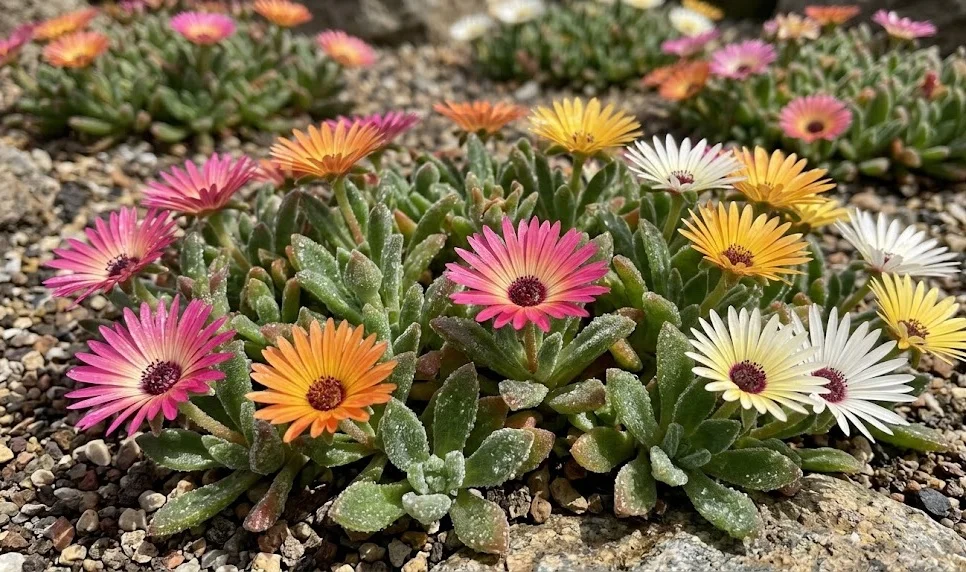

Livingstone daisy does not require heavy pruning, but light trimming and regular grooming can keep it attractive for longer. Its naturally low, spreading habit is part of its charm, so the aim is not to force a rigid shape. Instead, pruning should remove spent flowers, damaged stems, and weak growth that spoils the display or traps moisture. Done carefully, cutting back can refresh the plant without stressing it.
This plant is usually grown as an annual, so pruning should be practical rather than severe. It does not need the structural pruning used for shrubs or long-lived perennials. The most useful work is small, regular maintenance throughout the flowering season. A few minutes of grooming often prevents the need for drastic correction.
The fleshy stems and leaves should be handled gently. They can bruise, snap, or rot if damaged roughly. Clean cuts are better than torn tissue. Sharp scissors or small snips are useful when stems are crowded.
Timing matters when cutting back. Work is best done during dry weather so cut surfaces can heal quickly. Avoid trimming heavily before prolonged rain or during cold, damp periods. The plant recovers fastest when light is strong and growth is active.
Deadheading and routine grooming
Deadheading improves the appearance of Livingstone daisy, especially in containers and formal displays. Spent flowers can become papery, untidy, or damp after rain. Removing them keeps the planting fresh. It also directs the plant’s energy toward continued flowering rather than seed production.
More articles on this topic
Not every faded flower must be removed immediately. In informal gravel gardens, a few spent blooms may not matter. However, dense plantings benefit from regular cleaning because old flowers can trap moisture. Grooming is especially useful after rain, when petals may cling to foliage.
Deadheading should be done carefully near new buds. Pulling roughly can break tender stems. Pinching is possible when the flower stalk separates easily, but scissors give more control. Clean removal reduces wounds and keeps the plant neat.
Yellowing leaves and dead lower growth should also be removed. These parts often collect near the crown, where they can hold moisture. Removing them improves air movement and reduces disease risk. This is one of the most important maintenance tasks in humid weather.
Cutting back leggy or tired growth
Livingstone daisy may become leggy if light is insufficient or the plant has flowered heavily for a long period. Light cutting back can restore a tidier outline. The aim is to shorten weak stems and encourage fresher side growth. Severe cutting into a stressed plant should be avoided.
More articles on this topic
A moderate trim is usually safest. Remove only the longest, weakest, or most damaged stems at first. If the plant responds well, further light shaping can be done later. This staged approach reduces shock.
After trimming, watering should be thoughtful. If the soil is dry, a light but thorough watering can support recovery. If the soil is already moist, extra watering is unnecessary. Feeding should also be modest, because strong fertilizer can produce soft regrowth.
Plants recover best from cutting back in bright, mild conditions. In extreme heat, trimming can expose inner stems to stress. In cold or wet weather, cuts may heal slowly. Choosing the right moment is as important as the cut itself.
Pruning for health and end-of-season management
Pruning is also a disease-prevention tool. Removing damaged or decaying tissue prevents problems from spreading through the planting. This is particularly important in containers, where plants are close together. A clean plant is less likely to develop crown rot or fungal trouble.
If a stem is soft, dark, or slimy, it should be removed immediately. Cut back to firm, healthy tissue if possible. If the crown itself is affected, the whole plant may need to be discarded. Keeping a rotting plant in place can threaten its neighbors.
At the end of the season, pruning has limited value in cold climates. Frost will usually finish the plant, and removal is more sensible than cutting back. Healthy seed heads may be left briefly if seed collection is desired. Otherwise, the bed can be cleared and prepared for the next planting season.
In mild areas or protected containers, a light tidy-up before winter may be useful. Remove flowers, weak shoots, and dead leaves, but avoid hard pruning. The plant should enter the cool season compact and dry. Heavy cutting late in the year can weaken it when recovery conditions are poor.