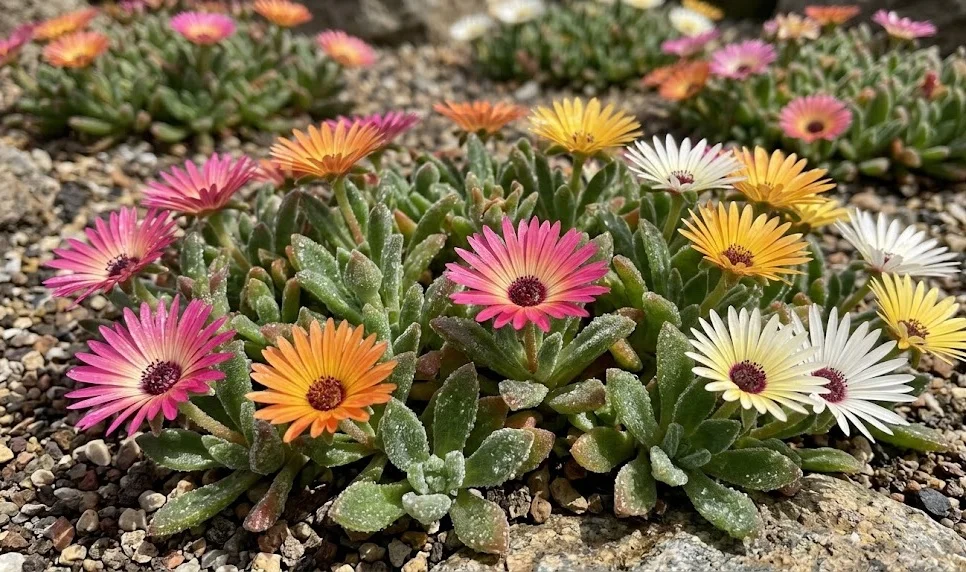

Livingstone daisy is generally a resilient annual when grown in sun and free-draining soil, but it can quickly suffer when conditions become damp, crowded, or poorly ventilated. Most serious problems are linked to excess moisture around the roots and crown rather than to aggressive pests. Prevention is therefore more important than rescue treatment. A healthy planting begins with the right site, careful watering, clean propagation, and regular inspection.
The plant’s succulent-like leaves are useful in dry weather but can become a liability in damp conditions. Soft tissues hold moisture, and damaged leaves can decay if air movement is poor. Diseases often start near the base, where wet soil and dead material collect. Keeping this area open and clean is a simple but effective practice.
Pests are usually secondary problems. Aphids, slugs, snails, and occasional sap-feeding insects may appear, especially on young or stressed plants. Severe infestations are more likely when plants are weak from poor growing conditions. Strong light, moderate feeding, and correct watering reduce the chance of pest damage.
Regular observation is the best diagnostic tool. A quick look at leaves, stems, flowers, and soil surface can reveal problems early. Small issues are easy to remove or correct before they spread. Waiting until the plant collapses usually leaves fewer options.
Root rot and crown rot
Root rot is the most important disease problem for Livingstone daisy. It develops when soil stays wet for too long and roots lose access to oxygen. The plant may wilt even though the soil is moist, because damaged roots can no longer take up water properly. This symptom often leads gardeners to water more, which makes the problem worse.
More articles on this topic
Crown rot affects the base of the plant. The crown may become soft, dark, and unstable. Leaves near the base may yellow, collapse, or detach easily. Once crown tissue has rotted, recovery is unlikely.
Prevention is based on drainage. The plant should be grown in gritty soil, raised beds, rock gardens, or containers with reliable drainage holes. Avoid planting it in low spots where rain collects. In wet climates, mineral mulch can help keep the crown drier than organic mulch.
If rot is noticed early, remove affected plants or damaged parts immediately. Do not compost badly diseased material if it is slimy or foul-smelling. Improve air movement and reduce watering for the remaining plants. In containers, replacing saturated compost may be necessary if several plants are affected.
Fungal leaf and stem problems
Leaf spotting can occur during humid or rainy weather. Spots may appear as pale, brown, or dark marks on leaves that stay wet for long periods. While minor spotting is usually cosmetic, it can spread if conditions remain poor. Good spacing reduces the risk considerably.
More articles on this topic
Stem decay may follow mechanical damage or persistent moisture. A broken or shaded stem can become soft and begin to rot. Decay may then move into nearby healthy tissue. Removing damaged stems promptly helps prevent spread.
Overhead watering increases the likelihood of fungal issues. Water directed at the soil is safer than spraying foliage and flowers. If overhead irrigation cannot be avoided, morning watering is best. Leaves should dry before evening whenever possible.
Hygiene is important in dense plantings. Remove fallen petals, dead leaves, and old flowers that sit on the crown. These materials hold moisture and can become a starting point for disease. Clean plants dry faster and remain attractive longer.
Aphids and sap-feeding insects
Aphids may appear on tender shoots and flower buds. They feed by sucking sap, which can distort young growth. Their sticky honeydew can also attract sooty mold. Small colonies are common and can often be controlled before they cause serious damage.
Inspection should focus on new growth. Aphids often hide under leaves or cluster around buds. Early detection allows simple physical removal. A firm spray of water can dislodge many of them, provided the plant is allowed to dry afterward.
Biological control is useful in gardens that support beneficial insects. Ladybirds, lacewings, hoverfly larvae, and parasitic wasps can reduce aphid numbers naturally. Avoid unnecessary broad-spectrum insecticides, as they may harm these allies. A diverse garden usually has fewer persistent aphid problems.
If treatment is needed, mild insecticidal soap can be used carefully. It should contact the insects directly and should be tested on a small area first. Applications are best made in cool conditions rather than strong sun. Repeated inspection matters more than one heavy treatment.
Slugs, snails, and physical damage
Slugs and snails can damage young Livingstone daisy plants, especially shortly after planting. They chew leaves and may destroy small seedlings overnight. Damage is most common in damp weather or in heavily mulched beds. Once plants become larger and conditions dry, pressure often decreases.
Prevention starts with garden hygiene. Remove hiding places such as dense weeds, boards, and decaying leaves near the planting. Watering in the morning rather than evening can make the area less attractive overnight. Gravel mulch may also reduce movement around the plants.
Barriers and traps can help in small plantings. Copper tape on containers, raised benches, and hand-picking after rain are practical methods. Wildlife-friendly gardens may also benefit from birds, frogs, and ground beetles. Control is most successful when several mild methods are combined.
Physical damage from wind, pets, or foot traffic can also invite disease. Broken succulent tissue decays easily in damp weather. Plants should be placed away from busy paths where they will be brushed repeatedly. Damaged parts should be trimmed cleanly rather than left to rot.
Preventive care and plant resilience
The strongest disease prevention is correct culture. Full sun, lean soil, and good drainage keep plants compact and dry. Crowded, shaded, overfed plants are much more vulnerable. Prevention should be built into the planting plan rather than added after problems appear.
Spacing is often underestimated. Dense planting may look impressive at first, but it traps humidity near the foliage. A little room between plants allows air to move and helps flowers dry after rain. Healthy spacing also makes inspection and grooming easier.
Water management should change with the weather. During cloudy, cool, or rainy periods, irrigation should be reduced or stopped. During hot, dry spells, water deeply but only when the soil has dried enough. This flexibility keeps roots healthy and prevents stress.
Finally, plants should be replaced when they are beyond recovery. Annual displays are meant to look fresh and colorful. A badly rotted or pest-ridden plant can affect its neighbors and spoil the bed. Removing weak plants promptly is often the most professional decision.