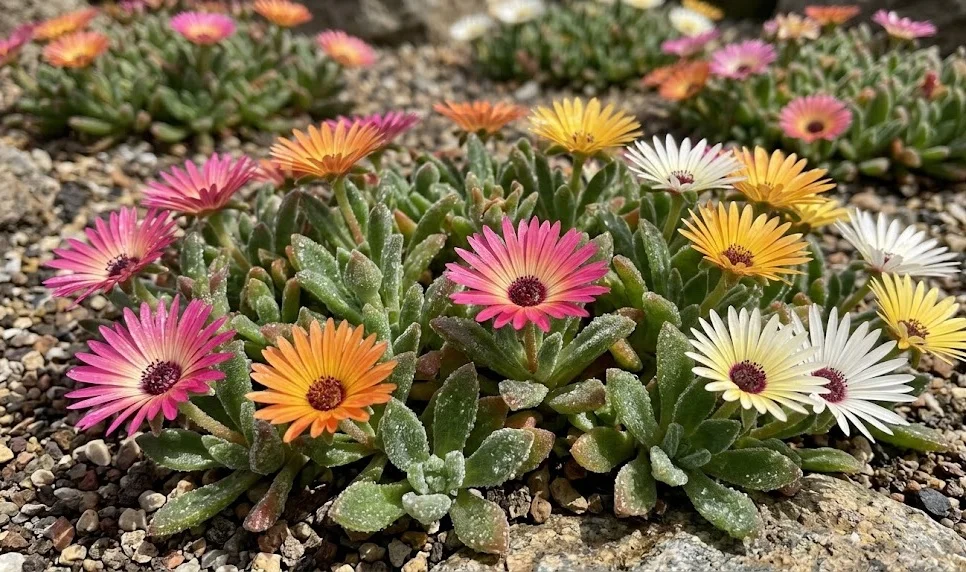

Livingstone daisy thrives when water and nutrients are supplied with restraint, not abundance. Its fleshy leaves and dry-climate character mean that constant moisture can do more harm than a short dry spell. Feeding also needs a light hand, because rich nutrition may encourage soft growth at the expense of flowers. The best routine keeps the roots active, the crown dry, and the plant compact enough to flower heavily in full sun.
A well-grown plant should look firm, low, and colorful. If it becomes loose, pale, or overly leafy, watering and feeding are often part of the problem. The plant does not respond well to the same routine used for thirsty summer bedding plants. It needs a rhythm of moisture followed by air around the roots.
The correct routine depends on where the plant is grown. A container dries faster than a bed, while sandy soil dries faster than loam. Weather also changes the watering requirement from week to week. Observation is more reliable than a fixed calendar schedule.
The guiding principle is simple. Water deeply enough to reach the root zone, then allow the soil to dry slightly before watering again. Feed lightly only when growth and flowering justify it. Avoid anything that leaves the plant soft, wet, or crowded.
Understanding the plant’s water needs
Livingstone daisy stores moisture in its leaves, which helps it tolerate short periods of dryness. This storage ability does not mean the plant should be neglected completely. Young plants and container specimens still need regular checking. However, it does mean they should not be watered automatically every day.
More articles on this topic
The roots need both water and oxygen. When soil remains saturated, oxygen is pushed out and roots begin to suffer. Damaged roots cannot support flowering, even if the top of the plant still looks green for a while. This is why overwatering often appears as sudden collapse rather than gradual wilting.
Wilting should be interpreted carefully. A plant may droop briefly in hot midday sun and recover in the evening. That kind of temporary stress does not always require immediate watering. If the soil is still moist below the surface, extra water may create more trouble.
Real drought stress usually shows as persistent wilting, dull leaves, and dry soil at root depth. In that case, a thorough watering is useful. Water should be applied to the soil rather than sprayed over the flowers. Wet flowers and leaves are more likely to mark, close, or decay in humid weather.
Watering in beds and borders
In open ground, newly planted Livingstone daisies need careful watering until roots spread. The first two weeks after planting are especially important. The soil should be kept lightly moist but not wet. Once the plants begin to grow, watering intervals can be extended.
More articles on this topic
Established plants in well-prepared soil often need less water than expected. Rainfall may be enough in mild periods. During hot, dry weather, a deep watering once the soil has dried is usually better than frequent shallow watering. Deep watering encourages roots to explore a wider soil volume.
Morning is the best time to water. It allows the soil surface and foliage to dry during the day. Evening watering can be acceptable in very hot weather, but wet crowns overnight should be avoided. The plant is more vulnerable to rot when nights are cool and damp.
Soil type changes the routine. Sandy soil may require more frequent watering because it drains quickly. Loam holds moisture longer and should be checked before irrigation. Clay soil needs special caution, because it may appear dry on top while remaining wet around the roots.
Watering in pots and balcony boxes
Container-grown plants need closer monitoring because their root space is limited. A shallow bowl in full sun can dry very quickly during warm weather. At the same time, a decorative pot without drainage can kill the plant by holding water. Drainage holes are not optional for this species.
The growing mix should be open and gritty. A standard multipurpose compost can be improved with perlite, coarse sand, or fine grit. This helps water move through the pot and keeps air in the root zone. A dense, peat-heavy mix can stay too wet after repeated watering.
Water should be applied until it begins to leave the drainage holes. This confirms that the full root ball has been moistened. After that, excess water should drain away freely. A pot standing in water for hours is at risk of root damage.
Small containers may need watering more often, but the same dry-down principle applies. Check the compost with a finger before watering again. If it feels cool and moist below the surface, wait. If it is dry at root depth and the plant is losing firmness, water thoroughly.
Feeding for flowers, not soft growth
Livingstone daisy is not a heavy feeder. In garden soil, a light addition of compost or a modest balanced fertilizer before planting is often enough. The plant naturally flowers well in lean conditions when light is strong. Heavy feeding can reduce the neat habit that makes it attractive.
Nitrogen is the nutrient that most often causes problems when overused. Too much nitrogen encourages leafy growth and soft stems. Soft plants are less resistant to poor weather and may flower less freely. A fertilizer with moderate nitrogen and adequate potassium is usually more suitable.
Container plants may benefit from occasional feeding because nutrients wash out with watering. A diluted liquid feed every few weeks during active flowering can maintain performance. The solution should be weaker than for more vigorous bedding plants. Feeding should stop or be reduced if the plant becomes lush and floppy.
Feeding should never be used to compensate for poor light or wet soil. If the plant is not flowering because it is shaded, fertilizer will not solve the problem. If roots are struggling in saturated compost, feeding may make stress worse. Correct the growing conditions first, then feed only if needed.
Seasonal adjustments and warning signs
In spring, watering should be cautious because temperatures are lower and evaporation is slower. Young plants need support, but they also need air around the roots. Cold wet compost is particularly risky. Waiting for warmth before planting reduces many early watering problems.
In summer, the routine becomes more active. Sun, heat, and wind increase water use, especially in pots. Even drought-tolerant plants can suffer if containers dry completely for too long. Regular checking allows the plant to remain productive without being overwatered.
In late summer and autumn, growth may slow naturally. Watering should be reduced as temperatures fall and days shorten. Feeding should also become lighter or stop entirely. Pushing growth late in the season often produces weak tissue that declines quickly in damp weather.
Warning signs should be read as a whole. Yellowing lower leaves, a soft crown, and sour-smelling compost suggest too much moisture. Pale leaves and weak flowering in rich soil may indicate overfeeding or insufficient light. Firm leaves, compact growth, and repeated flower production show that the balance is right.