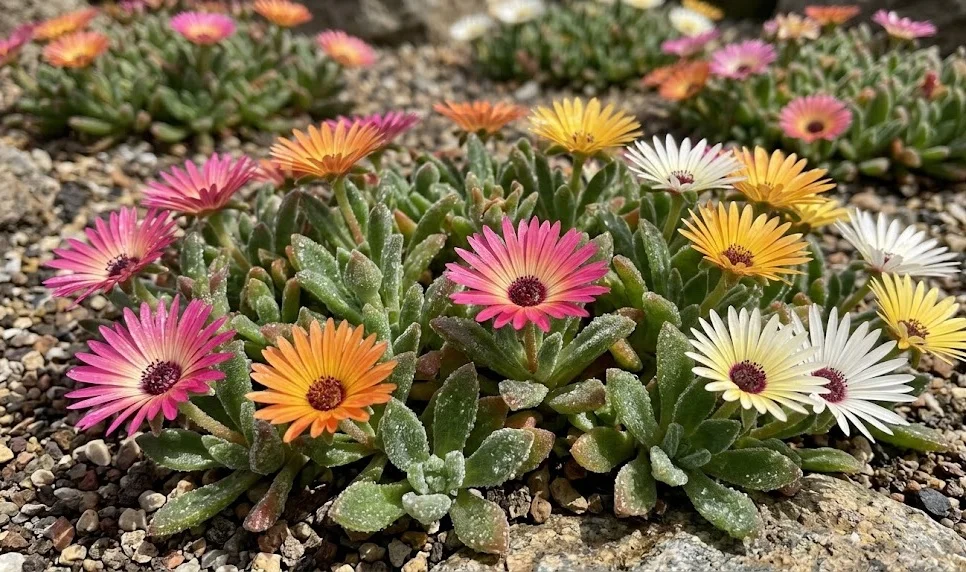

Livingstone daisy is easiest to grow when planting and propagation are planned around warmth, light, and excellent drainage. Its seeds are fine, its young plants are sensitive to cold, and its roots dislike wet soil, so timing and soil preparation make a clear difference. Once established, however, it can create a vivid carpet of flowers with relatively little effort. Successful propagation depends less on complicated techniques and more on giving seedlings the dry, bright conditions they naturally prefer.
The plant is commonly raised from seed because seed-grown plants offer a wide range of colors and are economical for mass planting. Seedlings are usually compact and quick to develop when they receive sufficient light. They should not be overwatered during the early stages, as damping-off can occur in stale, wet compost. Clean trays, fresh growing medium, and good ventilation are important.
Purchased young plants are also useful, especially for gardeners who want fast results. They should be chosen carefully, with firm stems, healthy leaves, and no signs of yellowing at the base. Plants that are already stretched or sitting in soaked compost may struggle after transplanting. A compact young plant with visible buds is usually a better investment than a large, soft specimen.
Planting out should be delayed until frost risk has passed. Livingstone daisy is not a plant for cold spring soil or exposed frosty nights. Hardening off is important when plants have been raised indoors or under glass. Gradual exposure to outdoor conditions helps prevent shock and improves establishment.
Starting from seed
Seeds can be sown indoors several weeks before the expected planting season. Use a free-draining seed compost and avoid burying the seeds too deeply. A light covering of fine compost or vermiculite is usually enough. The seed tray should be kept bright, warm, and evenly but lightly moist.
More articles on this topic
Excess moisture is the main danger during germination. The compost should never become waterlogged or sour. Watering from below can reduce disturbance and keep the surface from becoming compacted. Once seedlings appear, ventilation should be improved to prevent fungal issues.
Seedlings need strong light soon after germination. Without it, they quickly stretch and become weak. A bright windowsill, greenhouse bench, or grow-light setup can help maintain compact growth. Turning trays regularly prevents seedlings from leaning strongly in one direction.
Pricking out should be done gently when seedlings are large enough to handle. Their roots are fine, so rough handling can set them back. Each seedling can be moved into a small pot or cell with gritty compost. After transplanting, they should be watered lightly and kept out of harsh sun for a short recovery period.
Preparing the planting area
The planting site should be prepared before young plants are ready to go outside. Soil should be loosened and improved for drainage rather than enriched heavily. If the ground is clayey, coarse grit or fine gravel can help create a better root environment. Raised planting areas are especially useful where winter or spring rain leaves the soil heavy.
More articles on this topic
Weeds should be removed thoroughly before planting. Livingstone daisy stays low, so young plants can be overwhelmed by aggressive weeds. A clean bed also improves air circulation around the crown. Removing weed roots at the start reduces maintenance later.
Spacing depends on the desired effect and local growing conditions. Closer spacing gives faster coverage but increases humidity around the plants. Wider spacing improves air movement and reduces disease pressure. In most decorative beds, moderate spacing creates a good balance between quick impact and plant health.
The soil surface should be level but not compacted. A firm planting surface supports roots, while loose, open texture allows drainage. Avoid creating deep planting holes that collect water around the root ball. The root crown should sit at the same level as it did in the pot.
Transplanting young plants
Transplanting is best done on a mild day rather than during extreme heat. Water the young plants before planting so the root ball holds together. The planting hole should be only slightly wider than the root ball. After setting the plant in place, soil should be firmed gently without crushing the roots.
The first watering after planting is important. It settles soil around the roots and removes air pockets. However, it should not turn the area into mud. A single thorough but controlled watering is better than repeated soaking.
Newly planted Livingstone daisies may pause briefly before growing strongly. This is normal as roots adjust to the new soil. During this period, the plants should be protected from drought but not kept constantly wet. Once fresh growth appears, watering can become less frequent.
Mulching should be chosen carefully. Organic mulches that hold moisture around the crown may increase rot risk. Mineral mulch, such as gravel or fine stone, is usually more suitable. It keeps flowers clean, reflects heat, and supports the dry-garden character of the planting.
Propagation by cuttings and self-sowing
Although seed propagation is most common, cuttings can sometimes be taken from healthy non-flowering shoots. This method is more useful when preserving a particular color form. Cuttings should be short, firm, and taken from disease-free plants. Lower leaves can be removed so the cutting sits cleanly in the medium.
A gritty propagation mix is important for cuttings. The medium should be slightly moist but never wet. High humidity may help briefly, but stagnant humidity encourages rot. Gentle warmth and bright indirect light support rooting.
Self-sowing can occur where conditions are favorable. Seedlings may appear in gravel, cracks, or open soil after the parent plants finish flowering. These volunteer plants can be left in place if they are well positioned. They can also be lifted carefully while small and moved to a better spot.
Self-sown plants may not match the parent exactly. Mixed colors can appear, which is often attractive in informal gardens. If a precise color scheme is needed, controlled seed sowing is more reliable. For naturalistic displays, self-sowing can add charm and reduce annual replanting.