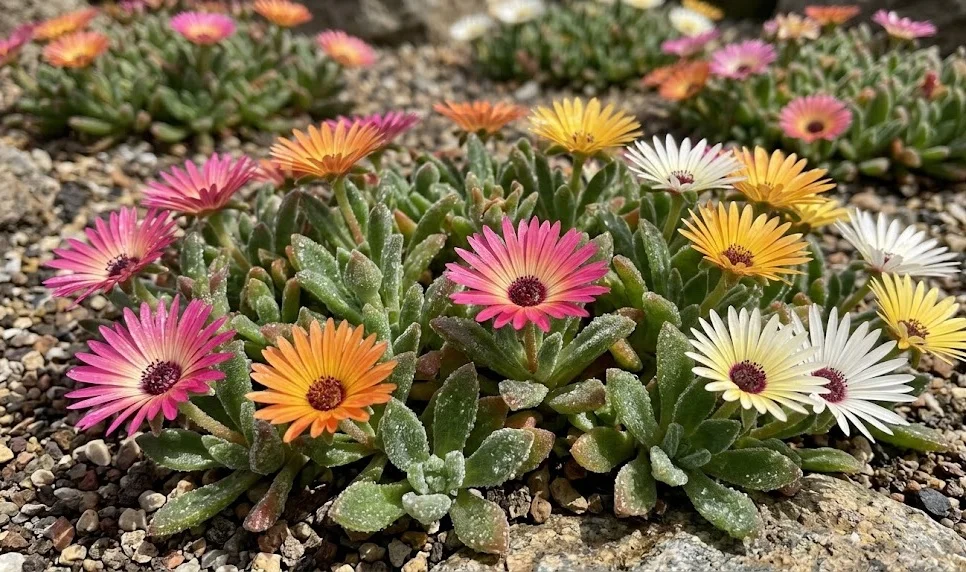

Livingstone daisy is one of those annual flowers that looks delicate at first glance but reveals a surprisingly tough character when grown in the right place. Its sparkling, daisy-like blooms open widely in strong light and close when conditions become dull, making the plant feel almost responsive to the rhythm of the day. Gardeners value it for hot borders, rock gardens, edging, containers, and gravelly beds where many softer annuals struggle. Good care begins with understanding that this plant prefers sun, lean soil, and careful watering rather than constant attention.
Livingstone daisy is closely associated with dry, open habitats, so it performs best when cultivation imitates those conditions. It has fleshy leaves that store moisture, which helps it cope with short dry spells once established. This feature also means the plant dislikes heavy, wet soil, especially around the crown. A healthy specimen usually looks compact, firm, and brightly colored rather than lush and overly leafy.
The plant is often grown as a seasonal annual in temperate gardens. It flowers generously during warm, sunny periods and gives the strongest display when temperatures are pleasant rather than excessively cold or persistently wet. In mild regions it may last longer, but in colder climates it is normally replaced after frost. Treating it as a high-performance annual makes care simpler and more realistic.
Its main ornamental strength is mass effect. A single plant can be charming, yet a group of plants creates a carpet of color that changes with the light. Mixed shades of pink, orange, yellow, white, red, and purple can make a border look lively without complicated design. For the best result, the plant should be placed where the flowers can be seen in direct sun during the brightest part of the day.
Soil and site conditions
Livingstone daisy needs sharply drained soil more than rich soil. Sandy, gritty, or gravelly garden soil is usually better than heavy clay. If the planting area holds water after rain, drainage should be improved before planting. Raised beds, rock gardens, and containers often provide the easiest solution.
More articles on this topic
A moderately poor soil can actually encourage a neater plant. When the soil is too fertile, the stems may become soft and the plant can produce more foliage than flowers. Excess nitrogen also increases vulnerability to rot and weak growth. The goal is not to starve the plant but to avoid pushing it into lush, watery growth.
Soil structure matters as much as nutrient content. Roots need oxygen around them, and compacted soil limits both drainage and root development. Loosening the soil before planting helps young plants establish quickly. Adding coarse sand, fine gravel, or mineral grit can improve the physical condition of dense beds.
The best site is open, warm, and exposed to plenty of sun. Livingstone daisy should not be tucked under tall perennials or shrubs where it receives only broken light. It can tolerate wind better than many soft annuals if the soil is not too dry at planting time. Good air movement also helps reduce fungal problems in damp weather.
Watering routine and moisture control
Watering should be steady during establishment but restrained after the plant begins active growth. Young plants need enough moisture to settle their roots into the soil. Once they are established, they should be allowed to dry slightly between waterings. Constant wetness is one of the most common reasons for failure.
More articles on this topic
In containers, watering requires closer attention because pots dry faster than garden beds. The surface may look dry while moisture remains deeper in the compost, so it is worth checking below the top layer. A pot with drainage holes is essential, because standing water quickly damages the roots. Saucers should not remain full after watering or rain.
During hot spells, Livingstone daisy may need more frequent watering, especially in small containers. Even then, the aim is deep, occasional watering rather than light daily splashing. Wetting only the surface encourages shallow roots and can leave the plant stressed in heat. A thorough watering followed by a dry interval is usually healthier.
Rainy periods require the opposite approach. If plants are in pots, they can be moved to a more sheltered position during prolonged wet weather. In beds, avoid extra irrigation when the soil is already moist. The leaves may tolerate moisture briefly, but the crown and roots should never sit in saturated conditions for long.
Light, temperature, and flowering behavior
Strong sunlight is essential for abundant flowering. Livingstone daisy opens its blooms most fully in bright conditions, which is why it performs so well in sunny patios and open beds. In shade, the flowers may remain partly closed and the plant can look disappointing. The more reliable the light, the more reliable the display.
Temperature also influences growth and flowering. The plant appreciates warmth but does not thrive in cold, damp soil. Planting too early in spring can lead to slow growth or losses after chilly nights. It is better to wait until the soil has warmed and frost risk has passed.
Extreme heat can temporarily reduce flower quality, especially if the roots are dry. In very hot climates, morning sun with slight afternoon protection may help maintain better appearance. However, deep shade should still be avoided. The balance is bright exposure with enough moisture at the root zone to prevent severe stress.
Cloudy weather changes the character of the plant. Flowers may close or open only partially, which is normal and not necessarily a sign of poor health. The display returns when sunlight improves. This daily and seasonal movement is part of the plant’s natural behavior.
Feeding and seasonal maintenance
Livingstone daisy needs only light feeding in most gardens. A small amount of balanced fertilizer at planting can help young plants establish, but repeated heavy feeding is unnecessary. Too much fertilizer often produces weak, sprawling growth. In fertile soil, no additional feeding may be needed at all.
For containers, nutrients are used up faster because watering leaches them from the compost. A diluted liquid feed every few weeks during active flowering can be useful. The strength should be modest rather than strong. A low to moderate feeding routine supports flowers without making the plant soft.
Deadheading is not always essential, but it can improve appearance. Removing faded flowers prevents the planting from looking tired and may encourage more blooms. It also reduces the chance of unwanted seedlings in mild climates. Use clean fingers or small scissors to avoid damaging nearby buds.
General grooming keeps the plant compact. Any yellowing, rotting, or damaged stems should be removed promptly. This is especially important after wet weather, when decaying tissue can spread problems. A well-groomed plant dries faster and remains more attractive through the season.
Container care and design use
Livingstone daisy is excellent in containers because its low habit suits bowls, troughs, balcony boxes, and shallow planters. The container must drain freely, and a gritty compost is preferable to a moisture-retentive mix. A layer of gravel on the surface can reduce splashing and keep the crown drier. The plant looks especially natural in terracotta, stone, and simple modern planters.
Spacing in containers should allow each plant to spread without becoming crowded. Dense planting gives quick impact but can reduce air circulation. If several plants are used together, they should be monitored for damp patches and dead material. Good spacing helps each plant keep its rounded shape.
In mixed containers, Livingstone daisy should be paired with plants that enjoy similar dry, sunny conditions. Drought-tolerant annuals, small grasses, and silver-leaved plants often make good companions. It should not be combined with moisture-loving species that need frequent watering. Mixed containers work best when all plants share the same basic needs.
In garden design, it is useful as a front-of-border plant. It softens hard edges, brightens gravel gardens, and fills gaps between stones. Because it stays relatively low, it should not be hidden behind taller plants. Its strongest visual role is close to paths, patios, and seating areas where the open flowers can be appreciated.
Common care mistakes
The most frequent mistake is overwatering. Because the plant has succulent-like foliage, it stores water better than many flowering annuals. Gardeners who water it like a bedding begonia or petunia often create conditions for root rot. The soil should be allowed to breathe between waterings.
Another mistake is planting in heavy shade. Livingstone daisy may survive in reduced light, but it will not give its characteristic floral display. The flowers need bright sun to open well. A shaded plant often appears healthy enough in leaf but poor in bloom.
Overfeeding can also reduce quality. Rich feeding may seem helpful, yet it often produces loose stems and fewer flowers. A compact, slightly lean plant is usually more floriferous and weather-resistant. Feeding should support natural growth rather than force it.
Planting too early is another common problem in cooler regions. Cold, wet soil can damage young roots before the plant has a chance to establish. Waiting for stable warmth usually gives better results than rushing spring planting. With this plant, patience at the start often means a stronger display later.
Keeping plants attractive until the end of the season
As the season progresses, plants may become uneven or tired. Regular inspection helps catch problems before the whole planting declines. Removing spent blooms, dead leaves, and weak stems can refresh the display. Small maintenance tasks are more effective than severe rescue work later.
If plants become leggy, a light trim can encourage neater growth. Cutting back should be moderate, because severe pruning may stress the plant in hot weather. After trimming, water lightly if the soil is dry, but do not soak the plant. Recovery is fastest in bright, mild conditions.
Late-season care depends on the climate. In cool autumn weather, flowering naturally slows as light and warmth decrease. In frost-prone areas, the plant should be enjoyed as a seasonal annual rather than forced to continue. In milder areas, it may keep flowering until prolonged cold or wet conditions end the display.
A successful planting of Livingstone daisy is built on restraint. Give it sun, drainage, modest fertility, and careful watering, and it will usually reward the garden with intense color. It does not need constant pampering, but it does need the right environment. When those basics are respected, the plant becomes one of the most reliable choices for dry, bright summer spaces.