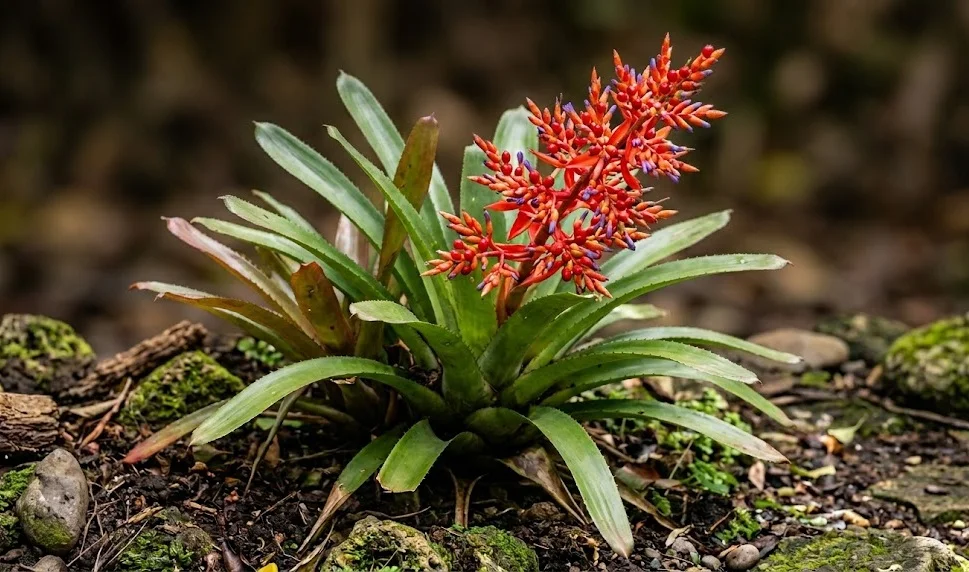

Growing the coral berry bromeliad successfully requires a deep understanding of its tropical origins and specific biological needs. This striking epiphyte offers a unique aesthetic to any indoor collection with its vibrant foliage and distinctive berry-like inflorescence. Achieving peak health for this plant involves more than just occasional attention; it requires consistent environmental management. By following professional guidelines, enthusiasts can ensure their specimens thrive for several years while producing healthy offshoots.
Creating the ideal indoor environment
The foundation of successful care begins with replicating the humid, dappled shade of a tropical rainforest floor. These plants are naturally epiphytic, meaning they often grow on trees rather than in traditional soil, which dictates their preference for high air circulation. Maintaining a consistent temperature between 18 and 24 degrees Celsius is crucial for steady growth throughout the year. Avoid placing the plant near cold drafts or heating vents, as sudden temperature fluctuations can cause significant stress to the foliage.
Humidity plays a vital role in the overall vitality of the coral berry bromeliad, as it absorbs much of its moisture through its leaves. In standard household environments, the air is often too dry, especially during the winter months when heating systems are active. You can increase local humidity by using a pebble tray filled with water or a dedicated room humidifier. Regular misting with distilled water also helps, but it should not be the only method used to maintain the necessary moisture levels in the atmosphere.
Air quality and movement are frequently overlooked aspects of bromeliad care that can impact long-term health. While the plant enjoys high humidity, stagnant air can lead to fungal issues and rot within the central reservoir. Providing a gentle breeze from a distant fan or ensuring the room is well-ventilated will prevent many common physiological problems. It is essential to strike a balance where the air remains moist but never becomes heavy or oppressive for the plant’s respiratory processes.
Choosing the right location within your home or greenhouse will dictate how often you need to perform maintenance. South-facing windows with sheer curtains often provide the perfect filtered light that these plants crave to maintain their leaf color. If the plant is kept in a spot that is too dark, the leaves may lose their luster and become elongated or weak. Conversely, direct midday sun can scorch the delicate tissues, leading to permanent brown patches that diminish the plant’s aesthetic value.
More articles on this topic
Understanding leaf structure and function
The physical anatomy of the coral berry bromeliad is specifically adapted to capture and store water in a central “tank” or “cup.” This reservoir is formed by the overlapping leaf bases and serves as the primary source of hydration and nutrient uptake. It is vital to keep this cup filled with clean, fresh water at all times to ensure the plant remains turgid. Over time, organic matter can accumulate in the tank, so it should be flushed out periodically to prevent stagnant conditions.
The leaves themselves are covered in tiny, specialized scales known as trichomes which are responsible for absorbing water and minerals from the air. These structures give some bromeliads a slightly silvery or matte appearance and are essential for the plant’s survival in nutrient-poor environments. Wiping the leaves with a damp cloth can help remove dust that might clog these trichomes and hinder the plant’s ability to breathe. Never use commercial leaf shine products, as the chemicals can damage these sensitive absorption points and suffocate the plant.
Observation of the leaf color and texture provides immediate feedback on the plant’s current health status. Healthy leaves should feel firm to the touch and exhibit a deep green or reddish-bronze hue depending on the specific variety. If the leaves start to feel soft or appear pale, it may indicate a lack of light or an issue with the watering regime. Early detection of these subtle changes allows for quick adjustments before the plant suffers any lasting structural damage or decline.
As the plant matures, the lower leaves may naturally age and begin to turn brown or dry out at the tips. This is a normal part of the plant’s life cycle and does not necessarily indicate a disease or a pest problem. You can carefully trim these dead portions using sterilized shears to keep the specimen looking tidy and professional. Always cut at an angle to mimic the natural shape of the leaf and avoid cutting into the healthy green tissue whenever possible.
More articles on this topic
Temperature and climate control
Maintaining a stable thermal environment is perhaps the most critical factor in preventing sudden plant collapse or leaf drop. The coral berry bromeliad prefers a “warm-room” climate where the nighttime temperature does not fall significantly below 16 degrees Celsius. If the temperature drops too low for extended periods, the plant’s metabolic processes slow down significantly, making it prone to rot. Professional growers often use heat mats or climate-controlled cabinets to ensure these tropical requirements are met during the colder months.
During the summer heat, it is equally important to protect the plant from overheating, which can lead to rapid dehydration. If temperatures rise above 30 degrees Celsius, the plant will require increased humidity and more frequent flushing of its central reservoir. You may notice the leaves curling slightly inward as a defense mechanism to reduce the surface area exposed to the hot air. Providing extra shade and improving ventilation during these peaks will help the plant navigate high-heat periods without suffering from heat stress.
Seasonal transitions require careful monitoring of the microclimate surrounding your bromeliad collection. In autumn, as the days shorten and the outdoor temperatures drop, the plant will naturally enter a slower growth phase. You should adjust your care routine by slightly reducing the amount of water provided to the soil while keeping the central tank filled. This transition period is when many plants are most vulnerable to shock, so making gradual changes is the key to a successful seasonal shift.
The interaction between temperature and light also affects the plant’s growth rate and its ability to flower. Higher temperatures generally require more light to support the increased metabolic activity, whereas cooler environments allow the plant to tolerate lower light levels. If you are growing your coral berry bromeliad under artificial lights, you must ensure that the heat generated by the bulbs does not dry out the foliage. Keeping a thermometer near the plant helps you stay informed about the actual conditions it is experiencing throughout the day and night.
Routine maintenance tasks
A consistent maintenance schedule is the hallmark of a professional gardener and ensures that no detail of the plant’s health is overlooked. Once a week, you should inspect the central tank to check the water level and the clarity of the liquid inside. If the water appears cloudy or has a foul odor, it is time to tip the plant over or use a turkey baster to remove the old water. Refilling the tank with fresh rainwater or distilled water will keep the core of the plant healthy and free from bacterial growth.
Dusting the leaves should be a regular part of your routine to ensure maximum photosynthetic efficiency. Use a soft, lint-free cloth dampened with lukewarm water to gently wipe both the upper and lower surfaces of the foliage. This process not only keeps the plant looking beautiful but also allows you to check for early signs of pests like scale or mealybugs. Many growers perform this task every two weeks to keep the plant’s specialized trichomes functioning at their peak capacity.
Soil inspection is another vital task, even though the plant relies heavily on its central reservoir for hydration. The potting medium should remain airy and slightly damp, but never saturated or soggy to the point of being anaerobic. Every few weeks, gently poke the surface of the substrate to ensure it hasn’t become overly compacted or hydrophobic. If the soil seems to be breaking down or smells sour, it may be an indication that a repotting session is required in the near future.
The removal of spent flower stalks is necessary once the vibrant inflorescence has finally faded and turned brown. Use a sharp, sterilized knife or scissors to cut the stalk as close to the base as possible without damaging the surrounding leaves. After the plant has flowered, it will eventually stop producing new leaves from the center and redirect its energy toward producing offsets. Recognizing this shift in the plant’s life cycle allows you to adjust your expectations and care focus toward the next generation of growth.
Seasonal adjustments in care
As the natural light levels change throughout the year, the placement of your coral berry bromeliad may need to be adjusted. In the winter, moving the plant closer to a window can compensate for the shorter days and lower sun angle. During the peak of summer, you might need to move it further away or add a sheer curtain to prevent leaf burn from the intense UV rays. Monitoring these light shifts ensures that the plant receives the optimal energy input needed for maintaining its striking foliage colors.
Fertilization needs also fluctuate with the seasons, following the natural growth patterns of the tropical environment. During the active growing season from spring through early autumn, a light application of balanced fertilizer can be beneficial. In the dormant winter months, it is best to cease all fertilization entirely to avoid a buildup of salts in the soil or the central tank. Over-fertilizing during a slow growth period can lead to “leggy” growth and weakened leaf structures that are more susceptible to damage.
Watering frequency should be dialed back as the evaporation rate decreases during the cooler parts of the year. While the central tank must always contain water, the soil surrounding the roots can be allowed to dry out a bit more than usual. This practice prevents the roots from sitting in cold, wet medium, which is the leading cause of root decay in indoor bromeliads. Always use water that has reached room temperature to avoid shocking the plant’s sensitive vascular system during winter applications.
Humidity management becomes a significant challenge when indoor heating systems are running, often dropping levels below 30 percent. You may need to increase the frequency of misting or ensure your humidifier is running consistently to protect the leaf tips from browning. Grouping plants together can also create a beneficial microclimate where the collective transpiration helps maintain higher local humidity. These small adjustments are crucial for keeping the coral berry bromeliad in “show-quality” condition throughout the entire year.
Long-term health and vitality
Ensuring the long-term survival of a coral berry bromeliad involves planning for its eventual transition from a single plant to a colony. Since individual rosettes only bloom once in their lifetime, the production of offsets, or “pups,” is the plant’s way of regenerating. Encouraging this process requires maintaining high health standards during the mother plant’s peak flowering and post-flowering stages. A healthy mother plant will often produce multiple pups, ensuring that your collection continues to grow and expand over the years.
Monitoring the root system every year or two is a good practice for long-term health, even if the plant doesn’t seem to need a larger pot. Over time, the organic components of the potting mix, like bark or peat, will decompose and lose their ability to hold air. If the roots appear dark and mushy instead of firm and light-colored, the plant needs fresh substrate immediately to recover. Professional-grade bromeliad mixes are designed to resist rapid decomposition and provide the drainage necessary for epiphytic roots.
Consistent water quality is a major factor in the long-term appearance of the leaves and the health of the central tank. The minerals found in tap water, such as calcium and chlorine, can leave white deposits on the foliage and eventually damage the plant’s tissues. Using rainwater, reverse osmosis water, or distilled water prevents this mineral buildup and keeps the plant’s absorption points clear. This attention to detail pays off in the form of pristine, vibrant leaves that remain beautiful for the entire life of the rosette.
Finally, keeping a record of your plant’s growth, flowering times, and any issues encountered can be incredibly helpful for long-term success. Noticing that a plant struggled during a specific month can help you proactively change your care routine for the following year. Gardening is a continuous learning process, and the coral berry bromeliad is an excellent teacher of tropical ecology. By observing the plant closely and responding to its needs, you develop the intuition necessary to manage a truly professional botanical collection.
Aesthetic and decorative considerations
The coral berry bromeliad is prized not only for its botanical interest but also for its significant decorative value in interior design. Its architectural form and glossy leaves make it a perfect focal point on a tabletop, shelf, or as part of a larger indoor garden. To maximize its visual impact, consider the container choice, ensuring it provides adequate drainage while complementing the plant’s colors. A simple, modern pot often highlights the complex patterns and textures of the bromeliad’s foliage and inflorescence.
When integrating this plant into a room, think about the backdrop and how it interacts with the plant’s silhouette. Darker backgrounds can make the bright green or reddish leaves pop, while a lighter setting emphasizes the plant’s elegant shape. Because the coral berry bromeliad is relatively slow-growing, it maintains its size and shape for a long time, making it a reliable element in a curated space. You can also mount the plant on a piece of cork or driftwood to showcase its natural epiphytic growth habit.
The stunning “berries” that appear after the flowering phase provide a long-lasting splash of color that can persist for several months. These small, globe-like fruits are often a brilliant shade of orange or red and create a beautiful contrast against the green foliage. As an expert, you should appreciate this phase of the plant’s life as much as the bloom itself, as it represents the peak of its reproductive cycle. Keeping the plant in a prominent location during this time allows you and your guests to enjoy the unique botanical display.
Proper spacing between your bromeliads and other houseplants is important for both health and aesthetics. Crowding plants too closely can restrict air circulation and make it easier for pests to spread from one specimen to another. Leaving enough room for each plant to “breathe” ensures that the individual form of the coral berry bromeliad is fully visible and appreciated. A well-spaced collection looks more professional and allows for easier access when performing routine maintenance or detailed inspections.