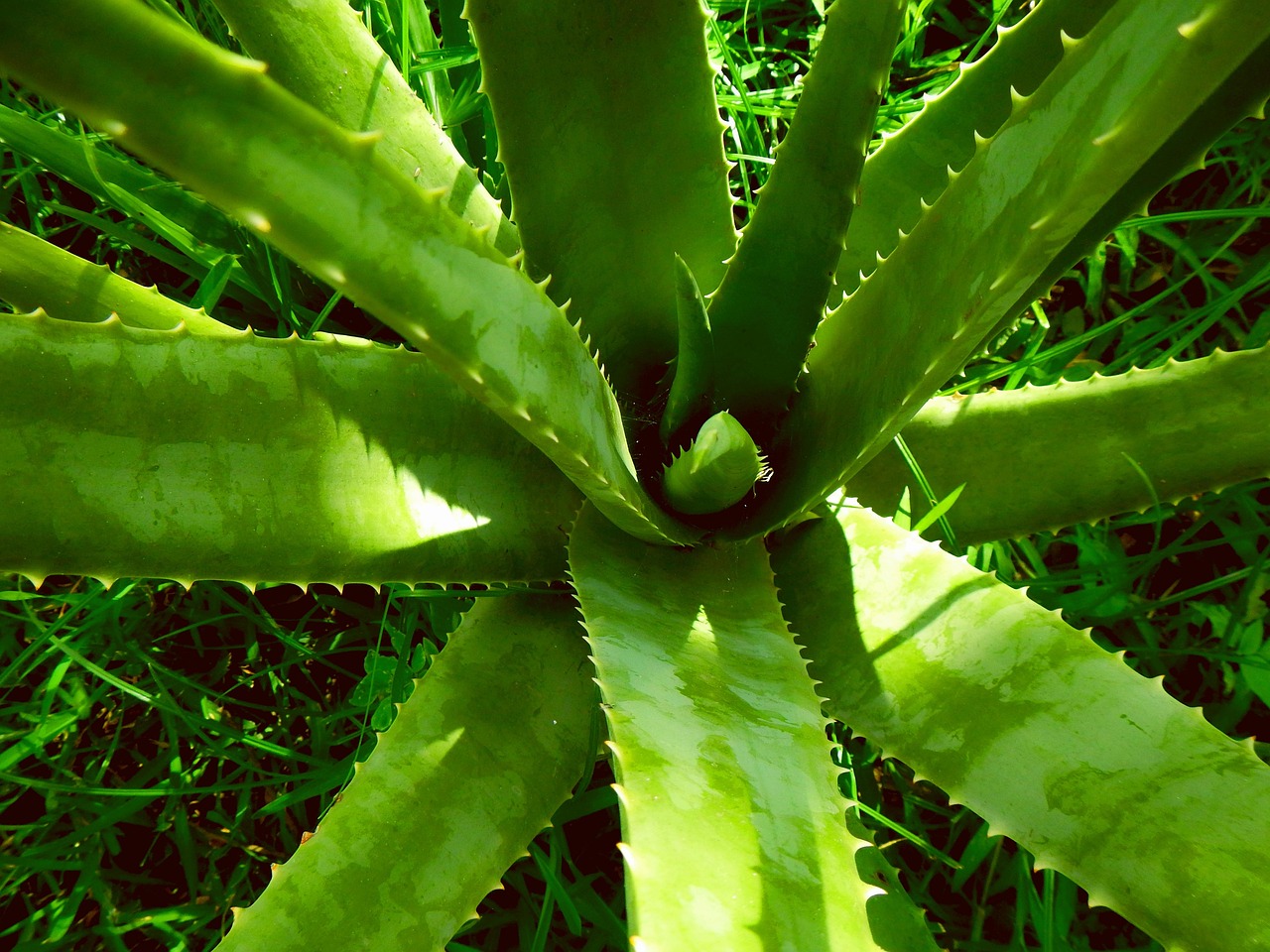

Aloe vera is a succulent plant species of the genus Aloe, which is widely distributed and has become an invasive species in many parts of the world. It is an evergreen perennial, originating from the Arabian Peninsula, but it grows wild in tropical, semi-tropical, and arid climates around the world. The species is attractive for decorative purposes and succeeds indoors as a potted plant. It is used in many consumer products including beverages, skin lotion, cosmetics, or ointments for minor burns and sunburns. There is little clinical evidence for the effectiveness or safety of Aloe vera extract as a cosmetic or medicine.
The plant has a short, stout stem and thick, fleshy leaves that are green to grey-green, with some varieties showing white flecks on their upper and lower stem surfaces. The margin of the leaves is serrated and has small white teeth. The leaves are succulent and store water, which makes the plant highly drought-tolerant. This water storage capacity is a key adaptation to its native arid environment, allowing it to survive long periods without rain. The internal gel of the leaves is the most well-known part of the plant and is harvested for various uses.
Understanding the natural habitat of Aloe vera is crucial for its successful cultivation. It thrives in conditions that mimic the dry, warm climates it originates from. This means it requires well-draining soil and plenty of sunlight. Overwatering is the most common mistake in Aloe vera care, as it can lead to root rot and the eventual death of the plant. Therefore, it is essential to allow the soil to dry out completely between waterings.
Proper care also involves providing the right temperature and humidity levels. Aloe vera prefers temperatures between 13 and 27 degrees Celsius. It can tolerate short periods of colder temperatures, but it is not frost-hardy. High humidity is generally not an issue for this plant; in fact, it can help it thrive, but good air circulation is necessary to prevent fungal diseases. With the right conditions, Aloe vera is a relatively low-maintenance plant that can add a touch of green to any home or garden.
Choosing the right pot and soil
Selecting the appropriate pot is the first step towards a healthy Aloe vera plant. A pot made of a porous material like terracotta or clay is ideal, as it allows the soil to dry out more evenly than plastic or glazed pots. This is crucial for preventing waterlogged soil, which can be fatal to succulents. The pot must also have at least one drainage hole at the bottom to allow excess water to escape freely. Without proper drainage, water will accumulate at the bottom of the pot, leading to root rot.
More articles on this topic
The size of the pot is also an important consideration. An Aloe vera plant that is top-heavy and has a small pot is prone to tipping over. Choose a pot that is as wide as it is deep, providing a stable base for the plant. When repotting, select a pot that is only slightly larger than the previous one, about 2 to 3 centimetres wider in diameter. A pot that is too large can hold excess moisture, which can be detrimental to the plant’s health.
The right soil mix is just as important as the right pot. Aloe vera requires a well-draining soil mix that does not retain too much water. A pre-made cactus or succulent mix is a good choice and is readily available at most garden centres. These mixes typically contain ingredients like sand, perlite, or pumice, which improve drainage and aeration. Good aeration is vital for the roots, allowing them to breathe and preventing suffocation in compacted soil.
You can also create your own soil mix by combining equal parts of regular potting soil, coarse sand, and perlite or pumice. This combination provides the necessary drainage while still retaining enough moisture and nutrients for the plant. Avoid using soil from your garden, as it is often too dense and may contain pests or diseases. The quality of the soil directly impacts the health of the plant’s root system, which is the foundation for a thriving Aloe vera.
Light and temperature requirements
Aloe vera thrives in bright, indirect sunlight. A location that receives several hours of bright, filtered light each day is ideal. Placing the plant near a south or west-facing window is a good option, but be careful to protect it from direct, intense sunlight, especially during the hot afternoon hours. Direct sunlight can scorch the leaves, causing them to turn yellow or brown. A sheer curtain can be used to diffuse the light and prevent sunburn.
More articles on this topic
While Aloe vera loves light, it can also adapt to lower light conditions, although its growth may be slower and less robust. If the plant does not receive enough light, its leaves may become etiolated, meaning they stretch out and become pale and spindly. If you notice these signs, move the plant to a brighter location. Inadequate light can also make the plant more susceptible to pests and diseases.
The ideal temperature range for Aloe vera is between 13 and 27 degrees Celsius. It can tolerate a wider range of temperatures, but extremes should be avoided. This plant is not frost-tolerant and can be damaged or killed by freezing temperatures. Therefore, if you are growing Aloe vera outdoors in a climate with cold winters, it is essential to bring it inside before the first frost.
During the winter months, when the plant is dormant, it can tolerate cooler temperatures, but it should still be protected from drafts. Avoid placing the plant near open windows or doors during cold weather. Sudden temperature fluctuations can stress the plant and make it more vulnerable to problems. Maintaining a consistent temperature will help your Aloe vera stay healthy and vibrant throughout the year.
Watering and feeding
Proper watering is one of the most critical aspects of Aloe vera care. As a succulent, Aloe vera is adapted to dry conditions and is highly susceptible to overwatering. The most common mistake is watering too frequently, which leads to root rot, a fatal condition for the plant. To avoid this, it is essential to allow the soil to dry out completely between waterings. A good rule of thumb is to check the top 5-7 centimetres of soil; if it is dry, it is time to water.
When you do water, do so thoroughly, allowing the water to run out of the drainage holes at the bottom of the pot. This ensures that the entire root system is hydrated. After watering, be sure to empty any excess water from the saucer to prevent the plant from sitting in water. During the growing season, in the spring and summer, you will need to water more frequently than during the dormant season in the autumn and winter.
Aloe vera does not require a lot of fertilizer. In fact, over-fertilizing can harm the plant. A balanced, all-purpose fertilizer, diluted to half-strength, can be applied once a year in the spring. This will provide the plant with the necessary nutrients for healthy growth. Avoid fertilizing during the winter when the plant is dormant.
It is important to use the right type of fertilizer and to follow the instructions on the package carefully. Slow-release fertilizers can also be a good option, as they provide a steady supply of nutrients over time. Remember that less is more when it comes to fertilizing Aloe vera. A healthy plant in good quality soil may not need any fertilizer at all.
Repotting your aloe vera
Repotting is an important part of Aloe vera care, as it provides the plant with fresh soil and more space to grow. Aloe vera typically needs to be repotted every two to three years, or when it becomes root-bound. Signs that your plant needs repotting include roots growing out of the drainage holes, slowed growth, or the plant becoming top-heavy and unstable. The best time to repot is in the spring, at the beginning of the growing season.
When you are ready to repot, choose a new pot that is slightly larger than the current one, with a diameter about 2-3 centimetres wider. Ensure the new pot has adequate drainage holes. Gently remove the Aloe vera plant from its current pot, being careful not to damage the roots. You may need to tap the sides of the pot to loosen the soil.
Once the plant is out of the pot, inspect the roots. If they are tightly packed and circling the bottom of the pot, gently loosen them with your fingers. This will encourage them to grow outwards into the new soil. If you see any dead or mushy roots, trim them off with a clean, sharp knife or pruning shears.
Place a layer of fresh, well-draining soil in the bottom of the new pot. Position the plant in the centre of the pot and fill in around the roots with more soil, leaving about 2-3 centimetres of space at the top. Gently press the soil down to secure the plant. Do not water the plant immediately after repotting; wait a few days to a week to allow any damaged roots to heal before watering.
Common problems and solutions
One of the most common problems with Aloe vera is overwatering, which can lead to root rot. Symptoms of root rot include yellowing or browning leaves, a soft, mushy stem, and a foul odour from the soil. If you suspect root rot, remove the plant from the pot and inspect the roots. Healthy roots should be firm and white, while rotten roots will be brown or black and mushy. Trim off any rotten roots and repot the plant in fresh, dry soil.
Another common issue is underwatering. While Aloe vera is drought-tolerant, it does need some water to survive. Signs of underwatering include wrinkled, curling, or thinning leaves. If your plant is showing these signs, give it a good, thorough watering. The leaves should plump up again within a day or two. To prevent this from happening again, check the soil moisture regularly and water when the top few centimetres are dry.
Pests can also be a problem for Aloe vera plants. Common pests include mealybugs, scale insects, and spider mites. Mealybugs appear as small, white, cottony masses on the leaves and stems. Scale insects look like small, brown bumps. Spider mites are tiny and difficult to see, but they create fine webbing on the plant. To treat pests, you can wipe them off with a cotton swab dipped in rubbing alcohol or use an insecticidal soap or neem oil spray.
Finally, Aloe vera can be susceptible to fungal diseases, especially in humid conditions with poor air circulation. Fungal diseases can cause leaf spots, powdery mildew, or stem rot. To prevent fungal problems, ensure the plant has good air circulation and avoid getting the leaves wet when you water. If you see signs of a fungal infection, remove the affected leaves and treat the plant with a fungicide.
Harvesting and using aloe vera
Harvesting the leaves of your Aloe vera plant is a simple process. It is best to harvest from a mature plant, as the leaves will be larger and contain more gel. Choose a thick, healthy leaf from the outer part of the plant. Use a clean, sharp knife or pruning shears to cut the leaf close to the base of the plant. Avoid pulling or tearing the leaf, as this can damage the plant.
After cutting the leaf, a yellow, latex-like substance will ooze from the cut end. This is called aloin, and it can be irritating to the skin and have a laxative effect if ingested. It is best to let this substance drain out before using the gel. Stand the leaf upright in a container for about 10-15 minutes to allow the aloin to drain away.
Once the aloin has drained, you can extract the gel. Lay the leaf on a flat surface and use a sharp knife to carefully slice off the thorny edges. Then, slice the leaf open lengthwise. You will see the clear, jelly-like gel inside. Use a spoon or a knife to scoop out the gel, being careful to avoid any remaining yellow latex.
The fresh gel can be used immediately or stored for later use. To store it, place the gel in an airtight container and keep it in the refrigerator for up to a week. For longer storage, you can freeze the gel in an ice cube tray. The gel has many purported uses, from soothing sunburns and minor skin irritations to being an ingredient in smoothies and other health drinks. However, it is always a good idea to do a patch test on a small area of skin before using it more widely, and to consult with a healthcare professional before ingesting it.
Aloe vera is a truly remarkable plant with a long history of medicinal and decorative use. I’ve found that the key to success is to provide it with a sunny spot and well-drained, sandy soil. It is a succulent, so it stores water in its leaves and can tolerate long periods of drought. One thing to keep in mind is that it doesn’t tolerate freezing temperatures well and should be moved indoors if you live in a colder climate. I usually water mine only when the soil is bone dry all the way to the bottom. I’ve also noticed that it benefits from a regular feeding with a balanced liquid fertilizer during the growing season. It’s a truly rewarding and low-maintenance plant that deserves a place in every home.
I couldn’t agree more about the importance of drainage and light, Dr. Vance. I’ve seen many an aloe vera that has been killed by overwatering, which leads to root rot. One thing I’ve noticed is that they really benefit from being repotted every few years to provide them with fresh soil and more room to grow. I’ve also had good success propagating mine by removing the “pups” or offsets that form around the main plant. It’s a fun and easy way to create a whole new collection of plants. I’ll definitely keep your advice in mind for my own aloes this year. Thanks for the helpful insights!
Aloe vera (Aloe barbadensis miller) is a fascinating species with a wide range of biological and chemical properties. I’ve found that its unique gel-like substance contains a number of active compounds that have been shown to have anti-inflammatory and healing effects. From a botanical perspective, it is interesting to note that it is one of the most widely cultivated succulent species in the world. I recommend using a well-draining potting mix, such as a cactus and succulent mix, to ensure that the roots don’t sit in water. It’s also important to provide it with plenty of bright, indirect light to keep it healthy and vibrant. It’s a truly fascinating and beautiful plant that deserves a place in every garden.
That’s a great point about the biological properties and the potting mix, Dr. Green. I’ve always been fascinated by the healing powers of the aloe vera gel. I’ve actually had some success using it to treat minor burns and skin irritations. I’ve also noticed that the plant can be a bit prone to scale insects, so I have to be diligent about checking for them. I use a cotton swab dipped in rubbing alcohol to remove any pests that I find. I’ll keep your advice about the soil drainage in mind for my next repotting project. Thanks for the helpful insights!
I love growing aloe vera in my indoor garden because it is so easy and rewarding. I’ve found that the ‘Chinensis’ variety is particularly attractive with its spotted leaves and compact growth habit. I usually plant mine in a simple ceramic pot, which really lets the plant take center stage. One thing I’ve noticed is that it is very attractive to mealybugs, so I have to be diligent about checking for them. I use a mild insecticidal soap and regular misting of the foliage to keep them under control. It’s a truly rewarding plant that always brings a touch of green to my home. I can’t wait for my plants to start producing pups again this year!
I absolutely love the clean and architectural look of aloe vera plants! They have such a wonderful presence and are so easy to care for. I’ve found that they are particularly well-suited for beginners who are looking for a reliable and low-maintenance plant. One thing I’ve noticed is that they are very attractive to a wide range of birds and insects, which is always a plus in my book. I usually plant mine with some other succulents like echeveria or sedum for a really interesting and diverse display. They are such a rewarding and beautiful plant that always brings a touch of nature to any home. I can’t wait to see my plants thrive this spring!