
The management of fire blight in apple orchards represents one of the most significant challenges for modern pomology due to the highly destructive nature of the bacterial pathogen. This disease can spread with alarming speed through a plantation, often moving from a few blossoms to entire branches within a matter of days under favorable weather conditions. Successful control requires a deep understanding of the life cycle of the bacteria and the environmental factors that trigger its rapid multiplication and dissemination. Growers must adopt a comprehensive approach that integrates early detection, cultural practices, and targeted treatments to safeguard their investments and ensure long-term productivity.
The causative agent is a gram-negative bacterium that thrives in warm and humid environments, particularly during the critical bloom period of the trees. It overwinters in cankers on the trunk and limbs, waiting for the spring temperatures to rise above a specific threshold to begin its active phase. Once the bacteria start producing ooze, they are easily transported by insects, wind, and rain to susceptible tissues like flowers and young shoots. This initial infection phase is the most dangerous because the internal vascular system of the tree provides a direct highway for the bacteria to travel.
Understanding the environmental triggers is essential for any professional orchardist who wants to stay ahead of a potential outbreak. High humidity combined with temperatures between eighteen and thirty degrees Celsius creates the perfect storm for bacterial colonization. Rainfall during the bloom period significantly increases the risk as it washes the bacteria into the open flowers where they can enter the plant through natural openings called nectarthodes. Without a precise monitoring system in place, a grower might not realize the extent of the infection until the visible symptoms of wilting and browning become widespread.
The economic impact of a severe infection cannot be overstated, as it often results in the loss of entire trees rather than just the current season’s crop. Because the bacteria can move systemically, they often reach the rootstock, which usually leads to the death of the entire plant within a single growing season. Commercial nurseries and established orchards alike face strict regulations and quarantine measures when the pathogen is detected to prevent its further spread. Consequently, the primary goal of any defense strategy is to maintain a low level of inoculum within the vicinity of the orchard throughout the year.
Early identification of infection signs
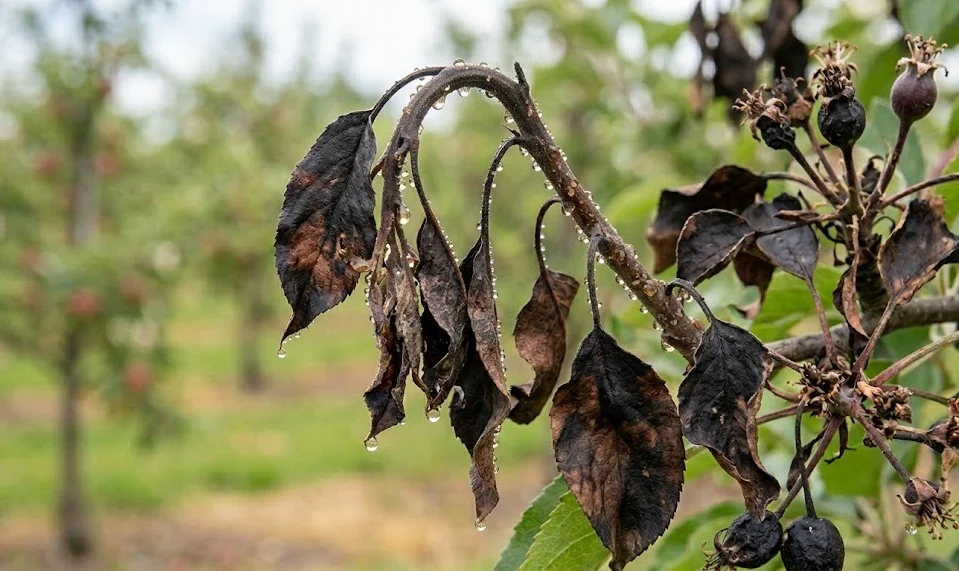
Recognizing the first signs of fire blight is a critical skill that requires frequent and detailed scouting of the orchard rows during the spring. The earliest symptoms usually appear on the blossoms, which turn water-soaked and then rapidly transition to a dark brown or black appearance. These infected flowers typically remain attached to the spur rather than falling off, which is a telltale sign distinguishing it from other common physiological drops. Careful observation of these early markers allows for immediate intervention before the bacteria can migrate into the woody parts of the tree.
As the infection progresses into the succulent green shoots, the characteristic shepherd’s crook symptom becomes increasingly visible and easy to identify from a distance. The tips of the shoots wilt and bend over in a hook shape, while the leaves turn a scorched black color as if they had been exposed to fire. During periods of high humidity, you may observe small droplets of amber-colored bacterial ooze exuding from the infected tissues. This sticky substance is highly infectious and serves as a primary source for secondary spread within the canopy via rain splashes.
Canker identification during the dormant season is equally important for preventing the resurgence of the disease in the following spring. These cankers appear as sunken areas on the bark, often with a cracked or discolored margin that separates the dead tissue from the healthy wood. If you peel back a small section of the bark at the edge of a canker, the underlying tissue will often show a reddish-brown streaking. Locating and marking these sites during the winter months simplifies the process of surgical removal before the sap begins to flow.
In addition to visual inspections, modern diagnostic tools can be used to confirm the presence of the pathogen in suspicious samples. Field-testing kits are now available that provide rapid results, allowing growers to make informed decisions about whether to implement emergency pruning or chemical applications. It is vital to distinguish fire blight from other look-alike issues such as Nectria canker or simple frost damage to avoid unnecessary and costly treatments. Professional diagnosis ensures that the management resources are allocated efficiently and effectively across the entire farm operation.
Proactive orchard management techniques
Preventative cultural practices form the foundation of a robust defense system and are often more effective than reactive treatments alone. One of the most important factors is the management of tree vigor, as overly succulent growth is far more susceptible to bacterial invasion. High nitrogen fertilization should be avoided in the early spring, as it encourages the rapid development of soft tissues that the bacteria prefer. Instead, a balanced nutrition program should be designed to promote steady growth and strong cellular structures throughout the growing season.
Water management also plays a pivotal role in creating an environment that is less conducive to the spread and multiplication of the bacteria. Overhead irrigation should be strictly avoided during the bloom and early shoot growth phases because it mimics the natural rainfall that facilitates infection. Drip irrigation is the preferred method for professional apple production as it delivers water directly to the roots without wetting the canopy. Keeping the foliage dry reduces the chances of bacteria being splashed from one leaf to another or from a canker to a fresh blossom.
The physical layout of the orchard and the pruning style can significantly influence the microclimate within the tree canopy and affect disease pressure. Trees should be pruned to allow for maximum airflow and sunlight penetration, which helps the leaves and flowers dry quickly after morning dew or rain. A dense, shaded canopy acts as a reservoir for moisture and provides a sheltered environment where the bacteria can thrive undisturbed. Proper spacing between trees also limits the physical contact between branches, reducing the risk of mechanical transmission of the pathogen.
Ground cover and weed management are often overlooked components of an integrated fire blight management strategy but are quite important for overall health. Tall weeds and grass around the base of the trees can contribute to higher humidity levels within the lower canopy, especially during the early morning hours. Maintaining a clean orchard floor or a low-mowed sod reduces the local moisture load and minimizes the habitat for certain insect vectors. Furthermore, removing any wild host plants like hawthorn or wild pear from the surrounding hedgerows can significantly reduce the external inoculum pressure.
Chemical and biological control options
The use of protective sprays is a standard practice in commercial apple production, particularly during the high-risk period when the trees are in full bloom. Copper-based compounds are often applied during the late dormant stage or at green tip to reduce the amount of bacteria present on the bark surfaces. While copper is effective, it must be used with caution during the growing season as it can cause russeting on the fruit of many apple varieties. Therefore, its application is usually restricted to the pre-bloom period to minimize the risk of cosmetic damage to the upcoming crop.
Antibiotics have traditionally been the primary tool for controlling fire blight during the flowering period, though their use is strictly regulated in many regions. These materials work by preventing the bacteria from multiplying on the surface of the flower parts before they can enter the plant tissue. Timing is everything when applying these treatments, as they are purely protective and do not have any curative effect once the infection is internal. Many growers now rely on sophisticated weather-based models to predict infection events and time their antibiotic sprays with surgical precision.
Biological control agents are becoming increasingly popular as sustainable alternatives or supplements to traditional chemical pesticides. These products typically consist of beneficial bacteria or yeasts that compete with the pathogen for nutrients and space on the blossoms. By colonizing the flower first, these biological agents create a biological shield that makes it much harder for the harmful bacteria to establish a foothold. While they may not provide the same level of knockdown power as antibiotics, they are valuable tools for resistance management programs.
Systemic acquired resistance inducers represent another innovative category of products that help the tree defend itself from within. These substances do not kill the bacteria directly but instead trigger the plant’s own natural defense mechanisms, making the tissues less hospitable to the pathogen. When applied correctly, these inducers can provide a longer-lasting period of protection and reduce the overall severity of any infections that do occur. Integrating these different modes of action is the best way to ensure consistent control while preventing the development of bacterial resistance.
Surgical removal and field hygiene
When infections do occur despite preventative efforts, immediate and aggressive pruning is necessary to stop the bacteria from reaching the main structural limbs. This process, often referred to as “ugly stub” pruning, involves cutting at least thirty to fifty centimeters below the last visible sign of infection. It is crucial to leave a short stub of several centimeters beyond the branch collar rather than making a flush cut, which helps prevent the bacteria from entering the trunk. These stubs are then removed during the dormant season when the bacteria are no longer active and moving through the vascular system.
The timing of these therapeutic cuts is essential, as pruning during active bacterial growth carries a high risk of spreading the disease further. It is best to perform these tasks on dry, sunny days when the relative humidity is low to ensure that the wounds dry out as quickly as possible. Removing infected wood during rainy weather or when the trees are wet is a recipe for disaster and can lead to a massive secondary outbreak. All removed material should be immediately taken out of the orchard and destroyed, preferably by burning or deep burial, to eliminate it as a source of inoculum.
Sanitation of pruning tools is a non-negotiable requirement for anyone working in an orchard where fire blight has been detected. The bacteria can easily survive on the surface of shears, saws, and loppers, being carried from a diseased tree to a healthy one with every single cut. Tools should be disinfected between each tree, or even between each cut if the infection pressure is particularly high, using a solution of bleach or high-strength alcohol. Failure to maintain strict tool hygiene can turn a well-intentioned pruning operation into a primary vector for spreading the pathogen throughout the plantation.
Training the orchard staff to recognize and report infections early is one of the most cost-effective ways to manage the disease on a large scale. Every person working in the field should understand the importance of not touching infected parts and then handling healthy trees without washing their hands or equipment. Regular scouting reports should be integrated into the farm management software to track the location and severity of outbreaks over time. By fostering a culture of vigilance and hygiene, a farm can significantly reduce the long-term impact of this devastating bacterial disease.
Selecting resistant cultivars and rootstocks
The choice of plant material is perhaps the most significant long-term decision a grower makes in the fight against fire blight. Some traditional apple varieties are notoriously susceptible to the disease and can be completely wiped out in a single bad year without intensive chemical intervention. In contrast, modern breeding programs have developed several varieties that show varying degrees of natural resistance or tolerance to the bacteria. Planting these less susceptible cultivars can significantly reduce the reliance on expensive spray programs and lower the overall risk profile of the orchard.
Rootstock selection is equally critical because many popular dwarfing rootstocks are highly susceptible to the systemic movement of the bacteria. If the pathogen reaches a sensitive rootstock, the entire tree will die, regardless of how resistant the scion variety on top might be. Newer rootstock series, such as those developed in Geneva, New York, offer excellent resistance to fire blight while maintaining the desired growth characteristics. Transitioning to these resistant rootstocks during orchard renewal or new plantings is a fundamental step toward building a more resilient agricultural system.
It is important to remember that resistance does not mean complete immunity, and even resistant trees can become infected under extreme disease pressure. However, in resistant varieties, the bacteria tend to move much more slowly through the tissues, and the resulting lesions remain smaller and easier to manage. This slower progression gives the grower more time to react and perform the necessary pruning before the infection becomes life-threatening for the tree. Combining genetic resistance with good cultural practices creates a multi-layered defense that is much harder for the pathogen to overcome.
When planning a new orchard, growers should consult with local extension services and nurseries to determine which varieties perform best in their specific climatic conditions. Local environmental factors can influence the expression of resistance, so a variety that performs well in one region might be more vulnerable in another. Diversity in the orchard can also help mitigate risk, as different varieties bloom at different times and have different levels of susceptibility. Avoiding large monocultures of highly sensitive varieties is a strategic move that enhances the long-term sustainability of the entire farming operation.
Establishing long term surveillance protocols
Effective long-term management of fire blight requires a consistent and disciplined approach to monitoring the orchard environment throughout the year. Surveillance should not be limited to the spring bloom period but must continue through the summer when trauma blight can occur following hailstorms. High-velocity winds and hail create small wounds in the leaves and bark that provide easy entry points for the bacteria to colonize. Prompt scouting after any significant weather event allows for the quick identification of new infections before they can spread systemically.
A detailed record-keeping system is an invaluable asset for identifying patterns of infection and evaluating the success of different management strategies. Mapping the locations of infected trees over several seasons can reveal “hot spots” within the orchard where environmental conditions or soil factors might be increasing disease pressure. These records also help in determining the effectiveness of various chemical and biological products under real-world conditions. Over time, this data allows the grower to fine-tune their approach and focus their resources where they are most needed.
Collaboration with neighboring orchardists and regional agricultural authorities can provide an early warning system for the entire community. Since the bacteria can be carried over long distances by wind and insects, knowing when an outbreak has started in a nearby farm is crucial for timing protective sprays. Many regions now have coordinated monitoring networks that share real-time data on bacterial activity and weather-based risk levels. Participating in these networks enhances the individual grower’s ability to protect their own trees while contributing to the overall health of the local industry.
Finally, staying informed about the latest research and technological advancements is essential for maintaining a competitive and healthy apple production business. The field of plant pathology is constantly evolving, with new diagnostic tools, more effective biological controls, and improved resistant varieties being developed every year. Attending professional workshops and reading specialized agricultural publications ensures that you are using the most up-to-date information available. A proactive, informed, and disciplined management strategy is the only way to successfully coexist with the threat of fire blight in a modern agricultural landscape.