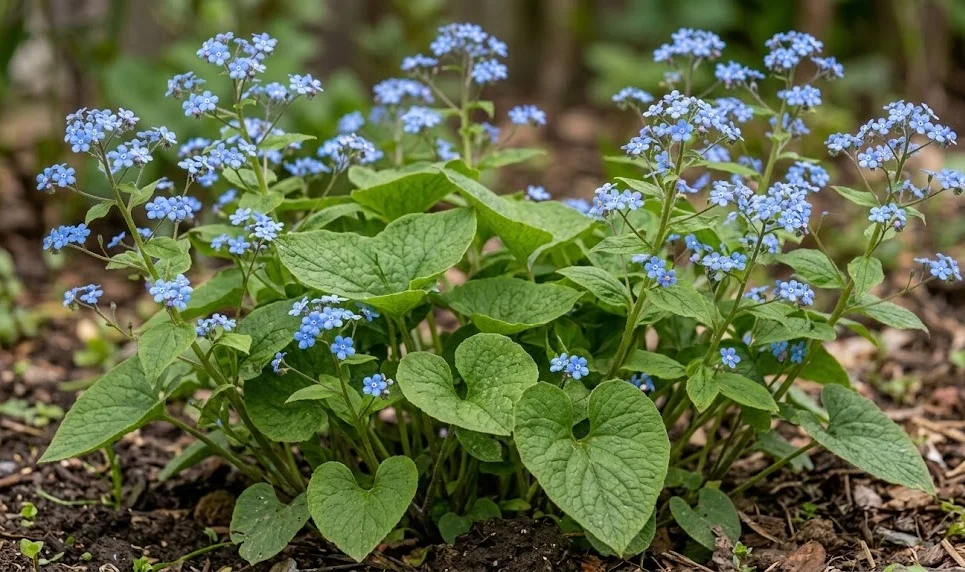

Finding the perfect balance of light is essential for the health and aesthetic appeal of this beautiful woodland perennial. You should ideally place this plant in a location that receives partial shade or dappled sunlight throughout the day. In its natural habitat, it grows under the canopy of deciduous trees, where it is protected from the harshest rays of the sun. Mimicking these conditions in your garden will result in larger leaves and much more vibrant blue flowers.
Direct afternoon sun is the biggest enemy of this plant, especially in regions with hot and humid summer climates. You will notice that the large, heart-shaped leaves can quickly become scorched and develop brown, crispy edges if exposed to too much heat. If you see the plant wilting significantly every afternoon, it is a clear sign that the light intensity is too high for its needs. Providing a physical barrier or moving the plant to a shadier spot may be necessary to save it.
Morning sun is generally much milder and more tolerable for the plant than the intense light of the late afternoon. You can successfully grow this species in a spot that gets a few hours of gentle sunlight before the middle of the day arrives. This bit of light can actually help the plant produce more flowers and keep the variegated patterns of certain cultivars looking bright. However, the soil must remain consistently moist to compensate for any sun exposure the plant receives.
Deep shade is another environment where this plant can survive, although its growth rate will be somewhat slower than in partial shade. You will find that the leaves might grow even larger in deep shade as they expand to capture as much light as possible. However, the number of flowers may be reduced, and the plant may take on a slightly more open and less compact form. For many gardeners, this trade-off is acceptable for a plant that can brighten up the darkest corners of the landscape.
Effects of light on different cultivars
The specific variety of Caucasian forget-me-not you choose will have a significant impact on its light requirements and tolerance levels. You should be aware that variegated cultivars with white or silver patches on their leaves are much more sensitive to sunlight. These lighter areas lack chlorophyll and can burn very easily if they are not protected by a significant amount of shade. For these specialized plants, a location with dappled shade or only very early morning sun is the best choice.
More articles on this topic
Solid green varieties are generally the most robust when it comes to handling different light levels in the garden. You can experiment with these plants in slightly brighter spots as long as you provide them with plenty of supplemental water. The extra light can lead to a very dense and lush growth habit that looks fantastic as a groundcover in large areas. Always monitor the health of the foliage as your primary guide for whether the plant is happy with its light exposure.
Cultivars with a heavy silver coating, like the popular ‘Jack Frost’, actually need a bit of light to maintain their metallic sheen. In too much shade, the silver color may become dull and the plant may lose some of its unique ornamental appeal. You should try to find a “sweet spot” where the plant gets enough light to look its best but not so much that it burns. Observing the plant’s color through the seasons will help you fine-tune its placement in your garden design.
If you are growing these plants in containers, you have the advantage of being able to move them as the light patterns change. You might find that a spot that was perfect in the spring becomes too bright in the middle of the summer as the sun’s angle shifts. Being able to shift your pots to a cooler, shadier location during heatwaves is a great way to keep your plants looking fresh. This flexibility allows you to learn about the light needs of the plant through direct observation and experience.
Adjusting light for local climates
The intensity of the sun varies greatly depending on your geographic location and the altitude of your garden. You should take your local climate into account when deciding where to plant your Caucasian forget-me-not in the landscape. In northern regions with cooler summers, the plants can often handle more direct sunlight than they can in the hotter south. Gardeners in warmer areas must be much more diligent about providing shade and moisture to their plants.
More articles on this topic
Urban gardens can have unique light challenges due to reflections from windows or heat absorbed by brick walls and pavement. You should avoid planting these perennials too close to light-colored surfaces that can bounce intense light and heat onto the foliage. Creating a cool microclimate with other plants or decorative garden structures can help mitigate these environmental stresses for your shade-lovers. Strategic planting can turn a difficult urban spot into a lush and thriving woodland oasis.
Seasonal changes in the light levels are also an important factor to consider for the long-term success of your garden. You might have a spot that is in full sun in the early spring before the trees have fully leafed out for the season. This early light is usually not a problem and can actually help the plant get a strong start after its winter dormancy. Once the tree canopy fills in, the plant will get the shade it needs for the hotter summer months ahead.
If you find that a plant is struggling in its current location, do not be afraid to move it to a better spot. You should transplant the specimen in the early spring or autumn when the weather is mild and the plant is less stressed. Moving a plant that is constantly burning in the sun to a shadier area will result in a dramatic improvement in its health and appearance. Your garden is a dynamic space, and adjusting your plantings is a normal part of the professional gardening process.