
Cultivating this perennial requires a deep understanding of its natural woodland habitat to ensure total success in your garden. You should focus on providing a cool and moist environment where the roots can thrive without drying out during the summer. The soil must be rich in organic matter to mimic the forest floor where these plants originally evolved over centuries. High-quality compost or leaf mold can significantly improve the texture and nutrient content of your dedicated garden bed.
Soil structure plays a vital role in the long-term health of these decorative shade plants in any landscape. You need to ensure that the drainage is efficient while still retaining enough moisture for the plant to stay hydrated. Heavy clay soils might require additional grit or organic sand to prevent root rot during particularly wet seasons. Testing your soil pH can also help you determine if specific adjustments are necessary for the most optimal growth possible.
Most experienced gardeners find that a slightly acidic to neutral pH range works best for this specific species. You can achieve this delicate balance by adding organic amendments every spring before the new growth begins to emerge. Avoiding overly alkaline conditions will prevent the yellowing of the leaves and promote much more vibrant flower production. Consistent monitoring of the soil quality will lead to a much more robust and attractive specimen for years to come.
Site preparation is just as important as the actual maintenance routine you eventually establish for the plants. You should clear the area of any aggressive weeds that might compete for essential water and local nutrients. Deeply tilling the soil helps the delicate roots spread out more easily in their first critical year of growth. Adding a slow-release organic fertilizer during the initial preparation can provide a steady supply of energy for the developing plant.
Understanding growth habits
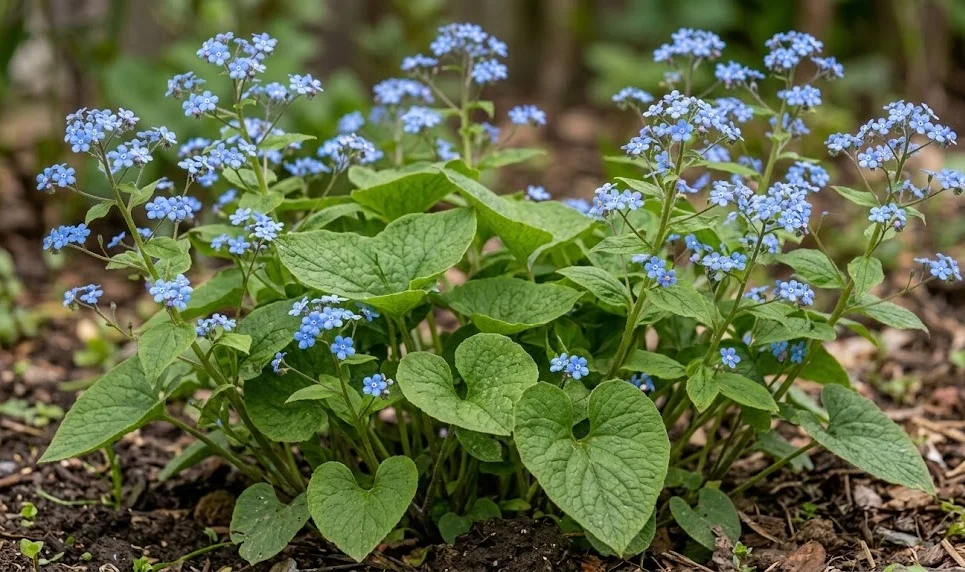
Observing how this plant spreads through its rhizomatous root system helps you manage its placement in the garden. It tends to form dense clumps that act as an excellent groundcover in shaded areas where grass struggles. The heart-shaped leaves provide a unique texture that contrasts beautifully with finer ferns or spiked hostas nearby. Knowing the eventual spread of the plant allows you to space them correctly to avoid overcrowding issues.
More articles on this topic
The flowering period usually occurs in early to mid-spring, offering a cloud of tiny blue blossoms for several weeks. You will notice that these flowers closely resemble the common forget-me-not, which gives the plant its popular name. Once the blooming concludes, the foliage continues to grow and often becomes even more impressive in size. Maintaining this foliage throughout the summer is the primary goal of any dedicated gardener caring for this species.
Vigor can vary depending on the specific cultivar you choose to plant in your outdoor living space. Some variegated varieties might grow a bit more slowly than the standard green-leaved forms found in nature. You should monitor the growth rate to ensure the plant is not becoming stunted by poor environmental conditions. Providing enough space for air circulation between the leaves will help maintain a healthy appearance all season.
Root development is the foundation of a healthy plant that can withstand various environmental stresses over time. These plants possess thick, fleshy rhizomes that store energy for the following growing season and winter dormancy. You should avoid disturbing the soil directly around the base of the plant once it has become established. Protecting these roots from extreme temperature fluctuations through mulching is a highly effective way to ensure longevity.
Seasonal maintenance routines
Spring is the busiest time for caring for these plants as they emerge from their winter slumber. You should remove any dead or tattered leaves from the previous year to make room for new growth. Applying a fresh layer of organic mulch around the base will help retain moisture as the temperatures begin to rise. This is also the best time to check for any signs of winter damage to the crown of the plant.
More articles on this topic
During the height of summer, the primary concern is keeping the large leaves from wilting in the heat. You might need to increase the frequency of your checks to ensure the soil remains consistently damp to the touch. If the plant is exposed to too much afternoon sun, you will notice the edges of the leaves turning brown. Providing temporary shade during heatwaves can help the plant maintain its aesthetic appeal until the weather cools.
As autumn approaches, the plant begins to slow down its metabolic processes in preparation for the coming cold. You should reduce any supplemental feeding to allow the tissues to harden off naturally before the first frost. The leaves will eventually turn yellow and then brown as the nutrients are pulled back into the rhizomes. This natural cycle is essential for the plant to survive the winter and return even stronger next year.
Winter care is minimal but still important for the long-term health of the Caucasian forget-me-not in your garden. You should leave the dead foliage in place to provide a natural layer of protection for the crown against freezing. If you live in an area with very little snow cover, adding extra straw or evergreen boughs can be beneficial. Checking the area for signs of rodent damage or excessive moisture buildup will help prevent spring surprises.
Managing foliage health
The large, heart-shaped leaves are the most prominent feature of this plant and require specific attention to stay healthy. You should regularly inspect the undersides of the foliage for any signs of hidden pests or early disease symptoms. Dust and debris can sometimes accumulate on the surface, which might interfere with the plant’s ability to photosynthesize. Gently rinsing the leaves with a soft spray of water can keep them looking fresh and functioning optimally.
Proper spacing is the most effective way to prevent many of the common leaf issues that gardeners face. When plants are crowded together, the humidity levels between the leaves can rise, leading to various fungal problems. You should ensure there is enough room for natural breezes to pass through the foliage and dry any excess moisture. Thinning out older clumps every few years can also help improve the overall health of the entire group.
Variegated cultivars require a bit more care because their white or silver patches are more sensitive to environmental changes. You should monitor these plants closely for signs of “reverting,” where the leaves turn completely green again. Pruning out any solid green shoots immediately will help maintain the desired look of your specialized variegated variety. Protecting these delicate leaves from direct, scorching sunlight is absolutely essential to prevent unsightly leaf burn.
The size of the leaves can be an indicator of the overall health and nutrition of your garden plants. If the leaves remain small or appear pale, it might be a sign that the plant needs more nitrogen. Conversely, overly large and floppy leaves might suggest that the plant is getting too much shade or too much fertilizer. Finding the right balance will result in foliage that is both structurally sound and visually stunning throughout the year.
Root health and stability
The rhizomatous nature of the root system means that the plant is relatively stable once it takes hold. You should be careful when planting companion perennials nearby so you do not accidentally sever the main rhizomes. If a plant becomes heaved out of the ground by frost, you should gently press it back into place. Adding a little extra soil around the exposed crown will protect the delicate growing points from the air.
Healthy roots are typically firm to the touch and a light tan or white color on the inside. You can check the health of the root system if you decide to move or divide the plant. If you notice any soft, black, or foul-smelling sections, you should prune them away before replanting the specimen. Using sterilized tools for any root work is a professional practice that prevents the spread of soil-borne pathogens.
Moisture levels in the root zone must be managed carefully to avoid both drought stress and waterlogging. While the plant loves water, stagnant conditions will quickly lead to the death of the lower root tissues. You should aim for a soil consistency that feels like a wrung-out sponge most of the time. Improving the soil porosity with organic matter is the best long-term solution for maintaining this ideal moisture balance.
Competition from the roots of large trees can sometimes be a challenge for this woodland-loving species. You should avoid planting them directly against the trunks of thirsty trees like maples or shallow-rooted beeches. Providing extra water and nutrients in these areas can help your plants compete more successfully with their larger neighbors. Using a root barrier might also be an option if you are trying to establish them in a particularly difficult spot.
Environmental stress factors
High temperatures can be very taxing on this plant, especially if the humidity is low at the same time. You will see the plant react by drooping its leaves to conserve internal moisture and reduce its surface area. Providing a deep watering in the early morning can help the plant build up enough turgor pressure to last the day. If the stress continues, the plant may go dormant prematurely to protect its vital underground structures.
Strong winds can tear the large leaves or cause them to dry out much faster than usual in the garden. You should choose a planting location that offers some protection from the prevailing winds in your local area. Planting behind a low hedge or a garden wall can create a microclimate that is much more hospitable. If a windstorm does damage the foliage, you can trim away the tattered pieces to improve the plant’s appearance.
Late spring frosts are a common concern as the new, tender leaves begin to unfurl from the center. You should have some garden fleece or buckets ready to cover the plants if a sudden cold snap is predicted. While the plant itself is very hardy, the current year’s foliage can be easily damaged by a hard freeze. Protecting the early growth ensures that the plant looks its best during the peak of its blooming season.
Urban environments can present unique stresses such as poor air quality or physical damage from foot traffic. You should plant them in areas where they are unlikely to be stepped on by pets or people. The large leaves do not handle mechanical damage well and will show scars for the rest of the season. Keeping the plants well-hydrated will help them recover more quickly from any minor environmental setbacks they encounter.
Long-term vitality and vigor
To keep your plants looking their best for a decade or more, you should focus on consistent and patient care. You do not need to perform drastic measures if the basic needs of the plant are met regularly. Observing the plants through the seasons will teach you more than any book ever could about their specific needs. Every garden has its own unique characteristics that will influence how the plant grows over the long term.
Refreshing the soil every few years with a top-dressing of compost will maintain the nutrient levels necessary for growth. You should avoid letting the soil become too compacted over time, as this restricts the movement of air and water. If you notice the center of a large clump starting to die out, it is a sign that the plant needs dividing. This process rejuvenates the older sections and gives you new plants to use elsewhere.
Keeping a garden journal can help you track the performance of different varieties in your specific conditions. You can note when they start blooming and when the foliage begins to decline in the late autumn. This information is invaluable when planning future garden projects or adjusting your maintenance schedule for better results. Shared knowledge with other gardeners in your area can also provide insights into local pest or weather trends.
The goal of expert care is to create a plant that looks as though it is thriving effortlessly in its environment. When you provide the right balance of shade, moisture, and nutrients, the Caucasian forget-me-not becomes a centerpiece. Its reliability and beauty make it a favorite for both professional designers and hobbyist gardeners alike. With the right foundation, these plants will bring joy and color to the shaded corners of your landscape for many years.