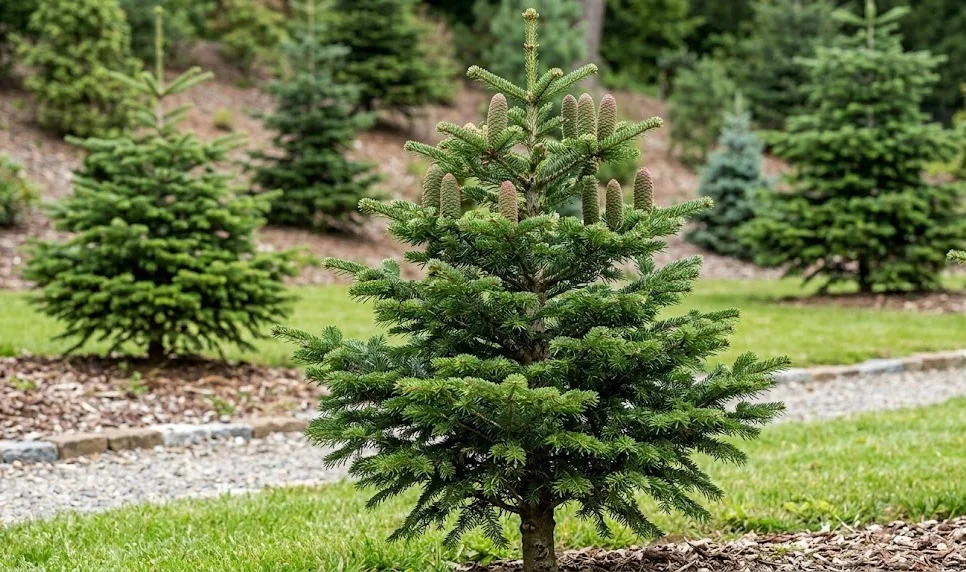

Protecting the nordmann fir from biological threats is a critical task that requires a vigilant eye and a deep understanding of conifer pathology. You must be aware that while this species is generally resistant to many common problems, it is not entirely immune to the pressures of pests and diseases. Early detection is almost always the key to preventing a minor issue from turning into a devastating loss for your garden or plantation. Understanding the symptoms and the lifecycles of these threats allows you to intervene with precision and care.
Fungal infections represent some of the most persistent challenges for any grower of fir trees, often thriving in damp or crowded conditions. You should look for signs of needle browning, unusual spots, or premature needle drop, especially in the lower or inner parts of the canopy. These pathogens can spread quickly from tree to tree if they are not managed through proper cultural practices and, when necessary, targeted treatments. Maintaining good air circulation and soil health is your first and most effective line of defense against these invisible invaders.
Insect pests can cause direct damage by feeding on the needles, sap, or wood, and indirect damage by acting as vectors for other diseases. You must become familiar with the common culprits, such as aphids, mites, and various scales, that specifically target the nordmann fir. Some of these pests are so small that they can only be seen with a magnifying glass, making regular close-up inspections a necessity. A healthy tree can often withstand a small population of insects, but an infestation can quickly sap its strength and ruin its appearance.
An integrated approach to pest and disease management is the most professional and sustainable way to protect your trees over the long term. You should focus on creating an environment that favors the tree and its natural enemies, such as ladybugs and predatory mites, while discouraging the pathogens. Using chemical interventions should be a last resort, employed only when other methods have failed and the survival of the tree is at risk. By fostering a balanced ecosystem, you reduce the overall pressure on your trees and create a more resilient landscape.
Fungal infections and needle blights
One of the most common fungal issues you might encounter is needle cast, which causes the needles to turn brown and fall off prematurely. You should notice that this usually starts on the older, inner needles before moving outward to the newer growth at the tips. This condition is often exacerbated by high humidity and poor air circulation within the canopy of the tree. Keeping the area around the base of the tree clear of fallen needles and debris can help reduce the amount of overwintering fungal spores.
More articles on this topic
Root rot is a much more serious fungal condition that can be fatal if it is not caught in the very early stages of development. You should be concerned if the entire tree begins to take on a yellowed or wilted appearance despite having adequate water in the soil. This pathogen thrives in waterlogged or compacted soils where oxygen levels are low and the roots are already under stress. Once root rot has taken hold, it is very difficult to treat, making prevention through proper site selection and drainage your best strategy.
Canker diseases can also affect the branches and trunk of the fir, appearing as sunken, discolored areas of bark that may ooze resin. You should carefully prune out any infected branches, making sure to cut back to healthy wood and disinfecting your tools between every single cut. If a canker appears on the main trunk, it can girdle the tree and cut off the flow of water and nutrients to the upper canopy. Regular inspections of the bark structure can help you spot these issues before they become life-threatening for the specimen.
Rust fungi are another group of pathogens that can cause unusual orange or yellow growths on the needles and stems of the fir. You should know that many rusts require an alternate host plant, such as certain shrubs or weeds, to complete their complex lifecycle. Removing these alternate hosts from the immediate vicinity can often break the cycle of infection and protect your fir trees. While rust is often more of an aesthetic issue than a fatal one, it can still weaken the tree and make it more susceptible to other stresses.
Common insect pests and their management
The balsam woolly adelgid is a particularly troublesome pest that can cause significant damage to the twigs and trunk of the nordmann fir. You should look for small, white, wool-like tufts on the bark and branches, which are the protective coverings for the tiny insects. This pest feeds on the sap of the tree and injects a toxin that causes abnormal wood growth and can eventually lead to dieback. Monitoring for these white spots in the spring and autumn is crucial for early detection and control.
More articles on this topic
Spider mites are common during hot, dry periods and can cause a characteristic stippling or bronzing of the needles across the entire tree. You can check for their presence by shaking a branch over a white piece of paper and looking for tiny, moving specks. If left untreated, a heavy infestation of mites can cause significant needle drop and leave the tree looking thin and unhealthy. Increasing the humidity around the tree or using targeted horticultural oils can help manage mite populations without harming beneficial insects.
Scale insects are another group of sap-suckers that can be found attached to the needles or small twigs, often looking like small, immobile bumps. You should notice that an infestation of scale often leads to the growth of sooty mold, a black fungus that grows on the sticky “honeydew” the insects excrete. Managing scale can be tricky because their hard outer shells protect them from many common contact insecticides during most of their life. Timing your treatments to coincide with the “crawler” stage, when the young are mobile and unprotected, is the key to success.
Aphids are perhaps the most well-known garden pests, and they certainly don’t ignore the lush new growth of a healthy nordmann fir. You should look for clusters of these small, soft-bodied insects on the undersides of new shoots in the early summer. While a few aphids are rarely a major problem, a large population can cause the new growth to become twisted and stunted. Often, a strong blast of water from a garden hose is enough to dislodge them and keep their numbers under a manageable threshold.
Environmental stress and physiological issues
Sometimes the problems your tree faces are not caused by a living organism but by the environment in which it is growing. You should be aware that “winter burn” is a common physiological condition where the needles turn brown because they lose more water than they can replace from the frozen ground. This is especially common on the side of the tree that faces the prevailing winter winds or intense afternoon sun. Providing a windbreak or a heavy layer of mulch can significantly reduce the incidence of this frustrating winter damage.
Heat stress during the height of summer can also cause symptoms that look very much like a disease or a pest infestation. You should look for drooping branches and a general loss of needle luster during periods of extreme temperature and low humidity. If the tree is exposed to too much direct sun in a reflected heat environment, like next to a white wall, the needles can actually scorch. Ensuring that the tree is well-hydrated and the root zone is cool is the best way to help it cope with these environmental extremes.
Nutrient deficiencies can lead to a variety of symptoms, the most common being chlorosis, where the needles turn yellow while the veins remain green. You should suspect a nutrient issue if the growth is stunted and the overall color of the tree is pale compared to healthy specimens. This is often linked back to the soil pH, as we discussed in the previous article, which can lock up essential minerals even if they are present in the earth. A targeted application of the missing nutrients can often restore the tree’s health relatively quickly.
Mechanical damage from lawnmowers, string trimmers, or even heavy snow can create entry points for pathogens and weaken the tree. You should be very careful when working around the base of the tree to avoid “barking” it, which destroys the vital cambium layer just under the surface. If a large branch is broken by snow or wind, you should prune it back cleanly to prevent decay from setting into the main trunk. Protecting the physical integrity of the tree is a simple but vital part of its overall healthcare plan.
Preventive measures and cultural controls
The best way to manage pests and diseases is to prevent them from becoming established in the first place through good cultural practices. You should start by ensuring that you are planting healthy, disease-free stock from a reputable nursery that follows high sanitation standards. Giving the tree enough space to reach its full size without crowding ensures that air can flow freely through the canopy. A tree that is growing in its ideal conditions of soil, light, and water will always be more resistant to any biological threats.
Sanitation is a powerful tool in the fight against disease that every professional gardener should practice religiously in their own space. You should promptly remove and destroy any dead or diseased wood you find on the tree, never leaving it on the ground where pathogens can linger. In the autumn, cleaning up fallen needles and other debris from under the tree can remove the overwintering sites for many pests and fungi. Keeping your tools clean, as mentioned before, is also a critical part of this overall sanitation effort.
Encouraging biodiversity in your garden can help create a natural balance that keeps pest populations under control without your constant intervention. You should consider planting a variety of other species that attract beneficial insects like lacewings, ladybugs, and parasitic wasps. These natural predators will do much of the hard work for you, hunting down aphids, scales, and mites before they can cause major damage. A garden that is a monoculture is always more vulnerable to a sudden and devastating pest outbreak.
Regular monitoring is the final piece of the preventive puzzle, allowing you to catch problems while they are still small and easy to manage. You should make it a habit to walk around your trees at least once a week, looking closely at the needles, the bark, and the overall form. If you notice something unusual, take the time to investigate and identify the cause before you decide on a course of action. This proactive approach saves time, money, and most importantly, the life and beauty of your majestic nordmann fir.
Integrated pest management strategies
Integrated Pest Management, or IPM, is a professional philosophy that combines multiple strategies for the most effective and least harmful results. You should always start with the most benign methods, such as manual removal of pests or improving the tree’s growing conditions. If those steps aren’t enough, you might move up to biological controls or targeted applications of soaps and oils. Only when these options have been exhausted should you consider more powerful chemical pesticides to save the tree.
When you do find it necessary to use a chemical treatment, you must choose a product that is specifically labeled for the pest or disease you are targeting. You should apply the treatment at the correct time in the organism’s lifecycle to ensure maximum effectiveness with minimum waste. Always follow the label instructions exactly, paying close attention to weather conditions and safety precautions for yourself and the environment. Targeted applications are always better for the overall health of your garden than broad-spectrum sprays.
It is also important to remember that not every insect you see on your tree is a pest that needs to be eliminated. You should learn to distinguish between the “bad guys” and the “good guys” who are actually helping you protect your trees. Many harmless insects use the fir as a home or a hunting ground, and their presence is a sign of a healthy and vibrant ecosystem. A zero-tolerance policy for insects in the garden is both unrealistic and counterproductive to the long-term health of the trees.
Finally, keep in mind that a tree’s health is a dynamic state that changes with the weather, the seasons, and the years. You should be prepared to adjust your management strategies as the tree grows and the environment around it evolves. What worked for a small sapling may not be sufficient for a fifty-foot-tall mature specimen with a massive canopy. By staying informed and flexible, you can ensure that your nordmann fir remains a healthy and beautiful part of your world for many decades to come.