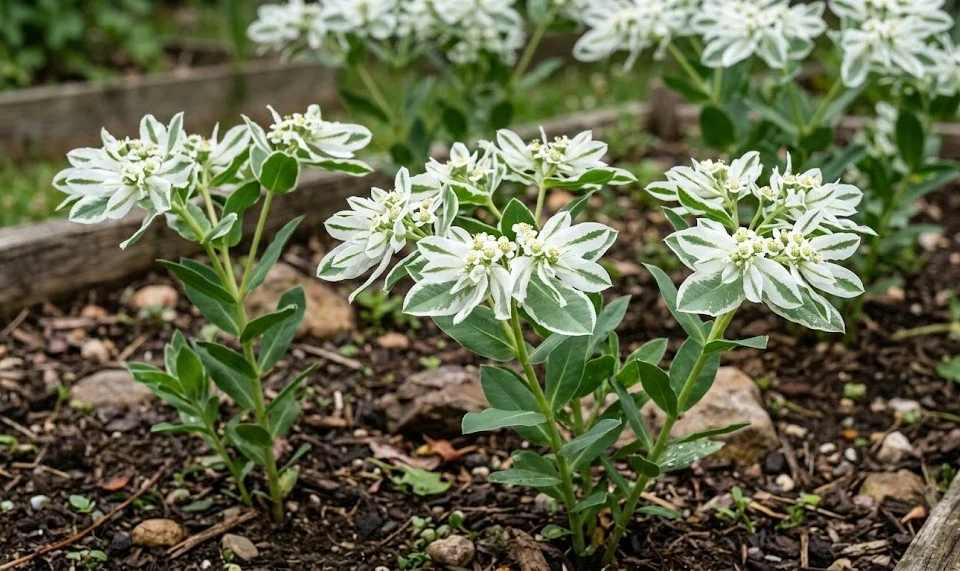

Pruning is a useful technique that can help you maintain the shape and health of your plants throughout the busy growing season. While snow-on-the-mountain does not require heavy pruning to survive, a little bit of maintenance can improve its overall appearance. By removing certain parts of the plant, you can encourage bushier growth and prevent it from becoming too tall or unmanageable. Always remember to use clean, sharp tools to ensure that you are making precise cuts that heal quickly.
Early season shaping
When the plant is still young, you can pinch back the growing tips to encourage the development of side branches. This simple action results in a much fuller and more compact plant that provides better coverage in the garden bed. You should perform this task when the plant is about six inches tall to establish a strong structural foundation. This early intervention prevents the plant from becoming a single, tall stalk that might be easily damaged by the wind.
Removing spent blooms
While the flowers are relatively small and inconspicuous, removing them once they have faded can keep the plant looking tidy. This process, often called deadheading, allows the plant to focus its energy on foliage production rather than seed development. You should cut back to just above a set of healthy leaves to maintain a natural look for the remaining stems. Regular deadheading can extend the period during which the foliage remains at its most attractive and vibrant state.
More articles on this topic
Late season rejuvenation
As the summer progresses, some of the older stems may begin to look a bit tired or lose their lower leaves. You can lightly prune these stems to stimulate a fresh flush of growth that will last until the first frost of autumn. It is important not to remove more than a third of the plant’s total mass at any one time to avoid causing excessive stress. Providing a little bit of extra water after pruning will help the plant recover quickly and begin producing new leaves almost immediately.