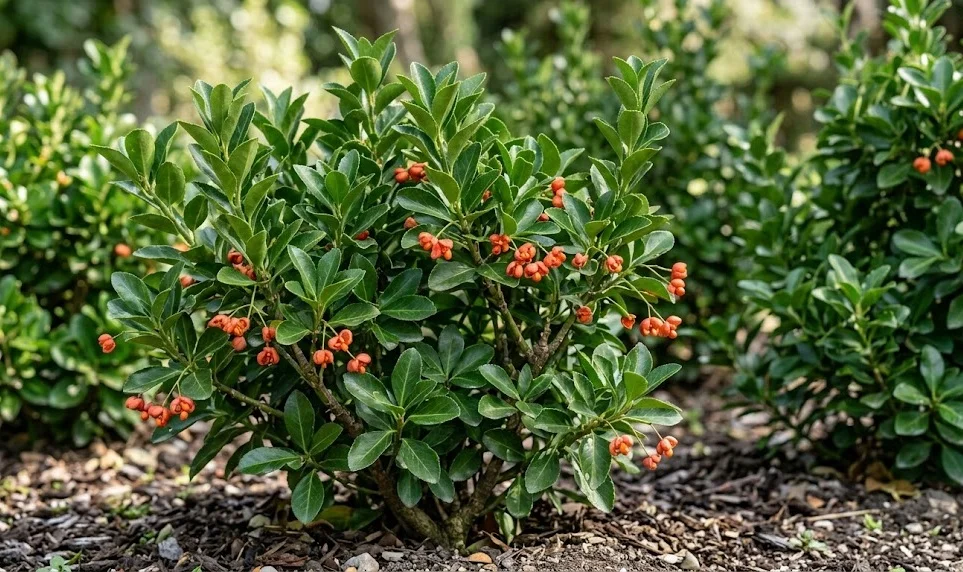

Managing this versatile evergreen shrub requires a basic understanding of its natural resilience and growth habits in temperate climates. You will find that it adapts remarkably well to various garden settings, whether you use it as a hedge or a standalone specimen. To ensure the plant thrives over many years, a consistent approach to its basic environmental needs is essential. Providing the right foundation today will lead to a lush and vibrant display of foliage that remains attractive throughout every season.
Maintaining the health of your plants starts with monitoring the overall vigor and leaf color during the growing season. You should check the undersides of the leaves regularly to spot any potential issues before they become widespread. A healthy specimen will show glossy, firm leaves that resist minor environmental stresses with ease. If you notice any dulling of the foliage, it often signals a need for a slight adjustment in your maintenance routine.
The soil structure plays a vital role in how the root system develops and sustains the upper canopy. You should aim for a soil profile that offers good drainage while retaining enough moisture to prevent complete dehydration. Heavy clay can be improved by adding organic matter, which helps oxygen reach the roots more effectively. Avoiding compacted soil ensures that the shrub can establish a deep and stable anchoring system in your garden.
Climate adaptation is one of the strongest traits of this species, allowing it to withstand diverse weather patterns. While it is quite hardy, protecting it from extremely harsh, drying winds will help maintain the integrity of the foliage. You might notice that plants in sheltered positions tend to keep a more uniform shape and deeper color. Observing how your specific microclimate affects the plant will allow you to make better long-term care decisions.
Growing these shrubs in containers is a popular choice for those with limited space or paved garden areas. You must ensure the pot size is proportional to the root ball to allow for steady and healthy expansion. Potted plants typically require more frequent observation than those planted directly in the ground. Using a high-quality potting mix will provide the necessary structure and nutrients for the plant to flourish in a restricted environment.
Seasonal transitions bring different requirements that you should be prepared to address as the weather changes. In the spring, the focus should be on supporting new growth through careful monitoring of moisture and nutrient levels. During the heat of summer, your main goal is to prevent heat stress and maintain hydration. As autumn approaches, you can begin to slow down intensive care to let the plant harden off for the winter months.
Long-term success with this shrub involves understanding its growth rate and how it interacts with neighboring plants. You should provide enough space for air circulation, which is critical for preventing common fungal issues. Densely packed gardens can sometimes restrict the natural development of the lower branches. By giving the plant room to breathe, you ensure that the entire specimen remains green from the base to the top.
The overall longevity of your garden display depends on the consistency of your care throughout the years. You will find that older specimens become quite hardy and require less intensive intervention than younger plants. However, regular check-ups remain important to ensure that the plant does not succumb to age-related decline. With just a small amount of regular attention, these shrubs can serve as a beautiful backdrop for your garden for decades.