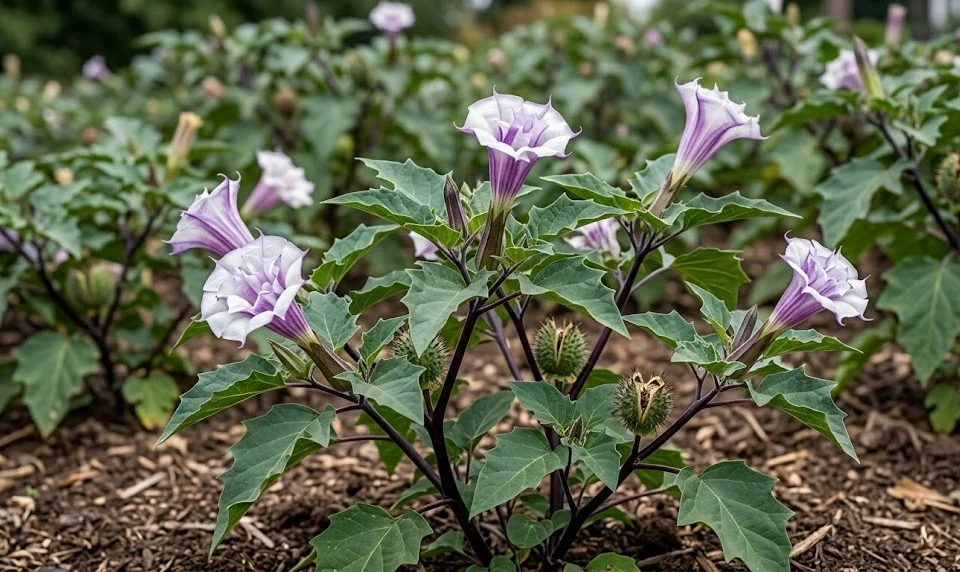

Care of devil’s trumpet is a rewarding task for any gardener who appreciates exotic beauty and architectural plant forms. This species is known for its dramatic, upright flowers and lush foliage that can transform a simple garden corner into a tropical paradise. To ensure the plant reaches its full potential, one must understand its specific growth habits and seasonal needs. Consistent attention to its environment will result in a healthy specimen that blooms profusely throughout the warmer months.
Understanding the growth environment
The devil’s trumpet thrives in conditions that mimic its native tropical habitats, which means warmth is a primary factor for success. You should place the plant in a location where it can enjoy plenty of heat without being battered by strong, drying winds. Soil temperature is just as important as air temperature, as cold roots will quickly lead to stunted growth or yellowing leaves. Gardeners often find that placing the plant against a south-facing wall helps to radiate extra heat during the cooler night hours.
The soil structure plays a critical role in the overall health and vigor of the plant during its active growing phase. A rich, well-draining medium that is high in organic matter will provide the necessary foundation for the extensive root system. If the soil is too heavy or contains too much clay, the plant may suffer from poor aeration and moisture buildup. Adding a generous amount of compost or aged manure before planting will help maintain the nutrient levels required for such a fast-growing species.
Humidity is another factor that often goes overlooked but is essential for maintaining the pristine appearance of the large leaves. In very dry climates, the foliage can become crispy at the edges, which detracts from the plant’s ornamental value. You can improve the local microclimate by grouping plants together or using organic mulch to retain moisture in the ground. Providing a gentle misting during the early morning hours can also help the plant cope with extreme summer heat waves.
Monitoring the plant’s progress involves checking the stems and leaves for any signs of physical stress or nutrient deficiency. Because the devil’s trumpet grows so rapidly, it can quickly deplete the resources in its immediate vicinity. You will notice that the plant responds almost immediately to changes in its care routine, making it an excellent subject for observant gardeners. Maintaining a steady environment is the key to preventing the premature dropping of flower buds, which is a common issue for beginners.
More articles on this topic
Managing seasonal transitions
As the seasons change, the care routine for your devil’s trumpet must be adjusted to account for different light levels and temperatures. During the peak of spring, the focus should be on encouraging new growth through consistent moisture and gentle feeding. This is the time when the plant establishes the structural framework that will support the heavy flowers later in the year. Moving the plant outdoors should only happen once the danger of frost has completely passed and the nights remain consistently warm.
Summer is the most demanding period for care because the plant is at its most active and requires the most resources. You will find that the plant’s thirst increases significantly as the days get longer and the sun becomes more intense. It is important to keep a close watch on the plant during heatwaves, as it can wilt quickly if the soil dries out even for a few hours. High-quality care during this time ensures that the flowering period is extended as long as possible into the autumn months.
When autumn arrives, the growth rate of the devil’s trumpet will naturally begin to slow down as the daylight hours diminish. You should start reducing the frequency of interventions to allow the plant to prepare for its upcoming period of rest. It is vital to stop heavy fertilization at this stage, as new, tender growth would be highly susceptible to the coming cold. Observing the natural rhythm of the plant will tell you exactly when it is time to move it to a protected area.
Winter care is primarily about survival and maintaining the plant in a dormant or semi-dormant state until spring returns. For those living in colder regions, this usually involves bringing the plant indoors or into a frost-free greenhouse. The goal is to keep the root ball alive without encouraging any active growth that would be weak and spindly due to low light. Once the temperatures begin to rise again in the spring, you can slowly reintroduce the plant to its active care cycle.
More articles on this topic
Supporting physical structure
The devil’s trumpet can grow quite large and heavy, especially when it is loaded with dozens of its signature blossoms. Without proper support, the soft wood of the branches can easily snap under the weight of the flowers or during a sudden summer storm. Providing a sturdy stake or a small trellis early in the season will help guide the plant into a manageable shape. It is much easier to install supports while the plant is still young rather than trying to fix a leaning mature specimen.
Tying the branches to the supports should be done with soft materials that will not cut into the delicate bark of the plant. As the stems thicken over time, you must check the ties regularly to ensure they are not constricting the flow of nutrients. A well-supported plant not only looks more professional but also experiences better air circulation throughout its canopy. This increased airflow is essential for preventing the buildup of moisture that could lead to fungal issues on the leaves.
The shape of the plant can be influenced by how you choose to support and guide its primary branches during the first few months. Some gardeners prefer a more shrub-like appearance, while others aim for a taller, more tree-like structure by removing lower shoots. Whichever style you choose, consistency in your structural management will lead to a more balanced and aesthetically pleasing result. A balanced plant is also less likely to tip over if it is being grown in a container on a patio.
Regularly inspecting the integrity of the support system is a necessary part of the long-term care routine for this species. Wind can cause the plant to rub against its stakes, which might create wounds that serve as entry points for pathogens. You should ensure that the stakes are driven deep enough into the ground or the pot to remain stable during heavy rain. Keeping the plant secure allows it to focus its energy on flower production rather than recovering from mechanical damage.
Optimizing flowering potential
The primary reason most people grow the devil’s trumpet is for its magnificent and highly fragrant blossoms that appear in waves. To maximize the number of flowers, you must ensure the plant is receiving the perfect balance of nutrients and sunlight. Any sudden stress, such as a missed watering or a sharp drop in temperature, can cause the plant to abort its developing buds. Providing a stable and nurturing environment is the best way to guarantee a continuous display of color and scent.
Deadheading, or the removal of spent flowers, is a simple but effective technique to keep the plant blooming for a longer period. When the flowers fade and begin to form seed pods, the plant shifts its energy from blooming to reproduction. By removing these pods before they mature, you signal to the plant that it should continue producing new flower buds. This practice keeps the plant looking tidy and prevents it from becoming exhausted by the demanding process of seed production.
The fragrance of the devil’s trumpet is most intense during the evening and night, which is when its natural pollinators are most active. If you want to enjoy this scent to the fullest, place the plant near a seating area or an open window where the breeze can carry the perfume. Many enthusiasts find that the quality of the fragrance is linked to the overall health and hydration of the plant. A well-cared-for specimen will produce larger flowers with a more complex and intoxicating aroma.
Flowering can sometimes be delayed if the plant is given too much nitrogen, which promotes leaf growth at the expense of blossoms. If your plant is lush and green but failing to bloom, you might need to adjust your feeding strategy toward a more balanced formula. Once the first buds appear, it is a sign that the plant has reached maturity and is ready for its peak performance. Watching the giant trumpets unfurl for the first time is one of the most rewarding moments in a gardener’s season.
Maintaining foliage health
The leaves of the devil’s trumpet are large and vibrant, acting as the primary solar panels that fuel the plant’s rapid growth. Keeping these leaves healthy and free from damage is essential for the plant to produce enough energy for its massive flowers. You should regularly wipe away dust if the plant is kept in a sheltered area, as clean leaves can photosynthesize more efficiently. Any yellowing or spotting on the foliage should be addressed immediately to prevent the problem from spreading to the rest of the plant.
Watering from below is often recommended to keep the foliage dry and reduce the risk of leaf-based diseases. If the leaves stay wet for extended periods, they can become a breeding ground for various molds and mildews that thrive in humid conditions. If you must water from above, try to do it early in the day so the sun can dry the leaves quickly. Healthy foliage should feel turgid and have a slight natural sheen that indicates proper hydration and nutrition.
The density of the foliage can sometimes become an issue, especially in older plants that have branched out extensively. If the interior of the plant becomes too crowded, the lack of light and air can cause the inner leaves to turn yellow and fall off. Thinning out some of the smaller, non-flowering shoots can help improve the overall vigor of the plant by focusing energy where it is needed most. This also allows you to see the flowers more clearly, as they won’t be hidden behind a wall of green.
Because the plant is quite poisonous, you should always wear gloves when handling the foliage or pruning the stems. The sap can cause skin irritation for some people, and it is vital to keep the plant away from curious pets and children. Despite these safety precautions, the foliage remains a beautiful and integral part of the plant’s overall charm. Professional care involves balancing the aesthetic needs of the plant with the safety requirements of the household.
Managing the root system
The root system of the devil’s trumpet is aggressive and needs plenty of room to expand if the plant is to reach its full size. If you are growing the plant in a container, you will likely need to move it to a larger pot at least once during the season. A root-bound plant will struggle to take up enough water and nutrients, leading to frequent wilting and poor flower production. Checking the drainage holes for emerging roots is a good way to determine if the plant has outgrown its current home.
When repotting, it is important to handle the root ball gently to avoid causing excessive transplant shock. Use a high-quality potting mix that provides a balance between moisture retention and drainage to support the new growth. You should ensure that the plant is set at the same depth in the new pot as it was in the old one to avoid stem rot. After repotting, the plant will need a few days in a shaded area to recover before being moved back into full sun.
In the garden bed, the roots will spread out horizontally to find moisture and nutrients in the surrounding soil. Mulching around the base of the plant is highly beneficial as it keeps the roots cool and prevents competition from weeds. You should avoid digging too close to the base of a mature plant, as damaging the surface roots can cause significant stress. A healthy root system is the silent engine that drives the spectacular display seen above the ground.
During the dormant season, the health of the roots is the most critical factor for the plant’s survival. If the roots are allowed to freeze or become waterlogged during the winter, the plant will not recover in the spring. You should keep the soil barely moist during this time, just enough to prevent the roots from drying out completely. Understanding the subterranean needs of the devil’s trumpet is what separates an amateur gardener from a true expert.
Safety and long term maintenance
Safety is a paramount concern when caring for the devil’s trumpet due to the high concentration of toxic alkaloids in all its parts. Professional gardeners always recommend keeping a dedicated set of tools for working with this plant to avoid cross-contamination. It is essential to wash your hands thoroughly after any maintenance tasks, even if you were wearing gloves during the process. Educating everyone who has access to the garden about the plant’s properties is a responsible part of its care.
Long-term maintenance involves keeping a detailed log of the plant’s performance, including when it was fed and when the first flowers appeared. This information is invaluable for planning future seasons and identifying patterns in the plant’s behavior. You might find that certain locations in your garden produce better results than others due to subtle differences in light or wind. Over time, you will develop a deep understanding of the plant’s unique personality and requirements.
Propagation is another aspect of long-term care that allows you to maintain the species in your collection for many years. Whether you choose to save seeds or take cuttings, the process ensures that you have backup plants in case of a particularly harsh winter. Sharing these plants with fellow enthusiasts can be a great way to build a community and exchange tips on best practices. However, always include a safety warning when gifting this plant to someone who might be unfamiliar with its nature.
Finally, the end of the season provides an opportunity to reflect on what worked well and what could be improved for next year. Perhaps the plant needed more water during the July heat, or maybe it would have benefited from a different type of support. Cleaning and disinfecting your pots and tools at the end of the year prevents the carryover of any diseases. With consistent and professional care, the devil’s trumpet will continue to be a highlight of your horticultural endeavors.