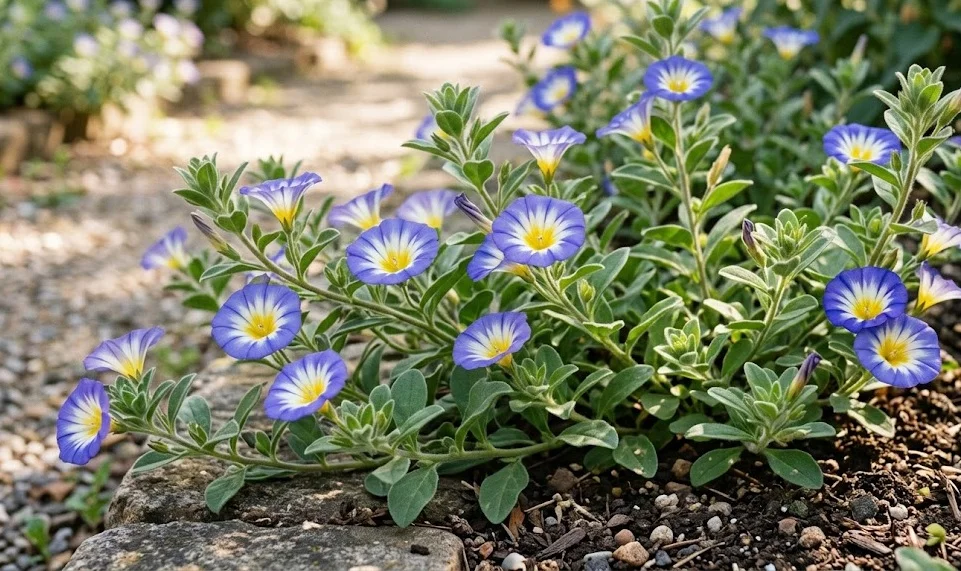

Mastering the balance of water and nutrients is essential for any gardener who wants to see their dwarf morning glory reach its full potential. These plants are relatively hardy, but they truly flourish when their specific hydration and feeding requirements are met with consistency. Watering provides the necessary moisture for the plant’s metabolic processes, while fertilization ensures it has the chemical building blocks for growth and flowering. Understanding how to read the signs of your plant’s needs will allow you to adjust your care routine as the seasons change.
Watering is often the most frequent task in the garden, and for this species, it is all about maintaining a steady supply of moisture. During the heat of summer, the large leaves and constant blooming can lead to high rates of transpiration, meaning the plant loses water quickly. It is best to water early in the morning, which gives the plant a chance to hydrate before the sun reaches its peak intensity. This also allows any water that gets on the leaves to dry quickly, reducing the risk of fungal diseases.
When applying water, aim for the base of the plant rather than spraying the foliage directly from above. Soaking the soil deeply encourages the roots to grow further down into the earth, making the plant more resilient during dry spells. A light sprinkle every day might look nice, but it often leads to shallow root systems that are more vulnerable to heat. You should aim to moisten the soil to a depth of several inches, ensuring that the entire root zone has access to moisture.
Knowing when to water is just as important as knowing how to do it correctly. A simple way to check the moisture level is to stick your finger about an inch into the soil near the base of the plant. If the soil feels dry at that depth, it is time to give your flowers a drink; if it still feels damp, you can probably wait another day. Overwatering can be just as damaging as drought, as it can lead to root rot and other issues caused by a lack of oxygen in the soil.
Designing a fertilization schedule
While good soil preparation provides a great start, supplemental fertilization can help the dwarf morning glory maintain its vigor throughout the season. Because these plants grow and bloom so rapidly, they can quickly deplete the available nutrients in the immediate area. A balanced, water-soluble fertilizer is often the easiest way to provide a quick boost when the plant starts to look a bit tired. Most gardeners find that feeding every two to four weeks is sufficient for plants grown in garden beds.
More articles on this topic
If you are growing your flowers in containers or hanging baskets, you will need to fertilize more frequently. Every time you water a pot, some of the nutrients are washed out through the drainage holes, meaning the soil becomes exhausted much faster than in the ground. For container plants, a diluted liquid fertilizer applied every week or two can help maintain the lush foliage and bright flowers. Just be sure to always apply the fertilizer to moist soil to prevent the concentrated minerals from damaging the delicate roots.
The type of fertilizer you choose can influence whether the plant focuses on leaf growth or flower production. For the dwarf morning glory, a fertilizer with a higher middle number, representing phosphorus, is ideal for supporting those iconic tricolor blooms. Avoid using high-nitrogen fertilizers once the blooming season has started, as this can lead to a massive amount of green leaves with very few flowers hidden underneath. A balanced formula like a 10-10-10 or a specific “bloom boost” product usually works best for most garden situations.
As the season winds down and the weather begins to cool, you can gradually reduce and then stop your fertilization routine. The plant’s metabolism slows down in late autumn, and it no longer needs the same level of nutrient support to stay healthy. Forcing growth late in the year can also make the plant more susceptible to the first frosts of the season. Letting the plant naturally transition into its final phase is a healthier approach for the overall garden ecosystem.
Water quality and environmental factors
The quality of the water you use can occasionally impact the health of your plants, especially if you have very hard water or live in an area with high chlorine levels. Rainwater is the gold standard for gardening, as it is naturally soft and free from the chemicals found in municipal tap water. If you have the space, setting up a rain barrel to collect water from your roof is an excellent way to provide your plants with the best hydration possible. Your flowers will often show their appreciation with more vibrant colors and healthier leaf growth.
More articles on this topic
Temperature also plays a significant role in how you should manage your watering routine throughout the year. In very hot weather, you might find that your plants need water twice a day, especially if they are in small pots or exposed to a lot of wind. Conversely, during a cool and rainy week, you might not need to water at all for several days. Always let the actual condition of the soil and the appearance of the plants be your guide rather than strictly following a calendar.
Mulching the soil around your dwarf morning glories is one of the best ways to conserve water and reduce your workload. A two-inch layer of organic mulch, such as shredded bark or compost, acts as an insulating blanket for the soil. It prevents the sun from baking the surface and significantly slows down the evaporation of moisture from the earth. This means the soil stays cooler and damper for longer, providing a much more stable environment for the roots to do their work.
Pay attention to how the wind affects your garden, as a breezy location can dry out plants much faster than a sheltered one. Wind increases the rate at which water evaporates from the leaves, which can lead to wilting even if the soil is still somewhat moist. If you notice your plants drooping on a windy afternoon, a light misting or an extra drink of water might be necessary to help them recover. Understanding these subtle environmental factors is what separates a good gardener from a truly great one.
Organic vs synthetic fertilizers
Choosing between organic and synthetic fertilizers is a decision that often depends on your personal gardening philosophy and the needs of your plants. Synthetic fertilizers are designed to be immediately available to the plant, providing a fast and predictable source of nutrients. They are very convenient and come in many different formulas tailored to specific stages of growth. However, they do not improve the long-term health of the soil and can sometimes lead to a buildup of salts if used excessively.
Organic fertilizers, on the other hand, work by feeding the soil microbes which then break down the material into nutrients the plant can use. Common organic options include compost tea, fish emulsion, and seaweed extracts, all of which are excellent for dwarf morning glories. While they work a bit more slowly than synthetic options, they contribute to a healthier soil structure and support a diverse ecosystem of beneficial organisms. Many gardeners find that using a combination of both methods provides the best results for their floral displays.
Compost is perhaps the most valuable “fertilizer” you can use, even though it is technically a soil amendment. Adding a fresh layer of compost around your plants mid-season provides a gentle, slow-release source of nutrients and improves the soil’s ability to hold water. It also introduces beneficial bacteria and fungi that can help protect the roots from diseases and improve nutrient uptake. It is an environmentally friendly way to recycle garden waste and return vital energy back into the earth.
Regardless of which type of fertilizer you choose, always remember that “more is not always better” when it comes to feeding plants. Over-fertilizing can lead to leggy, weak growth that is more attractive to pests like aphids and more susceptible to diseases. It can also cause “fertilizer burn,” where the edges of the leaves turn brown and crispy due to an excess of minerals. Following a “less is more” approach and observing your plants’ reaction is the safest way to ensure they stay healthy and beautiful.
Identifying signs of stress
Learning to read the visual cues of your dwarf morning glory is the best way to determine if your watering and fertilization routines are working. If the leaves are wilting and the soil feels dry and hard, the plant is clearly thirsty and needs immediate hydration. You will often see the leaves perk up within an hour or two after a thorough watering. If the plant continues to wilt even when the soil is wet, you might be dealing with overwatering and root rot, which is a much more serious problem.
Yellowing leaves can be a sign of several different issues, so you have to look closely to diagnose the cause. If the lower leaves are turning yellow while the rest of the plant looks fine, it might just be the natural aging process of the foliage. However, if the yellowing is widespread and accompanied by stunted growth, the plant might be lacking essential nutrients like nitrogen or iron. A light application of a balanced liquid fertilizer can often correct this deficiency and bring back the healthy green color.
If you notice that your plant is producing a lot of lush, green foliage but very few flowers, you might be giving it too much nitrogen. This is a common issue when gardeners use high-nitrogen lawn fertilizers near their flower beds. Switching to a fertilizer with a higher phosphorus content can help redirect the plant’s energy toward making those beautiful tricolor blossoms. It is all about finding that perfect nutritional balance that supports both a healthy plant body and a spectacular floral show.
Finally, keep an eye out for any white crusty deposits on the surface of the soil, especially in container plants. This is usually a sign of salt buildup from synthetic fertilizers, which can eventually harm the roots and affect the plant’s health. If you see this, “flush” the soil by watering heavily until water runs freely out of the bottom of the pot for several minutes. This washes away the excess salts and refreshes the soil environment for your flowers to continue growing happily.