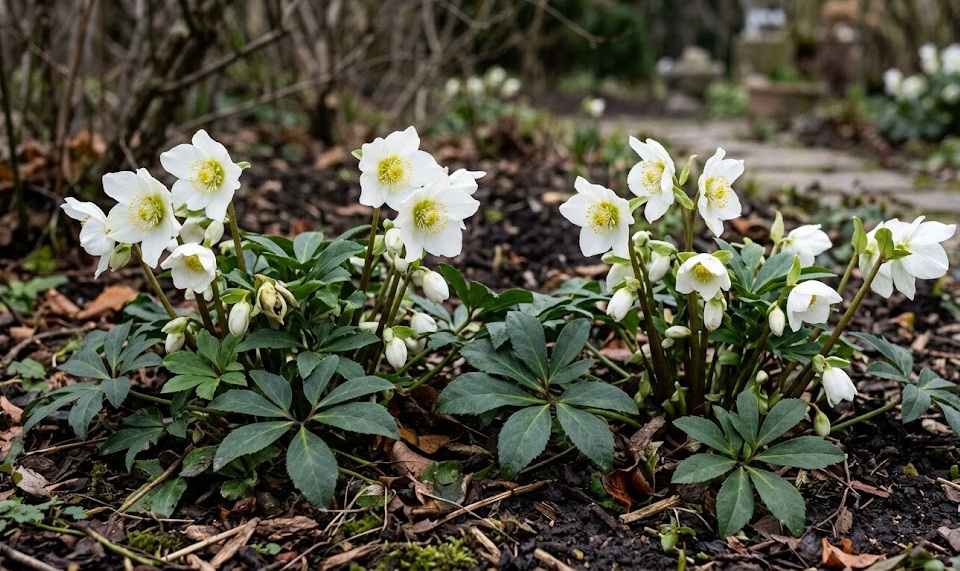

While many people call this plant the Christmas rose because of its ability to bloom in the dead of winter, its survival through the coldest months is not something to be taken for granted. In its native alpine habitats, it is often protected by a thick blanket of snow that insulates the ground and keeps the temperature stable. In a garden setting, however, we must often step in to provide that same level of protection and care to ensure the plant remains healthy and vibrant. This guide will explain the professional techniques for helping your plants navigate the challenges of ice, snow, and freezing winds.
The black hellebore is naturally hardy to very low temperatures, but it is the fluctuating conditions of modern winters that can be most damaging. Sudden thaws followed by deep freezes can heave the soil, exposing sensitive roots to the air and causing the plant to lose vital moisture. Preparing your plants for these changes starts long before the first snowflake falls, involving a combination of site selection, mulching, and proper hydration. A human-centric approach to gardening means being attentive to these environmental shifts and responding with the appropriate level of support.
Understanding natural hardiness and alpine origins
To truly appreciate the winter needs of this plant, one must understand that it evolved to thrive in high-altitude environments. Its leathery leaves are designed to resist desiccation, and its low growth habit keeps it out of the harshest winds. In the wild, it often grows in the dappled shade of deciduous trees, where it is sheltered from the most intense winter sun. By recreating these conditions in your garden, you are working with the plant’s natural biology rather than against it.
One of the most remarkable features of the Christmas rose is its ability to “melt” into the ground when temperatures drop well below freezing, only to spring back up as soon as things warm up. This is a survival mechanism where the plant moves water out of its cells and into the spaces between them to prevent internal ice crystals from causing damage. If you see your plants looking flat and wilted after a particularly cold night, do not panic and do not try to “fix” it. Simply wait for the sun to come out, and you will likely see them standing tall again within a few hours.
While the foliage is evergreen, it can become tattered and burnt by cold, dry winds, a condition known as windburn. This is especially true if the ground is frozen and the roots cannot take up water to replace what is lost through the leaves. If your garden is particularly exposed, providing a temporary windbreak made of burlap or evergreen branches can be a professional way to protect the foliage. This extra layer of care ensures that the green backdrop for your winter flowers remains attractive throughout the entire season.
More articles on this topic
The flowers themselves are surprisingly resilient, but they can be buried by heavy, wet snow that might snap the stems. While a light dusting of snow acts as a wonderful insulator, a massive accumulation should be gently brushed away. Use a soft broom or your hands to clear the center of the plant so the emerging buds have room to breathe. This small intervention can make the difference between a successful floral display and a season of broken stems and flattened blossoms.
Mulching for protection and soil stability
Mulching is perhaps the most effective professional tool for successful overwintering in a home garden. A thick layer of organic material acting as a blanket over the root zone helps to moderate soil temperatures and prevents the damaging cycle of freezing and thawing. Well-rotted compost, shredded leaves, or bark mulch are all excellent choices that will eventually break down and improve the soil. You should aim for a layer about two to three inches deep, spread in a wide circle around the base of the plant.
When applying winter mulch, it is crucial to keep the material a few inches away from the actual crown of the hellebore. If the mulch is piled up directly against the main stems, it can trap moisture and encourage rot, which is the last thing you want during a damp winter. The goal is to insulate the roots and the surrounding soil, not to bury the plant itself. This distinction is a hallmark of a professional gardener who understands the balance between protection and hygiene.
In regions where the ground remains frozen for long periods, mulching also helps to keep whatever moisture is in the soil from evaporating too quickly. Even though the plant is not growing rapidly in the winter, its evergreen leaves are still photosynthesizing and losing small amounts of water. Maintaining a stable moisture level in the root zone is vital for preventing the winter desiccation that often kills less hardy plants. Think of the mulch as a reservoir that keeps the plant’s life support system functioning through the darkest months.
More articles on this topic
If you are using fallen leaves from your own trees as mulch, make sure they are shredded first so they don’t mat down and prevent air from reaching the soil. Oak and beech leaves are particularly good because they take a long time to break down and have a slightly acidic to neutral pH. Avoiding the use of “hot” or fresh manure during the winter is also important, as you don’t want to encourage unseasonable growth that would be immediately killed by the next frost. A well-mulched garden is a happy garden, regardless of the temperature outside.
Managing potted plants during the winter
Growing black hellebores in containers is a wonderful way to bring the winter beauty closer to your home, but it does require some extra precautions. Because the root system is elevated above the ground and surrounded only by a thin layer of potting mix, it is far more vulnerable to freezing solid. A pot that sits out on a cold patio can experience much more extreme temperature swings than a plant in the ground. To protect your potted specimens, you might consider wrapping the containers in bubble wrap or burlap for added insulation.
During particularly severe cold snaps, the best professional advice is to temporarily move your pots into an unheated garage or a sheltered porch. You don’t want to bring them into a heated house, as the sudden warmth will shock the plant and likely cause it to drop its buds. The goal is simply to keep the roots from freezing solid for extended periods. Once the extreme weather passes, move the pots back outside to their original positions so they can continue their natural winter cycle.
Watering potted hellebores in the winter is a delicate task that requires a human touch and careful observation. You must ensure the potting mix doesn’t dry out completely, but you also cannot allow it to become a block of ice. Choose a mild day when the temperatures are above freezing to give your pots a light drink if they feel light when lifted. Always make sure the pots have excellent drainage so that any excess water can escape before the next freeze arrives.
Choosing the right type of container can also make a difference in how well your plants survive the winter. Terracotta pots, while beautiful, can sometimes crack when the wet soil inside expands as it freezes. Using frost-resistant ceramic, heavy-duty plastic, or stone containers is a much safer bet for year-round outdoor use. If you do use terracotta, consider “pot-in-pot” planting where the main plant is in a plastic liner inside the decorative pot, providing an extra layer of air insulation.
Rejuvenation and late winter bloom care
As the winter begins to transition into the very first hints of spring, your attention should shift toward helping the plant look its best for the peak of its flowering. This is the time when the old leaves from the previous year often start to look their worst—spotted, tattered, and generally messy. Removing these old leaves in late winter is a professional standard that serves two purposes. First, it clears the way for the flowers to be seen clearly, and second, it removes any fungal spores that might be overwintering on the foliage.
Be careful when removing the old leaves to avoid damaging the new flower stalks that are emerging from the center of the crown. Use a sharp pair of clean pruners and cut the old stems as close to the ground as possible without nicking the new growth. Once the old foliage is gone, you will be amazed at how much more impactful the white blossoms become. This simple act of grooming is one of the most satisfying tasks in the late winter garden and really shows the “human” hand in the landscape.
Monitoring the blossoms during a late-season snowstorm is also important to ensure they don’t get crushed just as they are reaching their prime. If a heavy snowfall is predicted, you can temporarily cover your most prized clumps with an upturned bucket or a specialized garden cloche. Just remember to remove these covers as soon as the weather clears so the plants can get the light and air they need. These small interventions are what ensure a spectacular and professional-looking display every single year.
Finally, as the soil begins to warm up in the very late winter, you can apply a very light application of organic fertilizer to give the plant a boost for its spring growth phase. This is the natural point in the cycle where the plant starts to transition from flowering to building new leaves and storing energy. By following the plant through its winter journey and providing the right support at the right time, you create a garden that is truly resilient. The black hellebore is a testament to the beauty of winter, and with your help, it will continue to shine year after year.