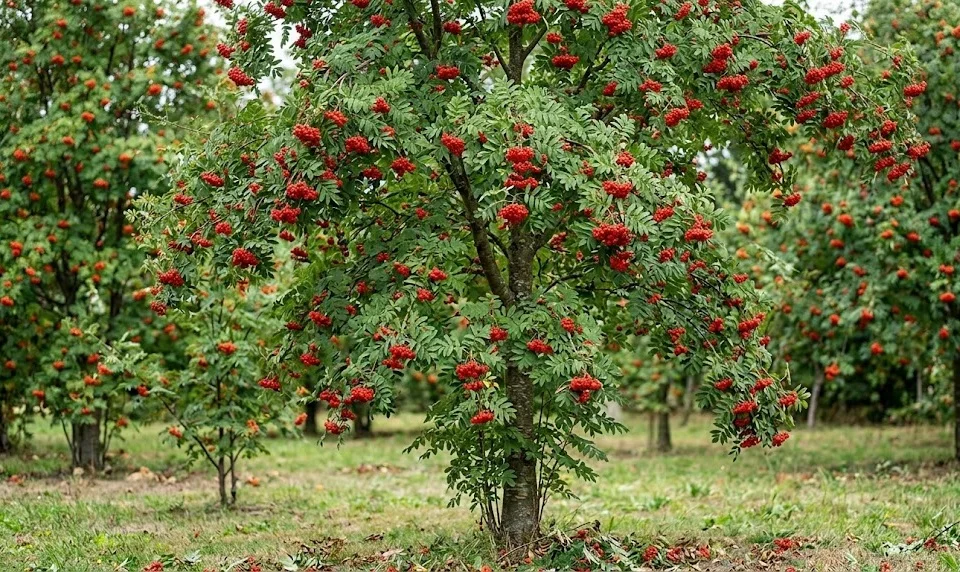

The most important pruning you will ever do for a mountain ash occurs during its first five years of growth, when the primary structure of the crown is being established. Your goal during this formative stage is to encourage a strong central leader and a well-spaced set of scaffold branches that can support future fruit loads. You should look for branches with wide angles of attachment to the trunk, as these are much stronger than those with narrow, V-shaped crotches. A professional approach to structural pruning prevents many of the breakage issues that plague older, unmanaged trees.
In the first few years, you should focus on removing any “competing leaders” that might try to grow as tall as the main central stem. Having a single dominant leader gives the tree a classic, upright form and makes it much more resistant to splitting during wind or snow storms. You should also remove any branches that are growing too close together or crossing each other, as these will eventually rub and create wounds. By making these small corrections early, you avoid the need for large, stressful cuts later in the tree’s life.
When removing a branch, it is critical to make the cut just outside the “branch collar,” which is the slightly swollen area where the limb meets the trunk. Cutting too close to the trunk, known as a flush cut, removes the specialized cells the tree needs to properly seal the wound. Conversely, leaving a long “stub” prevents the tree from growing over the cut and provides a perfect entry point for decay-causing fungi. Using sharp, clean bypass pruners ensures a smooth cut that will heal rapidly and cleanly.
Avoid the temptation to over-prune a young tree, as every leaf you remove is a “solar panel” that provides energy for root development. A good rule of thumb is never to remove more than twenty percent of the live canopy in a single growing season. Focus on the “three Ds” first: dead, damaged, and diseased wood, which should be removed as soon as it is noticed. Once those are gone, you can proceed with the more strategic cuts needed to shape the future of the tree.
Maintenance pruning for health
As the mountain ash reaches maturity, the focus of your pruning efforts shifts from shaping the tree to maintaining its health and vigor. Regular maintenance pruning involves thinning out the interior of the canopy to improve light penetration and air circulation throughout the foliage. This simple practice is one of the most effective ways to reduce the incidence of fungal diseases like apple scab or leaf spot. A tree that is “open” enough for a bird to fly through is generally much healthier and more productive.
More articles on this topic
You should also keep a close eye on “water sprouts” and “suckers,” which are the fast-growing, vertical shoots that often appear from the base of the trunk or along the main limbs. These shoots are extremely vigorous and can drain energy away from the more productive parts of the tree while also ruining its aesthetic form. It is best to remove them as soon as they appear, ideally while they are still soft and can be rubbed off with your thumb. If they have become woody, use a sharp pair of pruners to cut them back flush with their point of origin.
Thinning the fruit-bearing branches can also be beneficial in years when the tree is carrying an exceptionally heavy crop of berries. The weight of thousands of berries can put immense mechanical stress on the limbs, sometimes causing them to droop or even break. By selectively removing some of the fruit clusters in early summer, you reduce the physical load and ensure the remaining berries are larger and more vibrant. This “crop management” is a sign of a professional gardener who understands the balance between aesthetics and structural safety.
Always inspect the tree for signs of “dieback,” where the tips of the branches stop producing leaves and begin to turn brittle. This can be caused by various factors, including root stress, extreme weather, or localized pest issues. Pruning back to healthy wood—indicated by a green layer of cambium just beneath the bark—helps the tree wall off any potential pathogens and redirect its resources. Consistent, light maintenance is always preferable to radical, heavy-handed pruning every few years.
Timing and tool selection
The timing of your pruning cuts is critical for the mountain ash, as it affects how quickly the tree heals and how it responds in terms of new growth. For most structural and maintenance pruning, the late winter or very early spring—while the tree is still dormant—is the ideal window. During dormancy, the tree’s energy is stored in the roots and trunk, so removing branches doesn’t deprive it of its current leaf-based energy production. Additionally, the lack of leaves makes it much easier to see the overall structure of the skeleton and identify problematic branches.
More articles on this topic
However, if you are pruning specifically to manage a disease like fire blight, you must act immediately regardless of the season to stop the spread. In these cases, it is vital to prune during dry weather to minimize the risk of spreading the bacteria through moisture. For flowering and fruiting trees, some growers prefer to wait until just after the blossoms have faded to do light thinning. This allows you to enjoy the full spring display before making any adjustments to the canopy.
Using the right tools for the job is not just about convenience; it is about the health and safety of the tree. Bypass pruners are the workhorse for small branches up to about two centimeters in diameter, providing a clean, scissor-like cut. For branches that are too large for pruners, a high-quality pruning saw with a narrow blade is the best choice for making precise cuts in tight spaces. Loppers can be useful for medium-sized branches, but you must be careful not to crush the wood, which can happen with lower-quality “anvil-style” tools.
Finally, never underestimate the importance of tool hygiene in a professional gardening or agricultural context. After pruning a tree, especially one that shows any signs of distress, you should disinfect your blades with a solution of seventy percent rubbing alcohol. This prevents the accidental transfer of invisible spores or bacteria to the next branch or the next tree you work on. Keeping your tools sharp also ensures that each cut is as clean as possible, which is the best way to help the mountain ash heal and thrive.