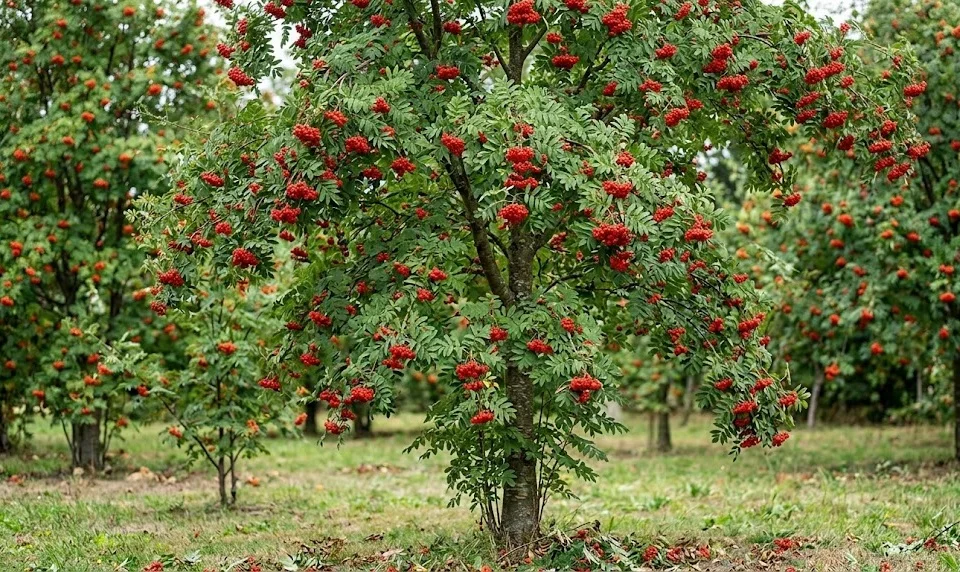

The mountain ash is a species that inherently seeks the light, and its performance in the landscape is directly tied to the amount of direct solar radiation it receives. To achieve the most prolific flowering and the subsequent heavy crops of vibrant berries, the tree should be planted in a location that receives full sun. In professional terms, this means at least six to eight hours of direct, unfiltered sunlight during the peak of the growing season. Adequate light ensures that the tree has enough energy to fuel the demanding process of reproductive development.
In addition to fruit production, high light levels contribute to a denser and more structurally sound canopy with shorter internodes between the leaves. Trees grown in full sun typically exhibit a more compact and aesthetically pleasing form compared to those struggling in the shade. The exposure to UV light also helps in the development of the anthocyanins that give the berries their characteristic deep red or orange hues. Without sufficient sun, the fruit may remain pale, sparse, and less attractive to both the gardener and the local bird population.
Full sun exposure also plays a critical role in the natural health management of the tree by keeping the foliage dry. Morning sun is particularly valuable as it quickly evaporates the dew that collects on the leaves overnight, which is a major factor in preventing fungal infections like leaf spot or rust. A tree that sits in a damp, shaded pocket for too long each day is much more likely to suffer from chronic leaf diseases. When planning your landscape, prioritize the sunniest spots for your mountain ash to ensure it remains vigorous and resilient.
However, it is important to balance this need for light with the tree’s preference for cool root systems, especially in warmer climates. While the canopy loves the sun, the soil beneath it should be protected from extreme heat through the use of mulch or low-growing groundcovers. This combination of “sunny head and cool feet” mimics the natural conditions found in the mountainous and northern regions where the species originated. A professional approach considers both the atmospheric light and the thermal conditions of the soil simultaneously.
Tolerance for partial shade conditions
While the mountain ash definitely prefers full sun, it is known for its remarkable adaptability and can tolerate partial shade with reasonable success. In a garden setting, partial shade is defined as a location that receives roughly four to six hours of direct sun, or dappled light throughout the majority of the day. You will find that the tree still grows well in these conditions, though its growth rate may be slightly slower than a specimen in full sun. It is a versatile choice for edges of wooded areas or gardens with mature, taller trees nearby.
More articles on this topic
In shaded environments, the tree may exhibit a more “leggy” or open growth habit as it stretches its branches toward the available light sources. This can result in a more graceful, airy appearance that some landscape designers actually prefer for certain aesthetic themes. However, you should be aware that the flowering will be less intense and the berry production will likely be much more modest. If your primary goal is the visual impact of the fruit, you should reconsider planting in a heavily shaded spot.
Monitoring the health of a mountain ash in partial shade requires a bit more attention to moisture and air circulation. Because the leaves take longer to dry in the shade, you must be extra vigilant about spotting any early signs of fungal disease. You might need to prune more frequently to thin out the canopy and allow whatever light and breeze are available to reach the interior branches. A proactive approach to maintenance can compensate for some of the disadvantages of a less-than-ideal light situation.
It is also worth noting that the intensity of the light varies significantly depending on your geographic latitude and the time of year. In southern regions, a bit of afternoon shade can actually be beneficial by protecting the tree from the most intense heat and reducing transpiration stress. In contrast, in more northern or coastal areas, every bit of available sunlight is precious and should be maximized. Understanding your local microclimate is the key to determining exactly how much shade your mountain ash can comfortably handle.
Light competition in forest settings
In its natural habitat, the mountain ash often grows as an understory or “pioneer” species, meaning it is well-versed in competing for light in complex environments. It often finds its niche in forest clearings, along rocky slopes, or at the edges of dense woodlands where the canopy opens up. In these settings, the tree uses its rapid early growth to reach for the sun before it is overshadowed by larger, long-lived canopy trees like oaks or beeches. This competitive nature makes it a resilient choice for diverse, multi-layered landscape designs.
More articles on this topic
When planting a mountain ash near other large trees or structures, you must account for the future shadow patterns that will develop over the years. A spot that is sunny today might become deeply shaded in a decade as a neighboring tree matures, which could lead to the decline of your specimen. Professional site planning involves visualizing the landscape in three dimensions and across a timeline of at least twenty years. If competition for light becomes too intense, the mountain ash may stop fruiting entirely and become susceptible to pests.
Root competition often goes hand-in-hand with light competition in a crowded forest-like garden setting. Larger trees not only block the sun but also have expansive root systems that can out-compete the mountain ash for water and nutrients. To help your tree succeed in these competitive zones, you should provide extra supplemental water and organic amendments during the establishment phase. Ensuring that the mountain ash has a strong start allows it to better hold its own against its larger neighbors.
If you find that an established mountain ash is being swallowed by the shade of encroaching vegetation, “limbing up” or thinning the surrounding trees can help. By selectively removing branches from the competing plants, you can create “light wells” that allow sun to reach the mountain ash canopy. This kind of thoughtful forest management keeps the ecosystem balanced and ensures that all species have the resources they need to thrive. A true expert understands that light management is an ongoing process of observation and adjustment.