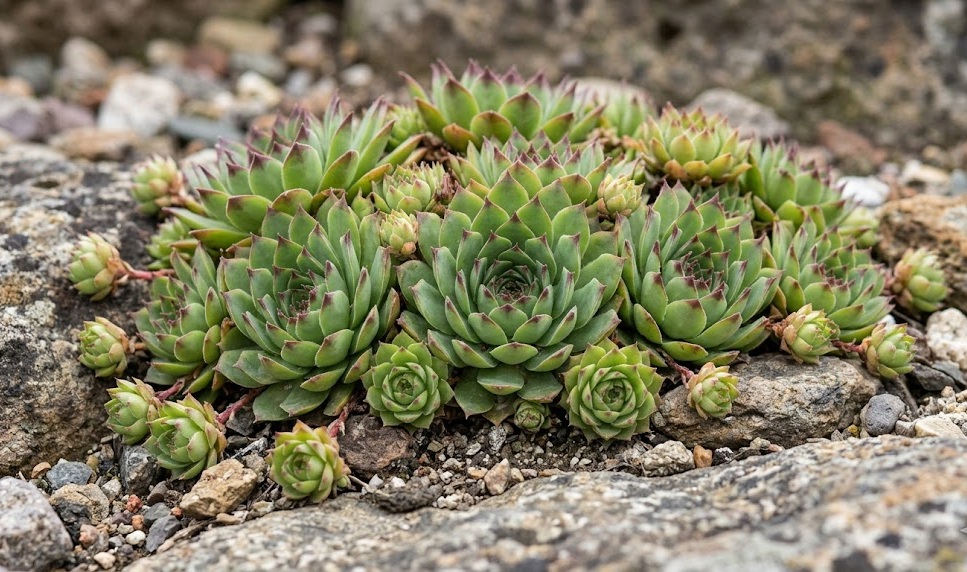

Pruning the common houseleek is a refined gardening practice that focuses on maintaining the aesthetic geometry of the colony and managing the plant’s natural life cycle. Unlike woody shrubs that require heavy structural cutting, the “pruning” of these succulents is a more delicate process of removing spent tissues and thinning out overcrowded areas. This maintenance not only keeps the display looking professional and tidy but also plays a crucial role in preventing disease and encouraging new growth. A well-managed colony of houseleeks is a testament to the gardener’s attention to detail and understanding of succulent biology.
The most frequent pruning task involves the removal of dead or dying rosettes after they have finished their flowering cycle. As a monocarpic species, the mother plant will naturally wither away once the seeds have been produced, leaving behind a dry, brown stalk and shriveled leaves. If left in place, these dead rosettes can become a focal point for rot and a hiding place for pests like snails or mealybugs. Removing them as soon as they are completely spent is an essential part of regular garden hygiene.
To remove a dead rosette, wait until the flower stalk is dry and brittle, then gently grasp it near the base and give a firm, steady pull. In most cases, the entire dead structure will pop out of the ground, leaving a small gap in the colony that will soon be filled by surrounding offsets. If the plant is firmly anchored, you can use a small, sharp knife or garden snips to cut it away at soil level. Being careful not to damage the living “chicks” around the base is the mark of a skilled hand.
In addition to removing spent blooms, you should also periodically clean up the lower leaves of the healthy rosettes. It is natural for the oldest, outermost leaves to turn brown and dry out as the plant grows from the center. While this is part of the plant’s normal development, a large accumulation of dry leaves can trap moisture against the stem. Gently tugging these dry leaves away with tweezers or your fingers improves airflow and gives the plant a much sharper, cleaner appearance.
Thinning and rejuvenating overcrowded colonies
Over time, a successful patch of common houseleeks can become so dense that the rosettes begin to pile on top of each other, losing their individual definition. This overcrowding can lead to a mounded, messy look and may cause some of the smaller plants to be smothered by their larger neighbors. Thinning out the colony every few years is a professional technique used to restore the balance and beauty of the display. This process also provides an excellent opportunity to gather offsets for propagation or sharing with other gardeners.
More articles on this topic
When thinning, start by identifying the oldest or largest rosettes that may be dominating the space too aggressively. You can carefully lift these individuals out of the soil using a small trowel, being mindful of the roots of the surrounding plants. Once some space has been created, the remaining rosettes will have the room they need to expand and settle back into a more natural, flat arrangement. This rejuvenation often triggers a new wave of offset production, keeping the colony youthful and vibrant.
If a colony has become particularly old and leggy, with long stems visible between the leaves and the soil, a more radical “cut back” may be necessary. You can decapitate the healthy rosettes, leaving about an inch of stem attached, and replant them directly into fresh, well-draining soil. This effectively resets the plant’s growth, allowing it to form a new root system and sit low to the ground once again. The remaining old stems in the ground may even produce a new flush of tiny offsets if they are left undisturbed.
The best time to perform this type of structural pruning and thinning is in the early spring, just as the plants are beginning their active growth phase. This allows the manipulated plants to recover quickly and establish themselves before the heat of summer arrives. Avoid heavy pruning in the late autumn or winter, as the plants are dormant and will not be able to heal their wounds as effectively. A seasonal approach to maintenance ensures that your houseleeks always have the energy they need to bounce back.
Tools and techniques for precision work
Using the right tools for maintaining your houseleeks can make a significant difference in both the ease of the task and the health of the plants. A pair of long, fine-tipped tweezers is perhaps the most useful tool for removing dry leaves from the tight spaces between rosettes. For larger tasks, a small, sharp pair of floral snips or a dedicated succulent knife allows for clean cuts without crushing the fleshy tissues. Always ensure your tools are sterilized with alcohol before and after use to prevent the spread of pathogens.
More articles on this topic
When making a cut on a living part of the plant, such as when removing an offset or decapitating a leggy rosette, a clean, swift action is best. Ragged or crushed tissue takes longer to heal and provides more surface area for potential infection. If you are working with a particularly large or sap-heavy specimen, you can allow the cut surface to “air dry” for a few hours before it comes into contact with the soil. This allows the plant to form a protective callus, which is its natural defense against soil-borne diseases.
For colonies grown in intricate rock gardens or vertical walls, the pruning process requires even more precision and patience. You must be careful not to dislodge the surrounding stones or the delicate root systems that are anchored in narrow crevices. Often, a small brush can be used alongside your tweezers to clear away any soil or debris that has fallen into the center of the rosettes during the pruning process. This meticulous attention to detail is what creates the “exhibit-ready” look seen in professional botanical displays.
The goal of all your pruning efforts should be to enhance the natural form of the common houseleek, not to force it into an unnatural shape. Observe the growth patterns of your specific varieties and let their geometry guide your interventions. Some types naturally form large, solitary rosettes, while others are meant to be dense, mat-forming groundcovers. Tailoring your pruning style to the specific characteristics of each plant is the final step in mastering the care of this ancient and beautiful succulent.
Maintaining the health of the parent colony
A well-pruned colony is a healthy colony, as the removal of dead material and the improvement of airflow significantly reduce the risk of rot. By regularly interacting with your plants during the pruning process, you are also more likely to notice early signs of pests or diseases. This proactive observation is a key part of professional integrated pest management. The simple act of cleaning up your houseleeks can be a meditative and rewarding part of your gardening routine.
As you remove the older rosettes and clean up the foliage, you are essentially helping the plant focus its energy on its most productive and vibrant parts. This concentration of resources leads to stronger, more resilient growth and better color expression. The “chicks” that fill the gaps left by your pruning will often grow faster and larger than they would have in a crowded, unmanaged patch. Your role as a gardener is to act as a facilitator for the plant’s natural drive for renewal.
Sharing the results of your pruning is one of the most enjoyable aspects of succulent gardening. The healthy offsets you remove during thinning are perfect for gifting to friends or for starting new projects in different parts of your garden. This generosity is a long-standing tradition among houseleek enthusiasts and helps to preserve rare or favorite cultivars. Every offset you plant is a new opportunity to apply your expert knowledge and watch a new colony flourish.
Ultimately, pruning and cutting back the common houseleek is about more than just aesthetics; it is about stewardship of a living organism. By understanding and respecting the plant’s life cycle, you can ensure that it remains a highlight of your garden for decades. The architectural beauty of the rosettes, combined with your professional care, creates a timeless and resilient landscape. Your commitment to these small but mighty plants is what allows them to truly shine in the agricultural and gardening world.