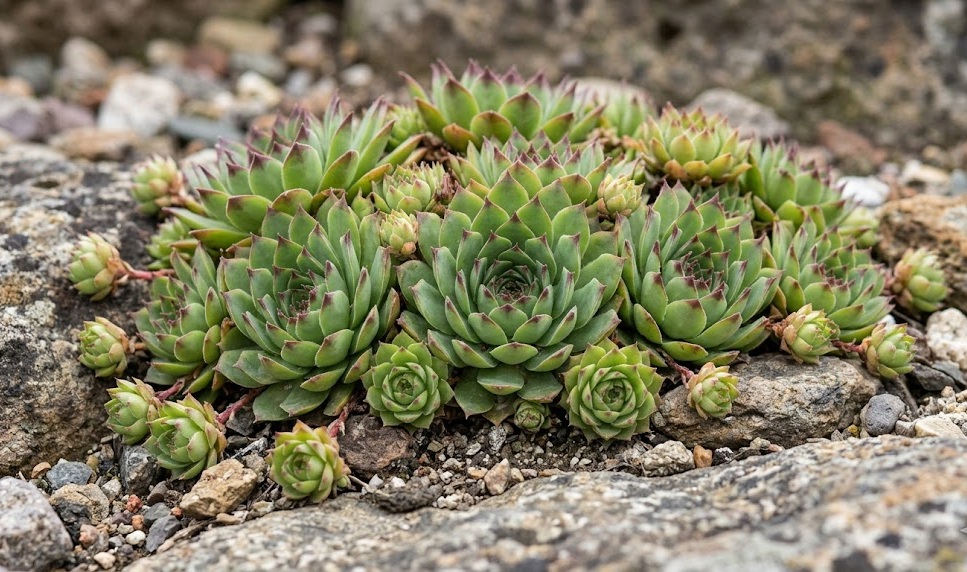

Overwintering the common houseleek is a relatively straightforward process due to the plant’s natural adaptation to the high-altitude, freezing environments of the European mountains. Unlike many other succulents that must be moved indoors, this species is fully hardy and actually benefits from a period of winter dormancy. The primary goal during the colder months is not to keep the plant warm, but to keep it dry and protected from the physical stresses of ice and snow. A successful overwintering strategy ensures that the rosettes emerge in the spring with their structural integrity and vibrant colors intact.
The physiological preparation for winter begins in the late autumn as the plant naturally loses some of its water content to prevent its cells from bursting during a freeze. You will notice the rosettes contracting and becoming much firmer to the touch as they enter this defensive state. It is vital to stop all fertilization by late summer to ensure that any new growth has time to harden off before the first frost arrives. Soft, nitrogen-rich tissues are the most likely to be damaged by extreme cold, so a lean approach to autumn care is essential.
If your houseleeks are planted in the ground, they are usually quite safe as long as they are in a well-draining spot. The earth provides a natural thermal mass that protects the root system from the most extreme temperature fluctuations. In regions with very heavy snowfall, the snow itself can actually act as an insulating blanket, keeping the plants at a steady temperature just around the freezing point. However, if you live in an area with frequent freeze-thaw cycles, you must be more vigilant about the plants being dislodged from the soil.
For those growing houseleeks in containers, a bit more attention is required because the roots are more exposed to the ambient air temperature. While the rosettes can handle the cold, the repeated freezing and thawing of a small pot can damage the delicate root hairs. It is a professional practice to move precious potted specimens to a more sheltered location, such as against a south-facing wall or under a porch. This keeps them out of the direct path of freezing winds and prevents the soil from becoming a solid block of ice for extended periods.
Managing moisture levels during the dormant phase
The greatest threat to a common houseleek during the winter is not the cold itself, but the combination of cold and excessive moisture. In their native habitat, these plants spend the winter under a layer of dry snow or in the crevices of well-drained rocks. In a garden setting, the heavy, wet soils of winter can lead to rapid rot if the drainage is not perfect. Ensuring that the planting site remains as dry as possible is the single most important factor for a successful overwintering.
More articles on this topic
If you are expecting a particularly wet winter, you might consider providing some temporary overhead protection for your succulents. A simple piece of glass or clear plastic propped up over the plants can deflect the worst of the rain while still allowing light and air to circulate. It is important that this cover does not touch the plants and that it is open on the sides to prevent the buildup of stagnant, humid air. This “umbrella” approach is a favorite technique among professional alpine gardeners who grow sensitive species.
For potted houseleeks, you should almost entirely cease watering from late autumn until the first signs of spring growth appear. The ambient humidity in the air is usually sufficient to prevent the plants from drying out completely during their dormant period. If you are keeping them in an unheated greenhouse, you may need to provide a very light watering once every month or two, but only on a day when the temperature is above freezing. Always check the soil and the condition of the leaves before deciding to add any moisture.
In the event of a sudden and deep freeze, the water inside the rosettes can sometimes turn to ice, making the leaves appear translucent or dark. It is crucial not to touch or move the plants while they are in this frozen state, as the ice crystals can cause internal damage if the tissues are disturbed. Once the temperature rises, the plants will naturally thaw and usually return to their normal appearance without any permanent harm. This remarkable resilience is what has allowed the species to survive for millennia in the harshest climates on Earth.
Protective measures for extreme conditions
In regions where temperatures regularly drop below -20 degrees Celsius, even the hardy common houseleek might benefit from some additional protection. Covering the rosettes with a thin layer of dry evergreen boughs or straw can provide a bit of extra insulation against the biting winds. This material should be loose and breathable to ensure that moisture is not trapped against the foliage. This type of “winter mulch” is especially helpful for newly planted rosettes that have not yet established a deep root system.
More articles on this topic
Avoiding the use of plastic sheeting directly on top of the plants is a professional rule that should never be broken. Plastic traps moisture and creates a greenhouse effect on sunny winter days, which can cause the plants to wake up prematurely only to be killed by the following night’s freeze. If you must use a cover, choose horticultural fleece or burlap, which allows for some gas exchange while still providing a thermal barrier. Always remove these covers as soon as the most extreme weather has passed.
The orientation of your winter display can also influence how well your houseleeks survive the darkest months. A spot that receives even a small amount of winter sun can help clear frost from the leaves and warm the soil just enough to prevent deep freezing. However, be wary of locations that get too much sun during the day and then plummet in temperature at night. These extreme daily cycles are more stressful for the plant than a constant, steady cold.
If you have particularly rare or sensitive cultivars, you might consider taking a few “insurance” offsets and keeping them in a more controlled environment. A cool, bright windowsill in an unheated room is often enough to keep them safe through the winter without forcing them into active growth. This ensures that you have a backup of your most prized plants in case the outdoor weather becomes truly catastrophic. Having a diverse strategy for overwintering is a mark of a dedicated and professional gardener.
Transitioning from winter to spring growth
As the days begin to lengthen and the temperatures consistently rise above freezing, your houseleeks will slowly begin to wake up. This is a critical transition period where the plants are vulnerable to sudden late-season frosts that can damage the tender new growth. You should gradually remove any winter protection as the weather stabilizes, allowing the plants to acclimate to the increasing light levels. This is also the time to perform a thorough inspection of the entire collection.
Look for any signs of winter damage, such as shriveled leaves at the base or rosettes that have been pushed out of the soil by frost heave. Gently press any dislodged plants back into the ground and firm the soil around them to ensure the roots can re-establish. Removing the dead, dried-out leaves from the previous year will improve the appearance of the colony and prevent pests from finding a home. This spring cleanup is a satisfying task that prepares the plants for their primary growing season.
Do not be tempted to water heavily the moment the first warm day arrives, as the roots may still be dormant and unable to process the moisture. Wait until you see a clear change in the center of the rosettes, which will begin to show a brighter green color as new leaves emerge. This visual cue is the plant’s way of telling you that it is ready for its first light watering of the year. Once the danger of a hard freeze has passed, you can return to your regular maintenance routine.
Successful overwintering is a testament to the gardener’s understanding of the plant’s natural life cycle and environmental needs. By working with the plant’s inherent hardiness rather than trying to fight against the climate, you create a sustainable and low-stress garden. The common houseleek rewards this professional care with a stunning display of resilience year after year. Watching these tiny rosettes emerge from the snow, vibrant and strong, is one of the true joys of alpine gardening.