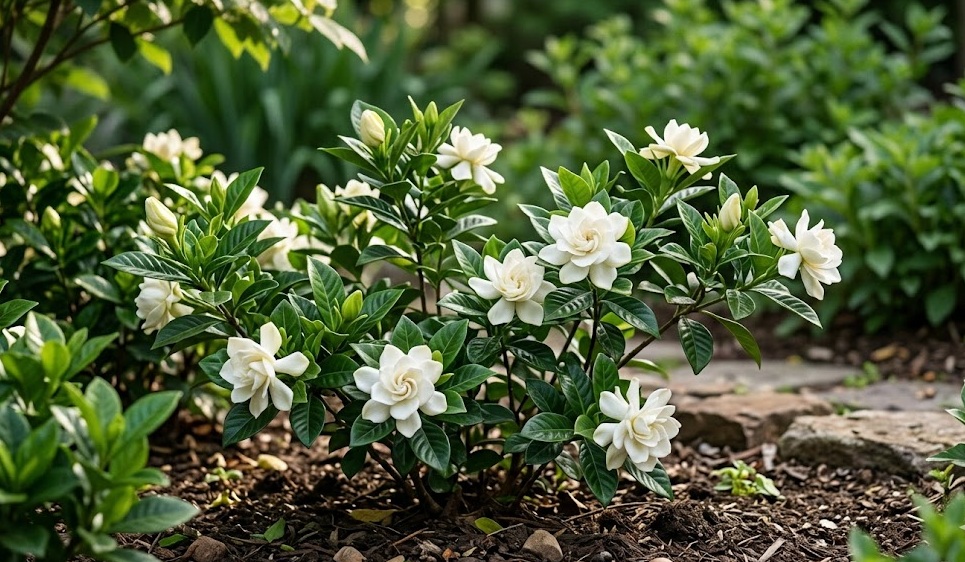

Protecting a gardenia from the various biological threats it faces is a constant responsibility for any gardener who wishes to keep their plants in peak condition. Because these plants are often grown in high-humidity environments, they can be particularly susceptible to fungal pathogens and a specific set of opportunistic insects. Identifying a problem in its earliest stages is the most effective way to prevent a minor infestation from becoming a total loss for the plant. A professional approach to pest and disease management involves a combination of preventative cultural practices and targeted, environmentally conscious interventions.
Identifying common insect pests
Aphids are among the most frequent visitors to gardenias, often clustering in large numbers on the soft, new growth at the tips of the stems. These small, sap-sucking insects can cause the leaves to become distorted or curled, and they often leave behind a sticky substance known as honeydew. This honeydew is not only unsightly but can also attract ants and provide a growing medium for black sooty mold. You can often manage a small aphid population by simply washing them off the plant with a strong stream of water from a garden hose.
Scale insects and mealybugs are more challenging pests because they often hide in the leaf axils or on the undersides of the foliage where they are less visible. Scale looks like small, waxy bumps on the stems and leaves, while mealybugs resemble tiny tufts of white cotton. Both of these pests drain the plant’s energy and can cause significant weakening or even dieback if they are left to multiply unchecked. Horticultural oils or insecticidal soaps are usually effective against these insects, but they must be applied thoroughly to reach every hidden corner of the plant.
Spider mites are another common issue, especially during the hot, dry months of the summer when the plant may already be under some environmental stress. These tiny arachnids are difficult to see with the naked eye, but their presence is often signaled by a fine webbing between the leaves and a “stippled” or bleached appearance of the foliage. Mites thrive in dusty, dry conditions, so keeping the humidity high and occasionally rinsing the leaves can go a long way in preventing an outbreak. If an infestation occurs, specific miticides may be necessary to bring the population back under control.
Whiteflies are small, moth-like insects that can be seen flying in a cloud when the plant is disturbed or shaken. Like aphids, they suck the sap from the leaves and produce large amounts of honeydew, leading to the same problems with sooty mold and ant activity. They are particularly common on indoor gardenias or those kept in greenhouses where the air is warm and still. Yellow sticky traps can be used to monitor their presence, and regular applications of neem oil or soap-based sprays can help manage their numbers over time.
More articles on this topic
Fungal and bacterial diseases
Root rot is perhaps the most serious disease affecting gardenias, often caused by overwatering or poorly draining soil in a container or garden bed. The first sign is usually a general wilting of the plant that does not improve after watering, followed by yellowing and loss of leaves. If you inspect the roots of an infected plant, they will appear brown and mushy rather than firm and white. Prevention is the only truly effective cure for root rot, so ensuring proper drainage and careful watering is essential for the plant’s survival.
Leaf spot diseases, caused by various fungal pathogens, manifest as brown or black circular spots on the foliage that may eventually merge and kill the entire leaf. These fungi thrive in wet, stagnant conditions where moisture sits on the surface of the leaves for extended periods. To manage leaf spot, you should remove any infected foliage and avoid overhead watering to keep the leaves as dry as possible. Improving the air circulation around the plant will also help the foliage dry more quickly after rain or dew, making it harder for the fungal spores to germinate.
Powdery mildew appears as a white, dusty coating on the leaves and buds, often during the cooler and more humid parts of the spring or autumn. While it is rarely fatal to an established plant, it can cause the leaves to become stunted and the flower buds to fail to open correctly. This disease is often a sign that the air circulation is poor or that the plant is receiving too much nitrogen fertilizer, which produces soft and vulnerable growth. Sulfur-based fungicides or simple baking soda sprays can often be used to treat existing mildew and protect new growth.
Sooty mold is not a disease that attacks the plant directly, but rather a fungus that grows on the sugary honeydew left behind by sap-sucking insects. It appears as a black, velvety coating that can cover large portions of the leaves and stems, blocking sunlight and reducing the plant’s ability to photosynthesize. While you can wash the mold off with a gentle soap solution, the only permanent fix is to identify and eliminate the underlying insect problem. Once the source of the honeydew is gone, the sooty mold will eventually disappear on its own as the old leaves fall.
More articles on this topic
Nutrient deficiencies and physiological disorders
Iron chlorosis is often mistaken for a disease, but it is actually a nutritional disorder caused by the plant’s inability to absorb iron from the soil. The symptoms are unmistakable: the new leaves turn a bright, pale yellow while the veins remain a distinct and contrasting dark green. This condition is almost always a result of the soil pH being too high, which chemically locks the iron and makes it unavailable to the roots. Correcting the soil acidity with elemental sulfur or using chelated iron supplements is the standard way to restore the plant’s health.
Bud drop is one of the most frustrating problems for gardenia owners, where perfectly healthy-looking flower buds fall off the plant just before they are ready to open. This is rarely caused by a pathogen and is usually a physiological response to a sudden change in the plant’s environment. Common triggers include a sharp drop in humidity, a sudden change in temperature, or the soil being allowed to dry out completely. To prevent bud drop, you must provide the most stable conditions possible during the critical weeks when the buds are reaching maturity.
Leaf yellowing can have many causes, and it is important to distinguish between natural leaf aging and a sign of systemic distress. It is normal for a gardenia to shed a few older, lower leaves as it puts on new growth, and these leaves will usually turn a solid yellow before falling. However, if the yellowing is widespread or affecting the tips of the branches, it may indicate a problem with watering, drainage, or a lack of nitrogen. Assessing the overall pattern of the yellowing will help you determine whether the issue is environmental or nutritional.
Edema is a condition where the plant takes up more water than it can use or release through its leaves, causing small, corky bumps to form on the undersides of the foliage. This often happens during periods of high humidity and cool temperatures when the plant’s transpiration rate is very low. While edema is not contagious and doesn’t seriously harm the plant, it is a sign that you should reduce your watering frequency and improve the air movement in the area. Once the environmental conditions improve, the new leaves will grow normally, although the old bumps will remain.
Integrated pest management strategies
A professional approach to keeping gardenias healthy relies on a strategy called Integrated Pest Management (IPM), which prioritizes prevention and low-impact solutions. This begins with selecting healthy plants from the nursery and placing them in an environment where they are naturally less likely to become stressed. A strong, vigorous plant is much more capable of resisting pests and recovering from minor diseases than one that is already struggling. Regular inspections allow you to catch problems while they are still small and can be handled with simple physical or mechanical methods.
Encouraging beneficial insects, such as ladybugs and lacewings, can provide a natural form of pest control that works around the clock in your garden. These predators feed on aphids, mites, and scale, often keeping their populations below the level where they cause noticeable damage to your plants. You can attract these “garden heroes” by planting a variety of flowering herbs and avoiding the use of broad-spectrum pesticides that would kill them along with the pests. This ecological balance creates a more stable and self-sustaining environment for your gardenias to flourish.
When a chemical intervention is necessary, you should always start with the least toxic option that will effectively solve the problem. Horticultural oils, insecticidal soaps, and neem oil are excellent choices for many common gardenia pests because they have a physical rather than a chemical mode of action. These products work by smothering the insects or disrupting their feeding and breeding cycles without leaving harmful residues behind. Always read the label carefully and apply these treatments during the cooler parts of the day to avoid leaf burn or “phytotoxicity.”
Record-keeping is an essential part of a professional management plan, helping you track when certain pests appear and which treatments were most effective. You might notice that spider mites always show up in July or that a specific corner of the garden is more prone to fungal issues due to poor air movement. This historical data allows you to act preventatively in future years, applying treatments or adjusting care before the problem actually manifests. Over time, this proactive approach makes the task of protecting your gardenias much easier and more predictable.
Long-term health through prevention
Maintaining the proper soil pH is perhaps the single most important preventative measure you can take to keep your gardenia’s immune system strong. When the plant has access to all the nutrients it needs, it can produce the complex chemical compounds it uses to defend itself against insects and pathogens. A plant that is suffering from chronic nutrient deficiencies will always be the first one to be attacked by pests in the garden. Regular soil testing and careful monitoring of leaf color will ensure that your plant stays in top defensive form.
Proper sanitation practices in the garden can significantly reduce the amount of disease-causing spores and overwintering pests that your plant has to face. This includes removing any fallen leaves or spent flowers from around the base of the plant, as these can harbor fungi and insects through the winter. You should also be careful to sterilize your pruning tools with alcohol between plants to prevent the accidental spread of systemic diseases. Keeping the area around your gardenia clean and tidy is a simple but highly effective way to promote long-term vitality.
Strategic pruning can also play a role in disease prevention by opening up the center of the plant to better light and air penetration. A dense, tangled interior is a perfect environment for scale insects and fungal pathogens to hide and multiply away from your sight. By thinning out some of the older or crossing branches, you create a more “transparent” plant that dries out faster after rain and is easier to inspect and treat. This structural maintenance is an investment in the plant’s future health and aesthetic quality.
In the end, the secret to a pest-free and disease-free gardenia is a combination of constant vigilance and a deep respect for the plant’s natural requirements. By providing the right light, water, and soil, you remove the primary causes of plant stress that invite unwanted guests in the first place. Your role as a gardener is to act as a guardian, creating a safe and supportive environment where the gardenia can reach its full potential. With a little care and attention, these magnificent plants can remain a healthy and beautiful part of your garden for decades.
Dealing with whiteflies on gardenias is a constant battle in my greenhouse, and I’ve found that early intervention is absolutely key. I use yellow sticky traps to monitor for their presence before they become a full-blown infestation. If I see even a few, I start a regimen of neem oil sprays, making sure to coat the undersides of the leaves where the larvae hide. Sooty mold is another frequent issue, usually appearing as a secondary problem after an aphid or whitefly attack. By controlling the insects that produce honeydew, you naturally eliminate the environment where the mold thrives. It’s much easier to prevent these problems with good air circulation and regular inspections than it is to cure them once they’ve taken hold.
Arthur, you’re spot on about the sticky traps; they are an essential tool for any gardenia owner. I’ve also noticed that spider mites can become a major problem during dry spells, especially if the plants are grown indoors or in a sheltered spot. I recommend giving the foliage a good blast of water every week to knock them off and increase the local humidity. For fungal issues like powdery mildew, I’ve had great results with a simple baking soda and water solution, which is much more eco-friendly than many commercial fungicides. Always test any spray on a small branch first, though, as gardenia leaves can be surprisingly sensitive to chemical treatments. Consistency and observation are definitely your best friends in this situation.
I’ve been struggling with root-knot nematodes in my gardenia bed, and it has been a heartbreaking experience. The symptoms often look like a simple nutrient deficiency—stunted growth and yellowing leaves—but the real damage is hidden underground. I’ve learned the hard way that you should always check the roots of any new plant before putting it in the ground. If you find small galls or swellings on the roots, it’s best to discard the plant entirely rather than risk infecting your soil. I’m currently trying to solarize the soil in that area to see if I can clear the infestation before planting anything else. Has anyone else had success with biological controls for nematodes in a home garden setting?