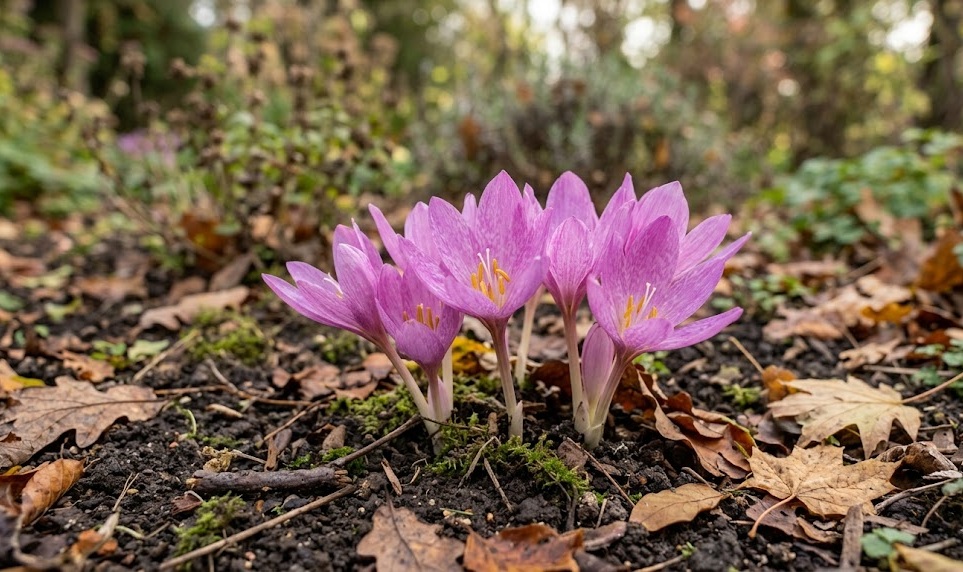

The anatolian saffron is a species that thrives in bright, open environments where it can capture the maximum amount of solar energy. Because its life cycle is divided into distinct flowering and vegetative phases, its light requirements also change depending on the time of year. You must understand that while the flowers appear in the autumn, the real “energy work” is done by the leaves in the spring. Providing the correct light exposure is the primary way to ensure that your plants have the strength to produce a spectacular floral display.
In its natural Mediterranean and Anatolian habitats, this plant is often found on open hillsides, rocky slopes, and clearings where there is little competition for light. You should aim to replicate this in your garden by choosing a site that is not overshadowed by large buildings or dense evergreen trees. Sunlight is the “fuel” that the plant uses to build up the starches and sugars stored within its underground corm. Without enough light, the corm will slowly shrink over several years, eventually leading to a cessation of flowering.
A professional evaluation of light involves more than just looking at a spot once during the day; you must consider how the light changes throughout the seasons. The angle of the sun is much lower in the spring and autumn, and shadows are much longer than they are in the height of summer. You should also consider that many deciduous trees will be leafless in the spring, allowing light to reach the ground that might be blocked later in the year. This “seasonal window” of light is exactly what the anatolian saffron has evolved to exploit.
While the plant loves light, it is also important to consider the intensity of the sun in your specific geographic location. In very hot, southern climates, some light afternoon shade can actually be beneficial during the hottest parts of the spring to prevent the foliage from scorching. However, for most temperate gardeners, the challenge is usually finding enough sun rather than too much. By carefully placing your saffron in the brightest parts of your garden, you are setting the stage for long-term health and impressive autumn blooms.
Ideal sun exposure for vegetative growth
The spring phase, when the large green leaves are active, is the most critical time for light exposure for the anatolian saffron. During these few months, the plant must capture enough energy to last it through the entire rest of the year, including the flowering period. You should ensure that the leaves receive at least six to eight hours of direct sunlight every day during the spring months. If the site is too shady during this time, the leaves will become “leggy” and pale, and the corm will not be properly replenished.
More articles on this topic
You must be careful about planting saffron under the deep shade of evergreen shrubs or trees that block the light year-round. While deciduous trees are often fine because they leaf out late, evergreens provide a permanent barrier that can be detrimental to the plant’s health. If you must plant near evergreens, choose the southern or western side of the shrub to maximize the available sunlight. A professional gardener always prioritizes the “light budget” of the plant during its most active metabolic period.
Shadows from fences, walls, and garden structures can also move significantly as the spring progresses, so you should monitor the site periodically. A spot that is sunny in March might be in deep shade by May when the sun is higher in the sky and nearby plants have grown taller. You should aim for a location that remains consistently bright throughout the entire vegetative window. This consistency allows the plant to maintain a steady rate of photosynthesis and build a large, robust corm.
If you notice that your saffron plants are leaning toward the light or if their growth seems weak, it may be a sign that they are not receiving enough sun. You might need to prune back overhanging branches or move the corms to a brighter location during their next dormant period. Providing the best possible light environment is a fundamental part of expert care that cannot be replaced by fertilizer or water. Sunlight is the most important “food” you can give to your anatolian saffron.
Impact of light on autumn flowering
While the spring light builds the corm, the light conditions in the autumn influence the quality and duration of the flowering display. The flower shoots of the anatolian saffron are sensitive to light and temperature, and they use these cues to determine when to emerge from the soil. You will find that plants in sunnier, warmer spots often bloom a week or two earlier than those in cooler, shadier corners. This variation is something you can use to extend the total flowering period across your entire garden.
More articles on this topic
The flowers themselves are quite delicate and can be affected by the intensity of the autumn sun, especially in unusually warm years. While they need light to open fully and show off their beautiful internal structures, very harsh, direct sun can cause the petals to fade or wither more quickly. A site that receives bright morning sun but has a bit of dappled shade in the late afternoon is often considered ideal for preserving the blooms. This balance ensures that you get the most visual impact from your plants for the longest possible time.
In the autumn, the sun is lower in the sky, and you must ensure that nearby perennials have not grown so large that they completely block the light from the saffron blooms. Many autumn-flowering plants are quite tall, and they can easily cast long shadows over the much shorter saffron flowers. You should consider the “light architecture” of your autumn garden and ensure that there is a clear path for the sun to reach the ground where your corms are planted. A professional layout keeps the lower-growing bulbs in the foreground where they can bask in the available light.
Light also plays a role in the activity of pollinators, which are essential if you wish to produce seeds for propagation. Bees and other insects are much more active in sunny, warm spots and are more likely to visit flowers that are clearly visible in the sun. If your plants are tucked away in a dark, cold corner, they may not be visited by as many pollinators, reducing your chances of a successful seed harvest. Providing good light exposure is thus important for both the immediate beauty of the flowers and the long-term reproduction of the species.
Adjusting light throughout the seasons
Managing the light requirements of the anatolian saffron is a year-round task that involves understanding the changing dynamics of your garden. During the summer dormancy, the light levels on the soil surface are less important for the plant’s internal biology, but they do affect the soil temperature. A sunny spot in the summer will “bake” the soil, which mimics the natural Mediterranean summer and helps the plant complete its dormant-phase chemical changes. You should not worry about keeping the dormant corms in the shade during the summer; in fact, the warmth is generally beneficial.
As you move from one season to the next, you should look for ways to optimize the light environment for your saffron colony. This might involve the strategic pruning of nearby shrubs in the late winter to ensure the spring sun can reach the soil. You could also choose companion plants that have “airy” or fine-textured foliage, which allows more light to filter through to the ground level. A professional approach involves treating the light in your garden as a resource that can be managed and directed to where it is needed most.
If your garden has moved toward being more shaded over time due to the growth of trees, you may need to adapt your saffron cultivation. You can try moving some of your collection into containers that can be placed in the sunniest spots during the critical spring and autumn months. Alternatively, you can create “sun pockets” by removing lower branches from trees or thinning out dense hedges. Being proactive about managing light ensures that your garden remains a suitable home for the anatolian saffron for many years.
Finally, remember that the anatolian saffron is a resilient plant that can tolerate some variation in light conditions, but it will always perform best in the sun. You should use your powers of observation to see how the plants respond to different light levels in various parts of your garden. Take note of where the flowers are the most vibrant and where the foliage is the strongest. This hands-on experience is the best guide for fine-tuning the light requirements for your specific collection and local environment.
Light is the most critical factor for the Anatolian saffron to successfully set buds for the following year. If they are planted under a heavy tree canopy, they may bloom well the first year but will quickly decline. They need that bright spring sun to photosynthesize and rebuild the corm’s energy reserves. I suggest planting them under deciduous shrubs where they can get full sun in the spring before the shrubs leaf out. This mimics their natural habitat in open mountain meadows quite effectively. If the foliage is too shaded, it will become elongated and weak, and the plant may skip a flowering season.