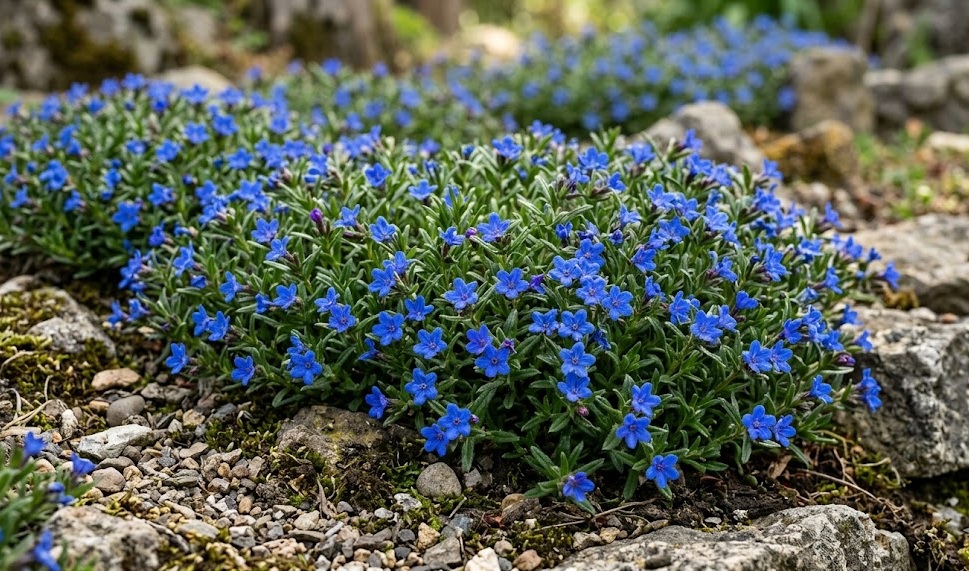

Understanding the light requirements of the purple gromwell is essential for achieving the dense growth and prolific flowering this plant is known for. This species is naturally adapted to open, sunny environments where it receives a high intensity of light throughout the day. You must provide a location that mimics these conditions if you want the plant to reach its full aesthetic potential. While it can tolerate some variation in light levels, its performance is directly linked to the amount of direct sun it receives.
The relationship between light and the plant’s metabolic processes is a primary factor in its overall health and vigor. Sunlight provides the energy required for photosynthesis, which fuels the production of leaves, roots, and flowers. If the light levels are too low, the plant will become leggy and sparse as it reaches toward the nearest light source. A professional gardener knows that the right amount of light is the most important “ingredient” for a beautiful purple gromwell display.
You should also consider how the angle and intensity of the sun change throughout the year in your specific geographic location. In northern regions, the plant may need every possible hour of direct sunlight to thrive during the shorter growing season. In more southern or Mediterranean climates, the midday sun can be intense enough to scorch the foliage, requiring a different management strategy. Adjusting the plant’s exposure based on these regional differences is a key part of successful garden planning.
Beyond just the quantity of light, the quality of the light also plays a role in the development of the blue flowers. Intense, direct sunlight helps stimulate the production of the pigments that give the flowers their signature deep blue color. Plants grown in even partial shade may produce flowers that are paler or fewer in number than those grown in full sun. By prioritizing light in your care routine, you ensure that your purple gromwell remains a vibrant highlight of your garden landscape.
Sunlight intensity and timing
The purple gromwell performs best when it receives at least six to eight hours of direct sunlight each day. This level of exposure ensures that the plant has enough energy to maintain its compact, mat-forming habit and produce abundant blooms. You should look for a spot in your garden that is not shaded by buildings or large trees for the majority of the day. A south or west-facing aspect is often the most effective for providing the high light levels this plant prefers.
More articles on this topic
Morning sun is particularly beneficial because it helps dry any dew or moisture from the leaves, reducing the risk of fungal diseases. The light intensity during the morning hours is also less stressful for the plant than the harsh afternoon sun. If you can provide a location that is sunny in the morning and early afternoon, you will find the plant thrives with very little stress. This balanced approach to light timing is a professional secret for maintaining healthy evergreen foliage.
In very hot climates, you must be cautious about the intensity of the sun during the hottest part of the day. While the plant loves light, extreme heat combined with direct sun can lead to leaf scorch and dehydration. You might notice the foliage taking on a dull or slightly yellowed appearance if it is receiving too much heat. In these cases, providing some light, dappled shade during the mid-afternoon can help protect the plant without significantly reducing its flowering potential.
Observing how the light moves across your garden at different times of the year will help you find the perfect spot. Remember that a spot that is sunny in the summer might be in deep shade during the spring or autumn when the sun is lower in the sky. Since the purple gromwell is an evergreen, its light needs continue throughout the year, even during its dormant phase. Ensuring the plant receives adequate light during the winter is also important for maintaining the health of the foliage.
Shade tolerance and its impacts
While the purple gromwell is primarily a sun-loving plant, it can tolerate a small amount of light shade in certain situations. However, you should be aware that growing this plant in too much shade will result in a significant loss of quality. The most obvious sign of insufficient light is “etiolation,” where the stems become long, weak, and thin as they search for more light. This completely changes the look of the plant, turning a dense carpet into a sprawling, messy shrub.
More articles on this topic
Shade also has a dramatic effect on the flowering performance of this species, often reducing the number of blooms by half or more. The flowers that do appear may be smaller and the blooming period will likely be much shorter than it would be in full sun. If you find your plant is mostly green and rarely blue, it is almost certainly a sign that it needs more light. Moving the plant to a sunnier location or thinning out nearby vegetation is the professional solution to this problem.
In addition to affecting growth and flowering, shade can also increase the plant’s susceptibility to various pests and diseases. Foliage in shady areas stays wet longer after rain or irrigation, creating the perfect environment for fungal spores to germinate. The plant’s weakened state from lack of light also makes it less able to resist attacks from insects like aphids or mites. Maintaining high light levels is one of the best ways to ensure the plant remains naturally healthy and resilient.
If you have a garden that is mostly shady, the purple gromwell may not be the best choice for your primary groundcover. You might consider using it in smaller, specifically chosen “sun pockets” where it can get the light it needs to perform. Alternatively, you can use architectural features like white walls or light-colored stones to reflect more light into the planting area. Creativity in light management is a hallmark of professional garden design and allows you to grow a wider variety of plants successfully.
Managing light in different climates
The ideal light exposure for the purple gromwell can vary significantly depending on the local climate and humidity levels. In coastal or mountainous regions where the air is cool and moist, the plant can often handle full, all-day sun without any issues. These conditions mimic its natural habitat and allow the plant to grow with maximum vigor and health. In these areas, your main concern should be maximizing the amount of light the plant receives during the growing season.
Conversely, in inland or arid regions where the sun is very intense and the air is dry, the plant may require more careful management. The combination of high light and low humidity can quickly dry out the delicate leaves and stress the root system. You may need to provide more frequent watering or use organic mulches to keep the roots cool in these high-light environments. Understanding the relationship between light and heat is a professional skill that is vital for gardening in challenging climates.
Urban environments can also create unique light conditions that you should take into account when planting. Reflected light from windows or light-colored pavements can significantly increase the intensity of the light the plant receives. While this can be a benefit in cooler areas, it can lead to overheating in warmer cities. You should monitor the temperature of the soil and the condition of the foliage if your plant is near these types of reflective surfaces.
Finally, consider the seasonal changes in light and how they might affect your maintenance routine. As the sun moves lower in the sky during the autumn, you may need to prune back nearby plants that are beginning to cast long shadows. Ensuring the purple gromwell continues to receive adequate light as it prepares for winter is important for its long-term survival. This proactive approach to light management ensures your garden remains a healthy and beautiful environment for all your plants.
Light and long-term plant health
The cumulative effect of proper light exposure over several years is a robust, healthy plant that is much more resistant to environmental stressors. A purple gromwell that has grown in optimal light will have thick, leathery leaves and a strong, woody structure. This strength helps the plant withstand heavy rain, strong winds, and the weight of winter snow without breaking or becoming damaged. Professional care is all about building this long-term resilience through consistent management of the plant’s basic needs.
Light also plays a role in the natural aging process of the plant and how it regenerates over time. In high-light conditions, the plant is more likely to produce healthy new growth from the base, which keeps the mat looking fresh and young. In lower light, the older stems may become bare and woody, with only a small amount of growth at the very tips. Proper light levels promote a more balanced growth pattern that is much easier to manage with regular pruning.
You can use light to guide the growth of your purple gromwell toward specific areas of your garden design. The plant will naturally grow more vigorously in the direction of the strongest light source. By managing the light levels around the plant, you can encourage it to fill in gaps or stay within certain boundaries. This level of control is a professional technique that allows you to create precise and beautiful garden compositions.
In summary, light is the most important environmental factor for the success of the purple gromwell in any garden. By providing full sun, managing heat during the peak of summer, and adjusting for your local climate, you ensure a spectacular floral display. Regular observation and small adjustments to the plant’s exposure will lead to a healthy, vibrant groundcover that will be the envy of your neighbors. Professional gardening is a journey of understanding the needs of your plants and responding with care and precision.
In my professional experience, Lithodora diffusa is one of those rare plants that truly demands “full sun” in the literal sense of the term. If it gets even a couple of hours of shade, the growth habit becomes loose and sprawling rather than the tight, carpet-like mound we all want. I’ve seen them fail in gardens where they were planted on the north side of a low wall, simply because they weren’t getting that intense midday radiation. The blue of the flowers is also much more vivid when the plant is grown in high-light conditions. Do you think there’s a risk of leaf scorch in very high-altitude gardens where the UV is more intense? I’m planning a project for a client at 1,500 meters and I’m a bit concerned about that.
Julianna, at that altitude, you actually have a different set of challenges, but leaf scorch is surprisingly rare for Lithodora if the roots are kept cool. They are naturally adapted to high-light environments, and the intense UV often results in an even more compact and robust plant. The key is to make sure there is plenty of rock or gravel around the base to keep the soil temperature stable. I’ve seen them thriving at even higher elevations than 1,500 meters in their native habitats. Just ensure that the drainage is absolutely perfect, as the snowmelt can be quite heavy in the spring. It should be a spectacular addition to your high-altitude project!
I have a south-facing driveway lined with purple gromwell, and they are absolutely thriving in the heat and light. It’s one of the few plants I’ve found that can handle the reflected heat from the asphalt without showing any signs of stress. I do make sure to give them a good soak once a week during the hottest part of July, but other than that, they are very low-maintenance. The light really is the fuel for those incredible blue flowers. I’ve noticed that if I have a cloudy spring, the first flush of blooms is always a bit delayed. It’s a great reminder of how closely tied these plants are to their environment.