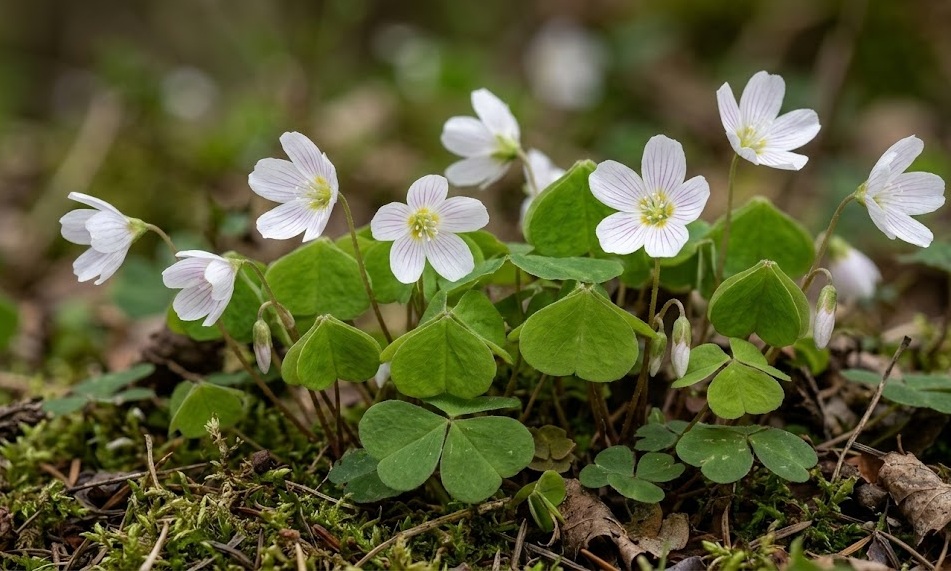

Understanding the specific light preferences of the wood sorrel is essential for its successful cultivation and aesthetic appeal. In its natural forest home, this plant is a master of living in the shadows where other species might struggle to survive. A professional gardener knows how to manipulate light levels to bring out the best in this delicate perennial. By providing the correct balance of illumination, you can ensure your plants remain healthy, compact, and full of life.
The wood sorrel is fundamentally a shade-loving plant that has evolved to thrive under the filtered light of a forest canopy. Direct sunlight, especially during the middle of the day, is often too intense for its thin and sensitive leaves. Exposure to harsh solar radiation can cause the foliage to become scorched, leading to brown patches or even the death of the entire leaf. Finding a spot with dappled or indirect light is the first step in creating a successful planting of this species.
Light levels also have a direct impact on the flowering and growth habits of the plant throughout the year. While it loves the shade, a small amount of brighter light in the early spring can help stimulate the production of its charming white flowers. Conversely, if the environment is too dark, the plant may become leggy and sparse as it tries to reach toward a light source. Balancing these needs requires careful placement and an understanding of how light changes within your garden across the seasons.
The plant’s unique ability to move its leaves in response to light is one of its most fascinating biological features. During the day, the leaflets are held horizontally to maximize the surface area available for photosynthesis in the dim light of the forest. At night, or when the light becomes too intense, the leaflets fold downward to protect the plant and conserve its resources. Observing these movements will give you a clear indication of whether your wood sorrel is comfortable in its current lighting situation.
Natural forest floor light conditions
In the wild, the wood sorrel lives in a world of shifting patterns and soft, diffused illumination. The light that reaches the forest floor has already been filtered through several layers of leaves and branches from the trees above. This results in a lighting environment that is low in intensity but relatively consistent throughout the daylight hours. Replicating this in a garden means choosing a location under deciduous trees or on the northern side of a building where direct sun is blocked.
More articles on this topic
The quality of light on the forest floor changes significantly with the seasons, which the wood sorrel uses to time its lifecycle. In the early spring, before the trees have fully leafed out, more light reaches the ground, providing the energy needed for flowering and initial growth. As the canopy closes in the summer, the environment becomes much darker and more humid, which the plant prefers during the hottest part of the year. You can mimic this natural cycle by placing your plants in a location where the shading changes as the year progresses.
Light on the forest floor is also characterized by a high proportion of far-red and green wavelengths that have been filtered through the leaves above. These specific wavelengths can influence the plant’s growth and developmental processes in subtle but important ways. While it is difficult to replicate this light quality exactly in a garden, providing a diverse canopy of overhanging plants can help create a similar effect. The goal is to create an environment that feels cool, protected, and softly lit at all times.
Understanding the “sun flecks” that occur in a forest is another key part of managing the light for your wood sorrel. These are brief periods of direct sunlight that reach the forest floor as the sun moves across the sky and through gaps in the canopy. While a few minutes of dappled sun is fine, prolonged exposure to these intense spots can be harmful to the plant’s sensitive tissues. Providing a dense and layered planting will help break up these sun flecks and ensure the light remains gentle and safe for the sorrel.
Managing direct sunlight exposure
Protecting your wood sorrel from the damaging effects of direct sunlight is one of the most important tasks for a gardener in a sunny climate. If you notice the leaves are starting to look pale or have developed dry, brown edges, it is often a sign of too much sun. The plant will also fold its leaves downward during the day if the light levels become uncomfortably high for its physiological processes. Moving the plant to a more shaded location or providing temporary artificial shade can quickly solve this problem.
More articles on this topic
In garden settings with limited natural shade, you can use other plants to create a protected environment for your wood sorrel. Taller perennials, ferns, or low-growing shrubs can all provide the necessary cover to shield the delicate sorrel from the sun. This type of companion planting not only solves the light issue but also creates a more diverse and interesting garden layout. Layering your plants in this way mimics the natural structure of a forest and provides a more stable microclimate for all your shade-loving species.
The time of day when the sun hits the planting site is just as important as the total amount of light received. Morning sun is generally much cooler and less intense than the afternoon sun, and many wood sorrel plants can tolerate a few hours of it without any issues. However, the hot and dry light of the afternoon should be avoided at all costs to prevent heat stress and leaf scorch. If your only available spot receives afternoon sun, you will need to provide some form of permanent shading, such as a lattice or a dense hedge.
Light levels can also be managed by carefully choosing the orientation of your planting beds relative to the sun’s path. North-facing or east-facing locations are generally much better for woodland plants than south-facing or west-facing spots. If you are planting in a courtyard or near a wall, be aware of how the light reflects off the surfaces and potentially increases the intensity. Using dark-colored or non-reflective materials in the surrounding area can help keep the light levels low and the temperature cool for your plants.
Artificial lighting for indoor growth
When growing wood sorrel indoors, providing the correct light can be a challenge, especially in homes with few windows or low natural light. While a north-facing window is often the best choice, it may not provide enough energy for the plant to thrive during the shorter days of winter. In these cases, supplemental artificial lighting can be a great way to ensure your indoor plants remain healthy and vibrant. Modern LED grow lights are efficient and can be adjusted to provide the specific light spectrum that plants need for growth.
The placement of the grow light is critical to ensure the plant receives enough illumination without being burned by heat or intensity. For a delicate plant like the wood sorrel, the light should be placed at a distance of thirty to fifty centimeters from the foliage. You should aim for a “cool” light spectrum that mimics natural daylight and avoids the intense red or blue light often used for flowering crops. A timer can be used to provide a consistent light cycle of twelve to fourteen hours a day, which is ideal for most woodland species.
Observe your indoor plant closely to see how it responds to the artificial light you are providing. If the leaves start to turn yellow or the plant looks stressed, it may be receiving too much light or the light is too close. On the other hand, if the plant becomes very tall and thin with small leaves, it is likely not receiving enough light and needs to be moved closer to the source. Finding the “sweet spot” will result in a compact, lush plant that looks just as good as one grown in its natural forest habitat.
In addition to artificial lights, you can also maximize the natural light in your home by using mirrors or light-colored walls to reflect light into darker corners. However, be careful not to create “hot spots” where reflected light becomes too concentrated on the plant’s sensitive leaves. Regularly rotating the pot will also ensure that all sides of the plant receive an equal amount of light, preventing it from leaning in one direction. With a bit of careful management, you can successfully grow beautiful wood sorrel indoors all year round.