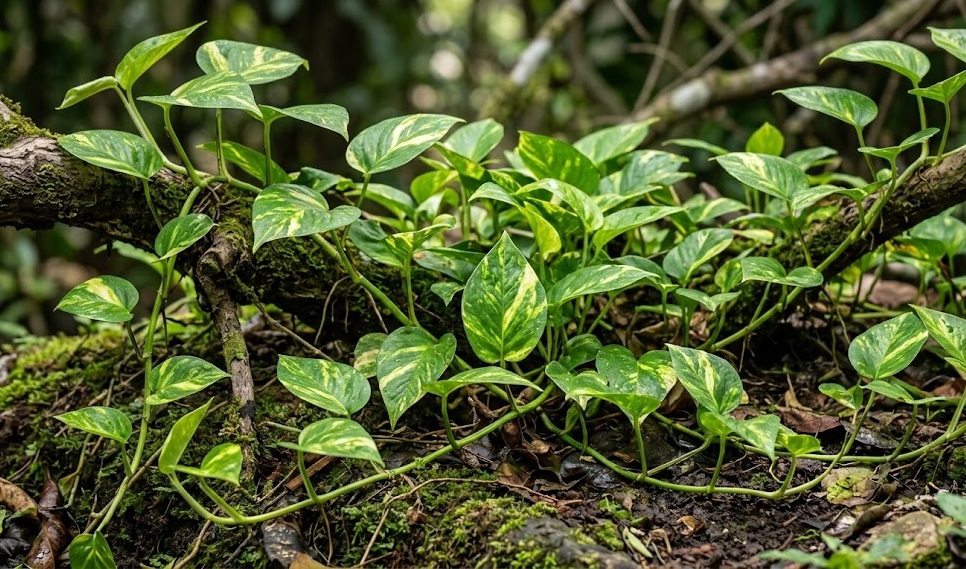

Understanding the light requirements of the golden pothos is essential for maintaining its health and the beautiful variegation that makes it a favorite among indoor gardeners. While this species is famously versatile and can survive in a variety of lighting conditions, it has a definite preference for bright, indirect sunlight. You will find that the plant truly thrives when placed near a window where it can receive plenty of ambient light without being hit by the harsh, direct rays of the sun. This balance is key to promoting vigorous growth while preventing the delicate leaves from becoming scorched or damaged.
If you place your pothos in a spot that is too dark, the plant will communicate its dissatisfaction through several visible changes in its growth habit. You may notice that the beautiful yellow or white marbling begins to disappear, as the plant produces more chlorophyll to compensate for the lack of light. The stems may also become “leggy,” meaning the distance between the leaves increases as the vine stretches desperately toward the nearest light source. While the plant can tolerate low light for a long time, it will not be as lush or vibrant as a specimen kept in a more illuminated area.
Conversely, exposing the golden pothos to intense, direct afternoon sun can be equally detrimental to its overall aesthetic and health. The leaves are relatively thin and can easily develop sunburn, which appears as bleached or brown patches that do not recover. If you have a south-facing window that receives strong light, you might consider using a sheer curtain to diffuse the rays and create a softer environment. Finding that perfect “Goldilocks” zone of light intensity will ensure that your plant maintains its compact shape and striking color patterns throughout the year.
The amount of light your plant receives also directly influences its other care needs, particularly its requirement for water and fertilizer. A plant in a bright location will photosynthesize more quickly and use up the moisture in its soil much faster than a plant in a dim corner. You should always be mindful of this connection when moving your plant to a new spot within your home or office. Being attentive to how the light changes with the seasons will allow you to adjust your care routine and keep your golden pothos performing at its professional best.
Maximizing growth through light placement
Selecting the ideal location for your pothos requires a bit of experimentation to see how the plant reacts to the specific light levels of each room. East-facing windows are often considered perfect because they provide gentle morning light that is less likely to cause heat stress. North-facing windows can also work well, providing a consistent but lower level of light that is suitable for maintaining the plant’s health without excessive growth. If you are using a west-facing window, be sure to place the plant a few feet back from the glass to avoid the intense heat of the late afternoon.
More articles on this topic
Artificial lighting can be a powerful tool for those living in apartments or offices with limited natural light sources. Standard LED or fluorescent bulbs can provide a helpful boost, but dedicated full-spectrum grow lights are much more effective for maintaining variegation. You should aim to provide about twelve to fourteen hours of light each day if you are relying entirely on artificial sources to sustain your greenery. Placing the lights about twelve to eighteen inches above the foliage ensures that the plant receives enough energy without being overheated by the bulbs.
Rotating your plant every few weeks is a simple but effective professional trick to ensure that all sides of the vine receive equal light exposure. Plants naturally grow toward the light, and without regular rotation, your pothos may become lopsided or develop a “back” that is sparse and unattractive. A quick quarter-turn every time you water will keep the growth balanced and the foliage looking full from every angle. This practice is especially important for large specimens or those climbing up a moss pole, where reaching the light can be a competitive process for the different stems.
You should also be aware that the light levels in your home will shift significantly as the seasons change from summer to winter. A spot that was perfect in July might become far too dark in December, requiring you to move the plant closer to the window. Monitoring these transitions allows you to provide a stable environment for your plant regardless of the weather outside. By staying proactive and observant, you can ensure that your golden pothos always has the energy it needs to continue its beautiful, cascading growth.
Troubleshooting light-related leaf issues
The color and texture of the leaves are the best indicators of whether your golden pothos is happy with its current light situation. If you see new leaves coming out smaller than the older ones, it is a classic sign that the plant is not receiving enough energy to sustain its full size. You might also notice that the vine stops producing new leaves altogether if the light levels drop below a certain threshold. Moving the plant just a few feet closer to a light source can often spark a dramatic turnaround in its growth and general vitality.
More articles on this topic
Variegation loss is another common issue that occurs when the plant is trying to maximize its light-gathering capabilities in a dim environment. Because the white and yellow parts of the leaf do not contain chlorophyll, they are essentially “dead weight” for a plant struggling to survive. By turning completely green, the plant is increasing its efficiency, even if it means losing the aesthetic qualities you love. Once you move the plant back into brighter light, the new growth will usually regain its beautiful marbling, though the older green leaves will stay as they are.
Brown, crispy spots in the middle of a leaf that was previously healthy are often a sign of “focused” light damage, which can happen if water droplets act like magnifying glasses. You should avoid misting your plant in the middle of a sunny day for this reason, as the lingering water can lead to localized scorching. If the damage is widespread across many leaves, it is a clear indication that the overall light intensity is too high for the species. Relocating the plant to a slightly more shaded area will prevent further damage and allow the plant to focus its energy on new, healthy foliage.
Ultimately, mastering the light requirements of the golden pothos is a journey of observation and adjustment that pays off in a spectacular display of indoor greenery. You will develop an intuitive sense of where the plant will be happiest as you watch it grow and respond to your home’s unique lighting environment. It is one of the most rewarding aspects of gardening to see a plant thrive simply because you found the perfect spot for it. With consistent attention and care, your golden pothos will remain a vibrant and glowing centerpiece of your living space for many years.