
Maintaining the golden currant involves a holistic approach that balances aesthetic appeal with the biological needs of the plant throughout the year. You must pay close attention to the subtle changes in foliage and stem strength to identify potential issues before they become systemic problems. A consistent routine of observation and light maintenance will yield the best results for both professional growers and hobbyists alike. This article provides a comprehensive guide to ensuring your shrubs remain healthy, vibrant, and productive for many seasons to come.
General maintenance guidelines
The foundation of plant health starts with understanding the specific rhythm of the local growing season. You should establish a calendar that tracks the bud break, flowering periods, and fruit maturation stages. This proactive approach allows you to time your interventions to match the natural development of the shrub. Consistent care prevents stress and makes the plant more resilient against environmental fluctuations.
Maintaining a clean area around the base of the shrub is essential for preventing the buildup of debris. You should remove fallen leaves and weeds regularly to ensure that airflow remains optimal at the ground level. This practice significantly reduces the risk of soil-borne pathogens infecting the lower branches of the plant. A tidy garden bed also makes it much easier to inspect the root zone for any signs of trouble.
Structural integrity is another key focus for long-term care of these ornamental and productive bushes. You need to check for any crossing or rubbing branches that could create entry points for disease. Removing damaged or weak wood as soon as it is spotted keeps the energy of the plant focused on healthy growth. Strong scaffolding ensures that the shrub can support a heavy crop of berries without breaking.
Finally, documenting the growth of your currants can provide invaluable insights for future management decisions. You might find it helpful to note the dates of significant events and the results of various care practices. This historical record helps you refine your techniques based on actual performance in your specific microclimate. Success in gardening is often the result of learning from these small, consistent observations over time.
More articles on this topic
Soil and environment monitoring
Soil quality directly impacts the nutrient uptake and overall vigor of the golden currant bush. You should conduct a soil test every few years to monitor the pH levels and mineral content. Ideally, the ground should be well-drained and rich in organic matter to support vigorous root development. Understanding your soil composition is the first step toward creating a thriving garden environment.
Compacted soil can be a major hurdle for the root system of a growing shrub. You can use a garden fork to gently aerate the area around the drip line without damaging the roots. This improves water penetration and allows oxygen to reach the underground parts of the plant more effectively. Good aeration is particularly important in heavy clay soils that tend to hold too much moisture.
Temperature fluctuations also play a role in how the plant manages its internal resources. You should be aware of the specific hardiness zone where you are planting to choose the best location. While the golden currant is quite hardy, extreme heat waves can stress the foliage and fruit. Providing some afternoon shade in very hot climates can help maintain the health of the leaves.
Mulching is a highly effective tool for regulating both soil moisture and temperature throughout the year. You should apply a layer of organic mulch like wood chips or straw around the base of the plant. This layer suppresses weed growth and slowly adds nutrients back into the soil as it decomposes. Remember to keep the mulch a few inches away from the main stem to prevent rot.
More articles on this topic
Seasonal health checks
Each season brings new challenges and opportunities for the growth of your currants. In the early spring, you should inspect the buds for any signs of frost damage or early pest activity. This is the time when the plant is most vulnerable as it wakes up from dormancy. Catching problems early in the season saves a significant amount of effort later on.
During the summer months, the focus shifts to maintaining hydration and protecting the ripening fruit. You should check the leaves for any signs of wilting or discoloration that might indicate heat stress. Ensuring that the plant has enough resources during this high-energy period is crucial for a good harvest. Consistent monitoring helps you adjust your care routine based on the current weather patterns.
As autumn approaches, the plant begins to prepare for its dormant phase. You should look for any signs of late-season fungal infections on the leaves before they drop. Removing this infected material from the garden site prevents the pathogens from overwintering in the soil. This transition period is vital for setting the stage for the following year’s growth.
Winter is the time for a thorough structural assessment while the branches are bare. You can easily see the architecture of the shrub and identify any limbs that need to be removed. This clear view allows you to plan your pruning strategy with precision and foresight. Even in the cold months, the health of the plant remains a priority for the dedicated gardener.
Advanced cultivation techniques
To achieve professional-level results, you might consider implementing more specialized cultivation methods. Using mycorrhizal fungi during planting can enhance the root system’s ability to absorb water and nutrients. This symbiotic relationship strengthens the plant from the inside out and improves its overall resilience. These small additions can make a significant difference in the long-term vitality of the shrub.
Advanced pruning methods can also be used to maximize both flower production and fruit yield. By selectively removing older wood, you encourage the growth of young, productive stems that carry the best berries. This constant rejuvenation process keeps the shrub at its peak performance level for many years. It requires a bit of practice but the results are well worth the additional effort.
Integrating the golden currant into a larger permaculture system can provide even more benefits. You can plant nitrogen-fixing companions nearby to naturally improve the fertility of the surrounding soil. This creates a self-sustaining ecosystem that reduces the need for external inputs like synthetic fertilizers. Thinking about the plant as part of a larger community is a hallmark of professional gardening.
Precision monitoring of weather data can help you anticipate the specific needs of your plants. You might use a local weather station to track rainfall amounts and temperature extremes with high accuracy. This data allows you to fine-tune your irrigation and protection strategies to the exact conditions on the ground. Professionalism in agriculture often comes down to this level of detailed attention and responsiveness.
Monitoring growth patterns
Observing how the golden currant expands each year tells you a lot about its internal health. You should notice a steady increase in new wood and a healthy density of foliage across the entire shrub. If you see certain areas of the plant lagging behind, it may indicate a localized problem with soil or light. Tracking these patterns helps you understand the unique personality of each individual plant.
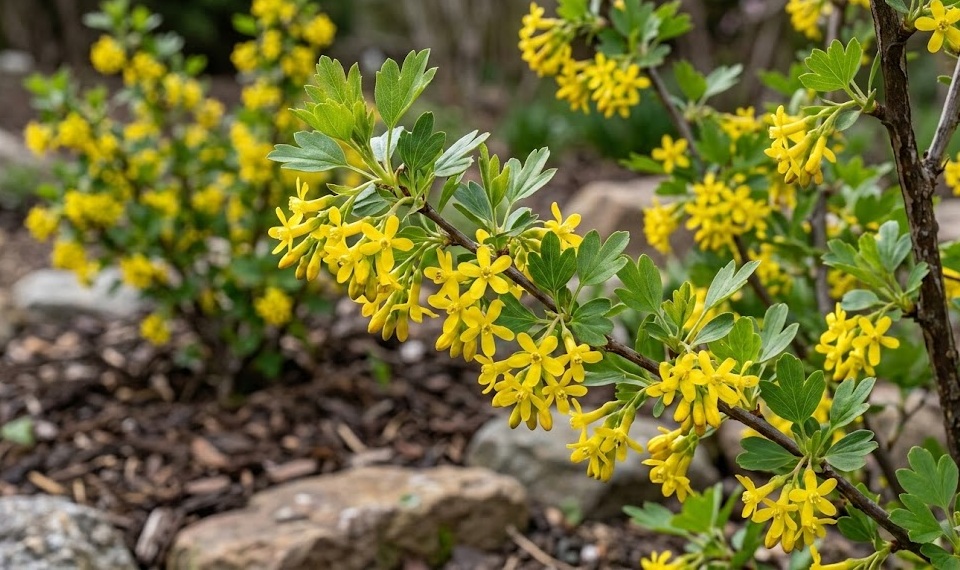
The flowering phase is a particularly revealing time for assessing the vigor of your bushes. You want to see a profusion of bright yellow blooms that are evenly distributed along the branches. A lack of flowers might suggest that the plant is not getting enough light or is perhaps too focused on vegetative growth. These visual cues are the plant’s way of communicating its status to you.
Fruit development is the final indicator of a successful care regimen throughout the year. The berries should be uniform in size and reach their full color as they ripen on the branch. If the fruit drops prematurely, it could be a sign of water stress or a lack of specific micronutrients. Evaluating the quality of your harvest is the best way to measure the success of your gardening techniques.
Root health is harder to see but can be inferred from the stability and growth rate of the upper plant. If the shrub feels loose in the ground or stops growing entirely, you should investigate the root zone. Ensuring that the roots have plenty of space to expand without competition is vital for a strong foundation. A healthy root system is the silent engine that drives the entire life cycle of the currant.
Optimizing fruit production
If your primary goal is a large harvest, you need to focus on the specific needs of the fruiting wood. Golden currants produce their best berries on stems that are two to three years old. You should manage the age of the wood through careful pruning to ensure there is always a supply of productive branches. This balance is key to avoiding biennial bearing patterns where the plant only produces every other year.
Pollination is another critical factor that can be optimized with a few simple strategies. While many varieties are self-fertile, having multiple plants can improve the rate of cross-pollination and lead to larger berries. You can also encourage local pollinators like bees and butterflies by planting other nectar-rich flowers nearby. A garden buzzing with life is usually a highly productive one.
Timely harvesting ensures that the berries have reached their peak flavor and nutritional content. You should wait until the fruit is fully colored and soft to the touch before picking. Harvesting too early results in tart fruit, while waiting too long may lead to loss from birds or spoilage. Learning the exact window for the best harvest is a skill that develops with experience.
Post-harvest care is just as important as the work you do leading up to the picking season. After the berries are gone, the plant needs a bit of extra support to recover its energy reserves. A light application of compost can help the shrub prepare for the following year’s growth cycle. This continuous cycle of care ensures that your production remains high year after year.
Long term sustainability
Sustainability in the garden means creating a system that thrives without depleting its own resources. You should aim to use natural methods for pest control and fertilization whenever it is possible. Building up the organic matter in the soil over time creates a resilient environment that requires less intervention. This long-term perspective is what separates a professional grower from a casual gardener.
Conserving water is a major part of running a sustainable agricultural or gardening operation. You can install a rainwater harvesting system to provide a natural and free source of hydration for your plants. Using drip irrigation instead of overhead spraying also reduces water waste and keeps the foliage dry. These small changes contribute to a much larger positive impact on the local environment.
Encouraging biodiversity around your currants helps to create a natural balance of predators and prey. By providing habitats for beneficial insects, you reduce the need for chemical pesticides that can harm the ecosystem. A diverse garden is more stable and better equipped to handle unexpected challenges like pest outbreaks. This ecological approach ensures the health of your currants and the surrounding landscape.
Finally, sharing your knowledge and your harvest with the community builds a culture of sustainability. You can save seeds or take cuttings to share with other gardeners who are interested in growing this wonderful plant. This helps preserve the genetic diversity of the species and spreads the joy of gardening to others. Sustainable practices ensure that the beauty and productivity of the golden currant can be enjoyed for generations.