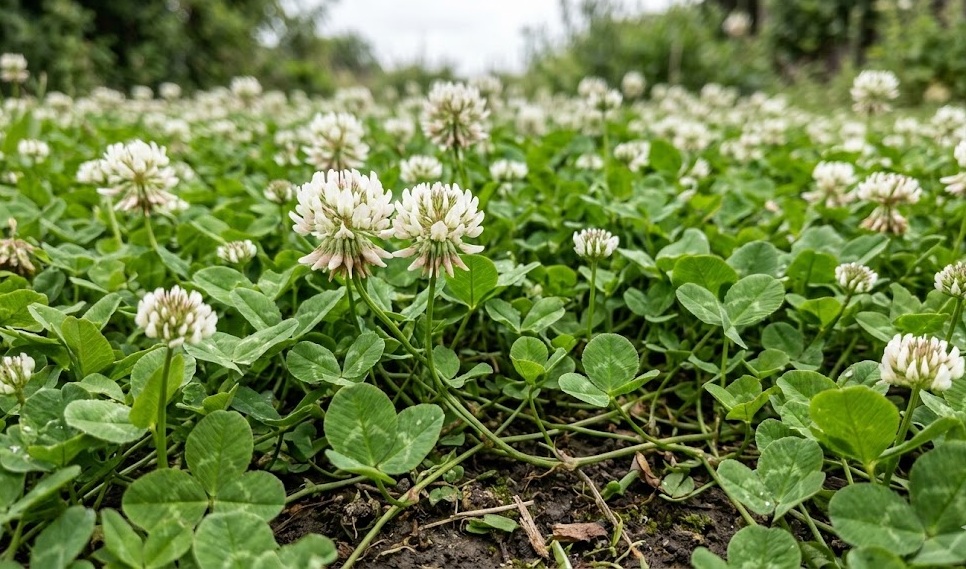

Maintaining white clover requires a deep understanding of its unique growth habit and physiological needs within a grassland ecosystem. This legume thrives when managed with a balance of mechanical intervention and natural support systems. Growers should observe the density of the stolons to determine the overall health and vigor of the stand. Consistent attention to these details ensures a productive and aesthetically pleasing cover throughout the growing season.
Successful maintenance starts with understanding that this plant is a perennial that spreads primarily through creeping stems. These stems allow the plant to fill in bare spots and create a dense, competitive mat that suppresses less desirable species. Regular inspection of these horizontal runners is necessary to ensure they are rooting properly at the nodes. When the mat becomes too thick, it may require strategic thinning to maintain air circulation and light penetration.
The resilience of this species depends heavily on the microclimate established within the canopy of the field. Maintaining a consistent height allows the clover to maximize its photosynthetic potential while protecting the soil surface from excessive evaporation. A healthy stand will exhibit vibrant green leaves and a robust root system that can withstand moderate foot traffic or grazing. Monitoring the interaction between the clover and other grass species is crucial for maintaining a balanced botanical composition.
Expert care involves anticipating the plant’s needs before visible signs of stress appear on the foliage. Proper maintenance routines should be flexible enough to account for unexpected fluctuations in local weather patterns. Documentation of growth rates and flowering periods helps in refining the management approach over multiple years. By treating the clover as a long-term investment, the quality of the agricultural or garden space is significantly enhanced.
Soil health and fertility management
The foundation of a thriving clover stand lies in the chemical and physical properties of the underlying soil. Periodic soil testing is recommended to ensure the pH remains within the ideal range for legume productivity. If the soil becomes too acidic, the essential bacteria responsible for nitrogen fixation will struggle to survive and function. Adjusting soil conditions should be done gradually to avoid shocking the established microbial communities.
More articles on this topic
Compaction is a significant threat to the horizontal spread of creeping stolons and root respiration. Implementing aeration techniques helps to keep the soil structure open and receptive to moisture and gas exchange. Heavy machinery or frequent traffic should be managed carefully to prevent the formation of hardpans that restrict root depth. Healthy soil structure supports a diverse community of beneficial organisms that contribute to the overall vitality of the clover.
Managing nutrient levels requires a specialized approach since this plant is capable of providing its own nitrogen. Excessive application of synthetic fertilizers can actually suppress the natural symbiotic relationships within the root nodules. Focus should instead be placed on maintaining adequate levels of phosphorus and potassium to support flowering and root strength. Organic matter additions can improve soil tilth and increase the cation exchange capacity of the land.
Drainage plays a vital role in preventing root rot and other moisture-related physiological disorders. While this species enjoys consistent moisture, standing water can quickly lead to anaerobic conditions that kill the plant. Grading the site or installing drainage solutions might be necessary in areas prone to heavy saturation. Observing how the soil handles intensive rainfall provides valuable data for future landscape modifications.
Integrated weed management strategies
Managing competing vegetation is a continuous process that requires a combination of cultural and mechanical control methods. White clover is naturally competitive, but aggressive perennial weeds can still find opportunities to establish themselves. Identifying these competitors early in their life cycle is the most effective way to prevent a large-scale infestation. A dense and healthy clover stand is the best biological defense against the encroachment of unwanted species.
More articles on this topic
Spot treatments are often preferred over broad-spectrum applications to preserve the integrity of the clover mat. Hand-pulling individual weeds can be effective for small areas or when dealing with highly invasive tap-rooted plants. It is important to remove the entire root system of the weed to prevent regrowth from remaining fragments. Consistency in these efforts reduces the seed bank in the soil over time.
Mowing at the correct height can selectively favor clover growth while weakening many upright weed species. By removing the flowering heads of weeds, you can significantly reduce their ability to spread through seed dispersal. This mechanical approach reduces the reliance on chemical interventions and supports a more ecological management style. Adjusting the timing of these cuts ensures that the clover has time to recover and shade the soil again.
Using mulch or organic covers in adjacent areas can prevent the migration of weed seeds into the clover stand. Creating a buffer zone helps to maintain the purity of the agricultural or ornamental area. Regular scouting sessions should be scheduled to look for changes in the botanical population of the field. Proactive management ensures that the clover remains the dominant and most productive species in the mix.
Mowing practices and height regulation
Regulating the height of the canopy is one of the most powerful tools available to a professional grower. The frequency of mowing should be determined by the growth rate of the plant rather than a fixed calendar schedule. Cutting too low can damage the creeping stolons and reduce the plant’s ability to recover from heat stress. Conversely, allowing the growth to become too tall can lead to thinning at the base due to lack of light.
Sharp blades are essential for making clean cuts that heal quickly and minimize the risk of pathogen entry. Ragged edges on the leaves increase water loss and provide an entry point for various fungal infections. The equipment should be cleaned after use to prevent the cross-contamination of seeds or diseases between different plots. Maintaining a consistent cutting height promotes a uniform appearance and stable growth patterns.
During the peak growing season, more frequent sessions may be required to keep the stand within the desired parameters. The clippings can often be left in place to decompose and return nutrients to the soil surface. This practice supports the nutrient cycle and helps to maintain the organic matter levels in the topsoil. However, if the clippings are too thick, they should be removed to prevent smothering the living tissue below.
Adjusting the height before periods of environmental stress can help the plant survive extreme conditions. For example, leaving the clover slightly longer during a heatwave provides better shade for the soil and stolons. In the autumn, a final cut helps to prepare the stand for the dormant period by removing excess biomass. This thoughtful approach to mechanical management ensures the longevity and resilience of the clover.
Health monitoring and diagnostics
Regular surveillance is required to identify physiological changes that might indicate underlying health issues. Discoloration of the leaves can often be the first sign of a nutrient deficiency or an emerging pest problem. Professionals should look for patterns in the field, such as patches of yellowing or stunted growth. Early diagnosis allows for more targeted interventions that are less disruptive to the overall ecosystem.
Checking the root nodules is a practical way to assess the efficiency of the nitrogen-fixation process. Healthy nodules should appear pink or reddish when sliced open, indicating the presence of active leghaemoglobin. If the nodules are white or green, the bacteria may not be functioning correctly due to soil or environmental factors. This internal check provides insights that are not visible through surface observation alone.
Environmental stress factors, such as drought or extreme temperatures, can weaken the plant’s natural defenses. Weakened plants are more susceptible to opportunistic infections and secondary pest infestations. Keeping detailed records of weather conditions alongside plant health observations helps in identifying cause-and-effect relationships. Understanding these links is vital for developing a robust and proactive management plan.
Collaborating with agricultural experts or diagnostic labs can provide definitive answers when symptoms are ambiguous. Soil and tissue testing can confirm specific mineral imbalances that might be hindering growth. Utilizing modern technology, such as aerial imaging, can help in monitoring large-scale agricultural installations. A data-driven approach ensures that management decisions are based on facts rather than assumptions.
Seasonal care adjustments
The management requirements for this species shift significantly as the environmental conditions change throughout the year. Spring care focuses on promoting rapid regrowth and repairing any damage sustained during the winter months. This is the ideal time to address soil compaction and apply any necessary mineral supplements. Encouraging early vigor sets the stage for a productive season and high biomass accumulation.
Summer management is largely centered around moisture conservation and heat stress mitigation. Irrigation should be applied deeply and infrequently to encourage the development of a deep and resilient root system. Monitoring the canopy temperature can help in determining the best time for supplemental watering or mowing. Providing slight shade through taller growth can protect the sensitive stolons from direct solar radiation.
Autumn is the period for building up reserves and preparing the plant for the upcoming cold season. Reducing the frequency of mowing allows the clover to accumulate carbohydrates in its roots and creeping stems. This energy storage is critical for survival during dormancy and for a strong start in the following spring. It is also a good time to assess the overall density and plan for any necessary overseeding.
Winter care is mostly passive but still involves protecting the stand from physical damage or chemical runoff. Avoid heavy traffic on frozen ground to prevent the brittle stolons from snapping or being crushed into the soil. Ensuring that the area is clear of debris helps to prevent localized rot and pest harboring during the wet months. Each season presents unique challenges that require a tailored and professional response.
Sustainable long-term management
A sustainable approach to clover care considers the environmental impact of every management decision made on the farm. Reducing the reliance on synthetic chemicals promotes a healthier soil microbiome and protects local water resources. Using the plant’s natural ability to fix nitrogen is a cornerstone of ecological and low-input agricultural systems. This philosophy not only saves money but also improves the long-term health of the land.
Diversity within the field can enhance the stability and productivity of the white clover stand. Mixing different varieties or combining clover with compatible grass species creates a more resilient plant community. Different species fill different ecological niches, making the entire system better at handling pests and climate fluctuations. A polyculture approach is often more sustainable than maintaining a strict monoculture over many years.
Long-term planning should include a strategy for periodic renovation or overseeding to maintain high density. Over time, even the most well-managed stands may experience a decline in vigor or an increase in weed pressure. Introducing fresh genetics through high-quality seed ensures that the stand remains productive and adapted to local conditions. Constant evaluation and improvement are the hallmarks of a professional management strategy.
Educational outreach and staying updated with the latest research are essential for any modern grower. New varieties and management techniques are constantly being developed to meet the challenges of a changing climate. Participating in professional networks allows for the exchange of ideas and best practices with other experts in the field. Continuous learning ensures that the care of white clover remains efficient, effective, and sustainable.