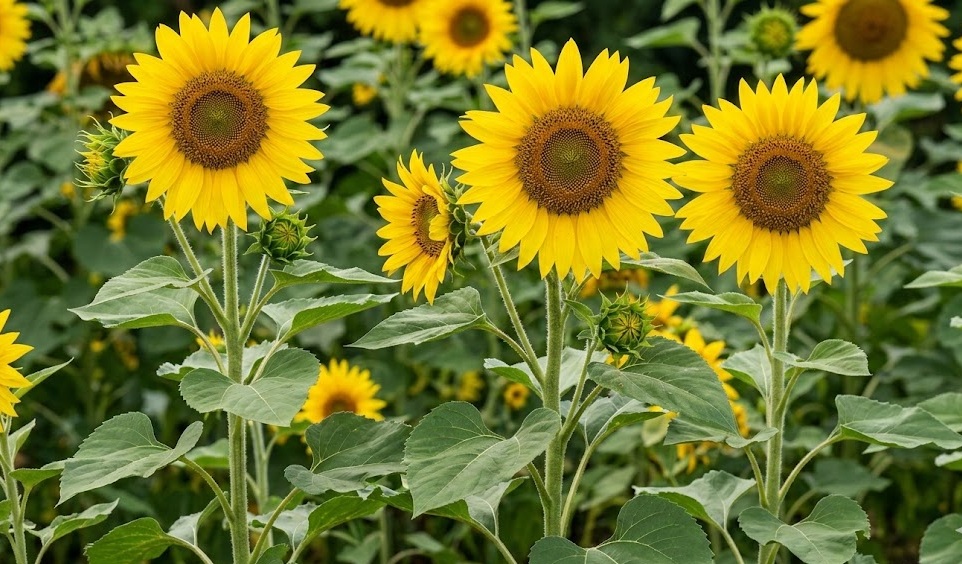

The concept of overwintering sunflowers is often misunderstood because most common varieties are strictly annual plants that complete their entire life cycle in one season. You must understand that for these annual types, the “overwintering” process actually involves the careful preservation of seeds to ensure a new generation in the spring. However, there are also perennial species related to the common sunflower that require specific root protection to survive the cold winter months. A professional approach to the end of the season ensures that your garden remains productive and prepared for the following year’s display.
For the standard ornamental sunflower, the end of the autumn season marks the time to harvest and store seeds for the future. You should wait until the back of the flower head turns completely brown and the seeds are firm and dry before beginning the harvest. This ensures that the seeds have reached full physiological maturity and possess the energy reserves needed for successful germination next year. Storing these seeds correctly is the most effective way to “overwinter” the genetic potential of your favorite ornamental varieties.
If you are growing perennial Helianthus species, the focus shifts toward protecting the underground tubers or root systems from freezing temperatures. You should apply a thick layer of organic mulch, such as straw or wood chips, over the base of the plant once the foliage has died back. This insulation helps to moderate soil temperatures and prevents the cycles of freezing and thawing that can damage delicate root tissues. Understanding the specific hardiness of your plants allows you to provide the appropriate level of protection for your local climate.
The transition from a vibrant summer garden to a quiet winter landscape requires a systematic cleanup of all plant debris. You should remove the large, woody stems of the sunflowers after they have been killed by the first hard frosts of the season. Leaving dead plant material in the garden can provide a harbor for pests and diseases that you want to avoid in the coming year. A clean garden bed is not just aesthetically pleasing, but it is also a professional standard for maintaining long-term plant health.
Seed harvesting and preparation
Successful overwintering of annual sunflowers starts with selecting the best heads for seed collection as the season comes to a close. You should choose the largest, most vibrant flowers that were free from significant disease or pest damage during the summer. Once the petals have fallen and the seeds are visible, you can cover the heads with a fine mesh bag to protect them from birds while they finish ripening on the stem. This ensures that you get the maximum yield of high-quality seeds for your next planting cycle.
More articles on this topic
After harvesting the flower heads, you must ensure that they are completely dry before you attempt to remove and store the seeds. You should hang the heads in a cool, dry, and well-ventilated area indoors for several weeks until they feel brittle to the touch. Any remaining moisture in the seeds can lead to mold and rot during the winter storage period, which will destroy their viability. Patience during this drying phase is essential for a professional gardener who wants to ensure a high germination rate in the spring.
Removing the seeds from the dried head is a simple task that can be done by hand or by rubbing two heads together over a collection bin. You should then winnow the seeds to remove any bits of dried plant material or empty hulls that might have mixed in. Only the plumpest and heaviest seeds should be kept for planting, as these have the best chance of producing strong and healthy seedlings. This careful selection process allows you to gradually improve the quality of your own local sunflower strain over several generations.
Labeling is a critical step in the professional storage of garden seeds that you should never skip, especially if you grow multiple varieties. You should include the name of the variety, the year of harvest, and any special notes about the plant’s height or color on each storage container. Using airtight glass jars or paper envelopes kept in a cool, dark place provides the ideal environment for long-term seed survival. By keeping organized records, you make it much easier to plan your garden layout and propagation schedule during the winter months.
Managing perennial varieties in winter
Perennial sunflowers are a wonderful addition to a permanent garden border, but they require a different kind of winter care than their annual cousins. You should wait until the stems have been completely killed by the frost before you cut them back to within a few centimeters of the ground. This allows the plant to move as much energy as possible from the foliage into the root system or tubers for winter storage. These underground structures are the key to the plant’s survival and its ability to return with vigor in the spring.
More articles on this topic
In colder regions, the protection provided by a natural snow cover is often not enough to ensure the survival of certain perennial varieties. You should consider adding a fifteen to twenty-centimeter layer of mulch over the crown of the plant to provide extra insulation against deep freezes. Materials like shredded leaves, evergreen boughs, or clean straw are excellent choices for this purpose as they allow some air to circulate while retaining heat. This simple task can be the difference between a thriving perennial bed and a collection of dead roots in the spring.
If your soil is particularly heavy and tends to stay wet during the winter, you must take extra precautions to prevent root rot. You should ensure that the area where your perennial sunflowers are planted has excellent drainage to avoid waterlogged conditions around the dormant roots. Some gardeners even build small mounds of soil or sand over the crowns to help shed excess water away from the sensitive center of the plant. Managing moisture levels is just as important as managing temperature when it comes to successful overwintering.
As the winter draws to a close, you should be careful not to remove the protective mulch too early during a brief warm spell. You should wait until the consistent danger of deep frost has passed and you see the first signs of new growth emerging from the soil. Gradually thinning the mulch allows the ground to warm up and provides a gentle transition for the young shoots as they begin their new season. This professional timing ensures that the tender new growth is not damaged by late-season cold snaps.
Container storage and indoor protection
If you are growing ornamental sunflowers in pots, you have the advantage of being able to move them to a more protected location for the winter. You should know that container-grown plants are more vulnerable to freezing because their roots are not insulated by the mass of the earth. For annual varieties, you can simply harvest the seeds and discard the spent plant material and old soil. However, if you have a special perennial variety in a pot, you must find a way to keep the root ball from freezing solid.
Moving your containers into an unheated garage, shed, or basement can provide enough protection to keep the roots dormant but alive. You should monitor the moisture levels in the pots occasionally, as the soil should not be allowed to become completely bone-dry even during dormancy. A light watering once a month is usually sufficient to keep the root tissues hydrated without triggering premature growth. This controlled environment mimics the natural winter cycle while shielding the plant from the most extreme weather events.
For those without indoor storage space, you can “heel in” your containers by burying the entire pot in a sheltered corner of the garden. You should then cover the area with a thick layer of mulch to provide the same insulation that ground-planted varieties receive. This method uses the thermal mass of the earth to protect the containerized root system from rapid temperature fluctuations. In the spring, you simply dig the pot up, clean it off, and place it back in its summer location to start the new growing season.
When the time comes to bring your containerized sunflowers back into the light, you should do so gradually to avoid shocking the plant. You should move the pots to a bright but sheltered spot and begin regular watering to encourage the roots to wake up. This is also an excellent time to top-dress the pots with some fresh compost or a slow-release fertilizer to provide the nutrients needed for the upcoming growth. Proper winter management of your containers ensures that your ornamental display returns even stronger the following year.
Garden cleanup and preparation for spring
The end of the sunflower season is the perfect time to perform a comprehensive cleanup and evaluate the health of your garden soil. You should remove all the old sunflower stems and roots, as these woody materials take a long time to break down in the garden bed. If the plants were healthy, you can shred the stems and add them to your compost pile where they will eventually become valuable organic matter. However, if you noticed any significant diseases, it is better to dispose of the material elsewhere to avoid recycling pathogens.
After the sunflowers are removed, you can take the opportunity to amend the soil with compost or well-rotted manure for the next season. You should work these organic materials into the top few centimeters of soil to allow them to integrate over the winter months. This “feeding of the soil” ensures that the nutrient levels are replenished and the soil structure is improved before you plant again in the spring. A professional gardener knows that the work done in the autumn is the secret to a spectacular display in the summer.
Cover cropping is another excellent professional technique for managing your garden beds during the winter after the sunflowers are gone. You should sow a fast-growing crop like winter rye or clover that will protect the soil from erosion and suppress winter weeds. In the spring, you can simply till these “green manures” back into the soil to add a significant boost of nitrogen and organic matter. This biological approach to garden maintenance keeps your soil alive and productive even during the coldest months of the year.
Reflecting on the successes and challenges of the past season while the garden is dormant helps you become a better horticulturalist. You should review your garden notes and photos to decide which ornamental sunflower varieties you want to grow again and which ones might be replaced. This period of quiet planning is an essential part of the professional gardening cycle, allowing you to approach the new spring with clarity and excitement. Your dedication to the entire life cycle of the sunflower, including its winter rest, is what leads to true gardening mastery.
The distinction between annual and perennial sunflowers is so crucial for overwintering success. I personally grow Helianthus maximiliani, and its ability to return year after year from its rhizomatous root system is amazing. In colder zones, a thick layer of organic mulch is essential to protect those crowns from deep freezes. For the annual types, I spend my autumn months selecting the best heads for seed harvesting to maintain genetic diversity. It is important to dry the heads in a well-ventilated area to prevent mold before extracting the seeds. I then store them in paper envelopes kept in a cool, dark place. This cycle feels more like preservation than traditional overwintering, but it is just as rewarding.
I completely agree with your approach to seed harvesting for the annual varieties. I’ve found that using a mesh bag over the heads while they are still on the stalk helps prevent bird loss while they dry. Do you find that the ‘Maximilian’ sunflower requires much dividing in the spring to stay vigorous? I’ve noticed mine can get a bit crowded after three seasons. Proper seed storage truly is the “bridge” between the seasons for most sunflower lovers.
For professional landscapers, the “overwintering” phase is also about soil preparation for the following spring. After removing the spent annual stalks, I like to sow a cover crop like winter rye to keep the soil biology active and prevent erosion. This also helps break up any soil compaction that might have occurred around the large root systems of the sunflowers. If you are dealing with perennial species like Helianthus x laetiflorus, late fall is the perfect time to assess the drainage of the site. Sunflowers generally hate “wet feet” during their dormant period, which can lead to root rot. I’ve lost several stands of perennials simply because the soil was too heavy and stayed saturated throughout January. Adding some grit or organic matter in the fall can make a world of difference for the next year’s growth.