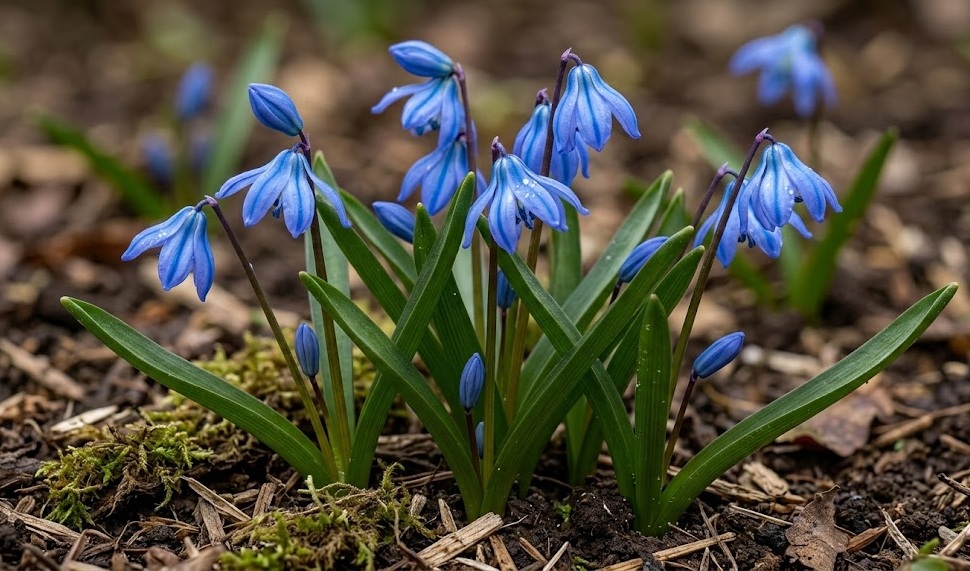

Providing the right balance of water and nutrients is essential for the long-term vitality of your siberian squill. While these plants are famous for their self-sufficiency, targeted care can significantly enhance the intensity of their blue blooms. You should approach watering and fertilization with a “less is more” philosophy to avoid overwhelming the delicate bulbs. Consistency during the active growing season is the secret to a thriving and healthy garden population.
Establishing a watering routine
The most critical time for watering your siberian squill is during its active growth phase in early spring. As the leaves and flower buds emerge, the plant requires a steady supply of moisture to fuel its rapid expansion. You should monitor the soil regularly and provide water if the top few centimeters feel dry to the touch. If the spring weather is naturally rainy, you might not need to intervene at all during this time.
When you do water, it is best to do so early in the morning so the foliage can dry before evening. This practice helps to minimize the risk of fungal diseases that thrive in damp and cool conditions. Aim the water at the base of the plants rather than spraying the flowers directly to preserve their delicate beauty. A deep, thorough soaking is always better than frequent, shallow waterings that don’t reach the bulb level.
As the flowers begin to fade and the plant enters its seed-production phase, moisture remains very important. The green leaves are working hard to store energy for next year, and they need water to complete this process. You should continue to monitor the soil moisture until the foliage starts to turn yellow and shows signs of dormancy. Once the plant goes dormant in late spring, you can significantly reduce the frequency of your watering.
During the hot summer months, the bulbs are resting underground and do not require much supplemental water. In fact, keeping the soil too wet during the dormancy period can lead to bulb rot and other health issues. If you have other plants in the same bed that need frequent watering, ensure the soil has excellent drainage. Natural rainfall is usually sufficient to keep the dormant bulbs alive until the cooler weather of autumn returns.
More articles on this topic
Improving drainage for bulb health
Proper drainage is perhaps even more important than the actual amount of water you provide to your bulbs. Siberian squill cannot tolerate “wet feet,” which occurs when water sits around the bulb for extended periods. You should observe your garden after a heavy rain to see if any puddles remain in your planting areas. If the water doesn’t drain away within an hour or two, you may need to take corrective action.
One way to improve drainage is by planting the bulbs in raised beds or on gentle slopes where gravity helps. You can also amend the soil with coarse organic matter or grit to create larger air spaces between soil particles. This allows excess water to move through the soil more quickly and away from the sensitive bulb tissue. Healthy bulbs should always feel firm and dry, never soft or mushy due to excessive moisture.
If you are growing squill in containers, choosing the right pot and potting mix is a critical decision. Ensure that the container has several large drainage holes at the bottom to allow water to escape freely. Use a high-quality potting soil that is specifically formulated for bulbs or mix in some perlite for extra aeration. Avoid using heavy garden soil in pots, as it tends to compact and trap moisture far too easily.
In some cases, you might need to install a simple drainage system if your entire garden has heavy, poorly draining soil. This can involve digging small trenches filled with gravel or installing perforated pipes to redirect the water. While this is a more labor-intensive solution, it will benefit all the plants in your garden, not just the squill. Creating the right moisture environment is the most important thing you can do for permanent bulb success.
More articles on this topic
Understanding nutrient requirements
Siberian squill does not require heavy fertilization to produce its iconic blue flowers every year. In fact, in very rich woodland soils, they can often thrive for decades without any supplemental feeding at all. However, in a typical garden setting, a little boost of nutrients can help the bulbs stay strong and multiply faster. You should focus on providing a balanced supply of minerals that supports overall plant health rather than just leaf growth.
The best time to apply fertilizer is in the early spring as soon as the first green shoots appear. This ensures that the nutrients are available in the soil exactly when the plant is most active and hungry. You can use a balanced, slow-release granular fertilizer that is specifically designed for flowering bulbs. Simply sprinkle the granules around the base of the plants and lightly scratch them into the soil surface.
Avoid using fertilizers that are very high in nitrogen, as this can lead to lush green leaves but very few flowers. Phosphorus and potassium are the more important elements for bulb development and successful flowering in the following year. A fertilizer with a ratio like 5-10-10 or 10-10-10 is usually ideal for most spring-blooming bulb species. Always follow the manufacturer’s instructions regarding the application rate to avoid damaging the delicate roots with too much salt.
Another excellent way to provide nutrients is by applying a thin layer of organic compost to the soil surface. Compost not only feeds the plants but also improves the overall structure and biological health of the soil. You can apply this organic mulch in the autumn or early spring to mimic the natural recycling of a forest. Over time, this practice builds a rich and fertile environment that the bulbs will truly appreciate and reward.
Timing your fertilization correctly
Timing is everything when it comes to feeding your garden bulbs for maximum benefit and efficiency. If you fertilize too late in the season, the plant may not be able to absorb the nutrients before it goes dormant. Conversely, fertilizing too early in the winter can result in the nutrients being washed away by heavy rain or snow. Aim for that “sweet spot” when the soil has warmed up and the roots are actively growing.
You can also provide a second, lighter application of fertilizer immediately after the flowers have finished blooming. This helps the plant as it enters its most intensive phase of energy storage and bulb development for the next cycle. During this time, the plant is focused on building up its internal reserves, and extra potassium can be very helpful. This late-season boost ensures that the bulbs remain large and capable of producing multiple flower spikes.
Never fertilize your siberian squill during the peak of the summer heat when the plants are completely dormant. At this stage, the roots are not active, and the fertilizer will simply sit in the soil or leach away. It is also important to avoid fertilizing in late autumn, as you don’t want to encourage new growth before the winter. Following the natural rhythm of the plant is always the safest and most effective approach for any gardener.
If you notice that your squill is growing very vigorously but not blooming well, you should stop fertilizing for a year. Sometimes, an overabundance of nutrients can actually discourage flowering in favor of vegetative reproduction and spreading. Observe the reaction of your plants to your feeding routine and adjust your methods based on their performance. Every garden is unique, and your plants will eventually tell you exactly what they need to thrive.
Preventing common fertilization mistakes
One of the most common mistakes gardeners make is placing fertilizer directly in the planting hole against the bulb. This can cause chemical burns to the sensitive bulb scales and may even kill the plant before it starts. Always mix the fertilizer into the soil or apply it to the surface where the roots can find it naturally. The goal is to create a nutrient-rich zone around the bulb, not to suffocate it with concentrated chemicals.
Over-fertilizing is another frequent issue that can lead to weak, spindly growth and increased susceptibility to pests. If the plants receive too much food, they may grow too quickly and have tissues that are soft and easily damaged. It is always better to be conservative with your application rates and see how the plants respond over time. Healthy growth should be steady and robust, not unnaturally fast or excessively dark green.
Make sure the soil is moist before you apply any type of granular or liquid fertilizer to your garden beds. Applying nutrients to bone-dry soil can cause root stress and prevents the plant from absorbing the food effectively. A light watering before and after fertilization helps to distribute the minerals evenly and safely through the root zone. This simple step ensures that your efforts result in healthy plants rather than stressed ones.
Finally, keep an eye on the overall health of your soil and consider having it tested every few years. A professional soil test can tell you exactly which nutrients are missing and which ones are already in abundance. This scientific approach takes the guesswork out of fertilizing and saves you time and money in the long run. By understanding your soil, you can provide the perfect environment for your siberian squill to flourish indefinitely.