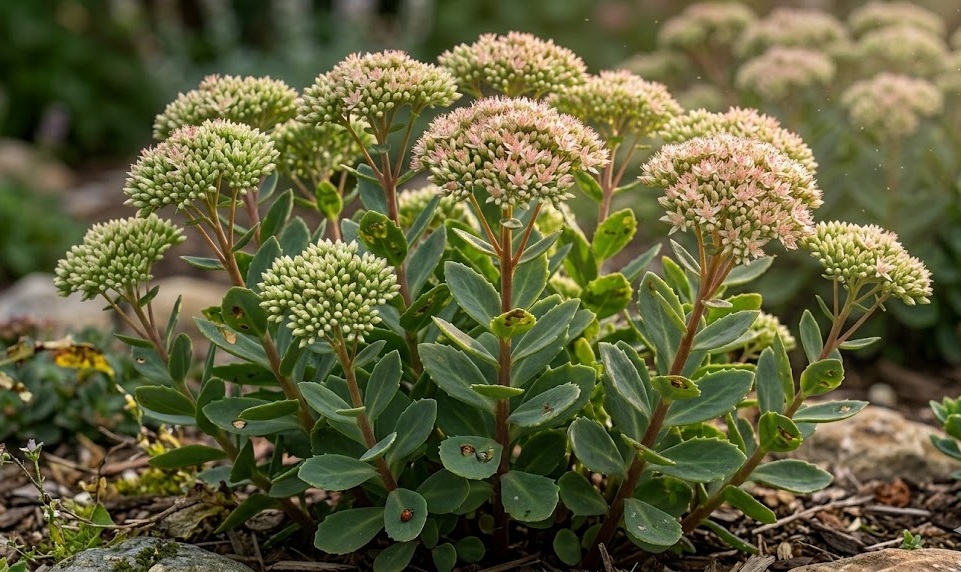

Mastering the hydration and nutrient needs of great stonecrop is a balancing act that favors restraint over abundance. This succulent has evolved to thrive in environments where resources are scarce, and providing too much water or fertilizer can lead to weak growth and poor health. As a professional gardener, you must learn to read the plant’s physiological responses to its environment to determine the exact timing for intervention. Proper management of these two factors will result in a plant that is structurally sound, beautifully colored, and capable of resisting common garden pests.
Establishing a hydration schedule
The great stonecrop requires a watering philosophy that respects its drought-tolerant nature while ensuring it has enough moisture to produce its large flower heads. During the first growing season, you should provide regular water to help the roots establish themselves in the local soil. However, once the plant is mature, it generally relies on natural rainfall except during periods of extreme heat and prolonged drought. Your goal is to keep the soil dry most of the time, allowing only occasional deep soakings that reach the lower root zone.
When you do decide to water, it is best to do so in the early morning hours before the sun becomes too intense. This allows any water that accidentally lands on the foliage to evaporate quickly, reducing the risk of fungal infections or sunburn on the leaves. Use a soaker hose or a watering can with the rose removed to apply water directly to the base of the plant. Avoid overhead irrigation, as the heavy weight of water on the large flower heads can cause the stems to bend or break.
The frequency of watering depends heavily on your soil type and the prevailing weather conditions in your region. In sandy soils, you might need to water once every ten days during a heatwave, whereas in heavier loam, the plant may go weeks without needing assistance. You should always check the soil moisture by inserting a finger several inches into the ground before reaching for the hose. If the soil feels cool and damp at that depth, the stonecrop has plenty of moisture and does not need more.
During the autumn and winter months, the plant’s water requirements drop almost to zero as it enters its dormant phase. In fact, providing water during a cold winter can be lethal, as the combination of wet soil and low temperatures often leads to crown rot. Most professionals stop all supplemental watering by the end of September, allowing the plant to harden off naturally. This reduction in moisture cues the plant to store energy in its rootstock rather than attempting to maintain active green growth.
More articles on this topic
Recognizing signs of water stress
Being able to identify the subtle signs of water stress is a hallmark of an expert gardener when dealing with succulents like the great stonecrop. While the plant can handle drought, extreme dehydration will eventually manifest as shriveled or wrinkled leaves. If you notice that the usually plump, turgid foliage is becoming thin and flexible, it is a clear indication that the plant’s internal water reserves are depleted. A deep, slow watering at this stage will usually restore the plant’s appearance within twenty-four hours.
Conversely, the signs of overwatering are often more dangerous and harder to correct once they have progressed. Leaves that turn yellow, become translucent, or feel mushy to the touch are classic symptoms of waterlogged soil. If the base of the stems appears dark or feels soft, the plant may already be suffering from root rot caused by anaerobic conditions. In such cases, you must immediately stop watering and consider improving the drainage around the plant to save it.
Another sign of water imbalance is the overall posture and structural integrity of the stems throughout the summer. Plants that receive too much water often grow too quickly, resulting in “soft” tissue that cannot support the weight of the developing flowers. If your stonecrops are constantly flopping over despite being in full sun, you are likely being too generous with the watering can. A stressed plant often has a more compact, sturdy habit and more intense leaf coloration than one that is over-pampered.
Monitoring the edges of the leaves can also provide clues about the moisture levels in the root zone. Brown, crispy edges often indicate that the plant is losing moisture faster than the roots can provide it, which can happen during very windy and hot days. While this doesn’t always mean the soil is dry, it suggests the plant might benefit from a temporary windbreak or a light mulching. By observing these fine details, you can adjust your care routine to provide exactly what the plant needs at any given moment.
More articles on this topic
Nutrient requirements for succulents
The great stonecrop is a “low-feeder,” meaning it has adapted to survive and even thrive in soils that would be considered nutrient-poor for most other garden plants. In a standard garden setting, the natural breakdown of minerals and organic matter in the soil is usually more than enough to sustain its growth. If you add too much fertilizer, especially those high in nitrogen, you will encourage excessive leaf growth at the expense of structural strength. This leads to a plant that looks lush initially but collapses as soon as the weather becomes challenging.
If your soil is truly depleted, a light application of a balanced, slow-release fertilizer in early spring is all that is required. Look for a product with a low nitrogen number, such as a 5-10-10 or a similar ratio that favors phosphorus and potassium. These elements support root development and flower production without triggering the rapid, weak stem growth associated with nitrogen. One application as the new rosettes appear is sufficient to fuel the plant through the entire growing season.
Many professionals prefer to use organic amendments like a thin layer of well-rotted compost or a dusting of bone meal instead of synthetic fertilizers. These materials release nutrients slowly over time and help improve the overall health of the soil microbiome. You should apply these amendments around the base of the plant, being careful not to let them touch the succulent stems directly. This method provides a steady, gentle supply of nutrition that mimics the natural recycling of nutrients in the wild.
You should completely avoid fertilizing the great stonecrop in the late summer or autumn. Feeding the plant late in the season encourages new, tender growth that will not have time to harden off before the first frost arrives. This soft growth is highly susceptible to cold damage and can provide an entry point for diseases during the winter. By following the plant’s natural growth cycle and limiting your inputs, you ensure a specimen that is both beautiful and resilient.
Application techniques and timing
The timing of nutrient application is just as important as the type of fertilizer you choose for your great stonecrop. The best window for feeding is in the early spring, just as the dormant buds are starting to expand into visible leaves. This allows the plant to utilize the extra nutrients during its primary period of vegetative expansion. If you miss this window, it is often better to skip the fertilization entirely rather than applying it too late in the year.
When applying granular fertilizer, always ensure the soil is already moist to prevent the concentrated minerals from burning the delicate feeder roots. You should scatter the granules evenly around the drip line of the plant, which is the area directly beneath the outermost leaves. After application, give the area a light watering to help dissolve the nutrients and carry them down into the root zone. This ensures that the plant can begin absorbing the help immediately without any risk of chemical shock.
For those who prefer liquid fertilizers, a half-strength solution applied once in late spring can be an effective alternative to granules. Liquid feeds are absorbed quickly and can provide a visible boost to plants that seem to be struggling or underperforming. However, you must be extremely careful not to overdo it, as the rapid uptake of nutrients can lead to the same structural issues as high-nitrogen granular feeds. Always prioritize the health of the soil over a temporary boost in the plant’s appearance.
Regardless of the method you choose, consistency and observation are key to successful fertilization. If your stonecrops are already growing vigorously and blooming well, they likely do not need any additional help from you. In fact, many of the most beautiful garden specimens are those that are left entirely to their own devices in lean, gravelly soil. Trust the plant’s ability to find what it needs, and only intervene when you see clear evidence of a genuine nutrient deficiency.
Managing soil drainage and runoff
Proper watering and fertilization are ineffective if the soil drainage is poor, as the roots will be unable to function correctly in a waterlogged environment. You must ensure that the surface of the soil around your great stonecrop is graded to allow excess water to move away from the crown. Even a slight depression in the soil can collect enough water during a storm to cause localized rot. Creating a small mound or “berm” for the plant is a professional technique used to ensure the most sensitive part of the plant stays dry.
Incorporate inorganic materials like grit or lava rock into the top layers of the soil to increase the “macropores” through which water and air travel. This physical structure is vital for succulents, as it allows the roots to breathe even immediately after a heavy rainfall. If you notice that water sits on the surface for more than a few minutes, your soil is likely too compacted and needs urgent attention. Aerating the surrounding area with a garden fork can help restore the flow of oxygen and moisture.
Be mindful of where your garden’s runoff goes, especially if you use fertilizers on nearby lawns or more demanding flower beds. Great stonecrops are often the unintended recipients of high-nitrogen runoff, which can disrupt their growth habit and make them “floppy.” If possible, position your stonecrops in a separate zone or uphill from areas that receive heavy chemical treatments. This spatial management helps maintain the lean environment the succulent prefers without requiring constant monitoring.
Finally, consider the use of permeable mulches to manage moisture levels at the soil-air interface. A layer of crushed stone or gravel not only suppresses weeds but also breaks the force of falling rain, preventing the soil from becoming crusty and impermeable. This allows every drop of water to enter the soil slowly and evenly, which is much better for the plant than a sudden deluge followed by a hard, dry crust. Managing the physical environment of the soil is the final piece of the puzzle in achieving a perfectly hydrated and nourished stonecrop.