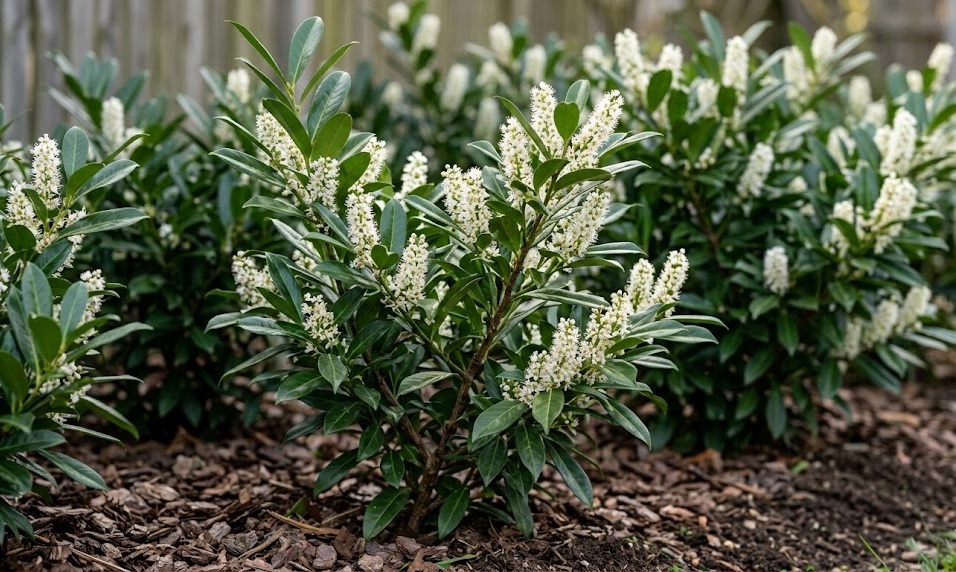

The light requirements of cherry laurel are remarkably flexible, which is one of the primary reasons for its popularity in professional landscaping and agriculture. You must understand that while this species can adapt to a wide range of conditions, its growth habit and foliage density will vary depending on the available sunlight. Finding the optimal balance for your specific location is essential for achieving the professional appearance of a dense and vibrant evergreen hedge. A professional approach to light management involves matching the variety of laurel to the specific microclimate of your garden site.
In a full-sun environment, cherry laurel will typically exhibit its fastest growth rate and produce the densest possible foliage for privacy screens. You should be aware that plants in direct sunlight require more frequent watering to compensate for the higher rate of transpiration from the leaves. The intense light also encourages a more compact structure, which is ideal for maintaining a neatly shaped hedge with minimal effort. Professional gardeners often prioritize sunny locations when the primary goal is a fast-growing and impenetrable wall of green.
However, the large leaves of the cherry laurel are also well-suited for capturing light in partially shaded areas of the garden. You might notice that in these locations, the leaves tend to become slightly larger and a deeper shade of green to maximize their photosynthetic efficiency. While the growth rate may be somewhat slower than in full sun, the plant will still maintain its healthy appearance and structural integrity. Expert horticulturists often use the species to provide year-round interest in the difficult transition zones between sun and shade.
The ability of cherry laurel to tolerate full shade is a significant advantage when designing landscapes with limited light availability, such as under large tree canopies. You should expect the growth to be much slower in these conditions and the overall form of the shrub to be more open and less dense. Regular monitoring is necessary to ensure that the plant is still receiving enough light to maintain its health and resist common diseases. Professionalism in light assessment allows you to place each plant where it has the best chance of fulfilling its intended role in the landscape.
Impact of light on foliage quality
The quality and appearance of the cherry laurel foliage are directly influenced by the intensity and duration of the light it receives each day. You will find that plants grown in bright, indirect light often have the most aesthetically pleasing gloss on their leaves. This professional “shine” is a sign of a healthy cuticle and a robust physiological state that is well-supported by its environment. Expert gardeners often manipulate light levels through strategic pruning of surrounding vegetation to optimize the visual impact of their evergreens.
More articles on this topic
In extreme shade, the leaves may lose some of their characteristic luster and become more susceptible to fungal infections due to prolonged leaf wetness. You must ensure that even in shaded locations, there is enough air movement to dry the foliage and prevent the development of powdery mildew. The lack of light can also cause the plant to drop its inner leaves, leading to a leggy appearance that may require rejuvenation pruning. A professional response to poor light quality involves thinning the canopy to allow more light to reach the lower and inner branches.
On the other hand, excessive light during the hottest part of the day can lead to leaf scorching or a pale, yellowish appearance in some varieties. You should monitor the foliage during the summer months for any signs of sun-induced stress, especially if the plants are near reflective surfaces like white walls. Providing some afternoon shade or ensuring consistent moisture levels can help the laurel cope with high light intensity without losing its beauty. Professionalism in gardening requires a nuanced understanding of how light interacts with other environmental factors to affect plant health.
You should also consider how the seasonal change in the sun’s path will affect the light levels in your garden throughout the year. A location that is in full sun during the summer may be in deep shade during the winter when the sun is much lower in the sky. This seasonal variation can impact the overwintering success of the plant and its ability to prepare for the spring growth flush. Expert horticulturists take a long-term view of light availability to ensure their plants remain healthy and vibrant through all four seasons.
Strategic placement and lighting adjustments
When planning a professional landscape, you should use the light requirements of cherry laurel as a guide for its strategic placement. You might use the most sun-tolerant varieties for the perimeter of the property to create a dense and effective privacy barrier. For the interior sections of the garden, where light may be limited by buildings or other plants, the more shade-tolerant cultivars would be a better choice. Professionalism in plant selection involves matching the specific biological traits of the variety to the unique characteristics of the site.
More articles on this topic
If you find that an established cherry laurel is struggling due to a lack of light, there are several professional techniques you can use to improve the situation. You might perform “crown lifting” on nearby trees to allow more light to penetrate to the understory where the laurel is growing. Alternatively, thinning out the branches of the laurel itself can help light reach the inner parts of the shrub and encourage new growth. Expert care is often about modifying the existing environment to better meet the needs of the plants under your supervision.
Artificial lighting in the landscape can also play a role in the health and appearance of your evergreens, though it is primarily used for aesthetic purposes. You should be careful not to use high-intensity lights that might interfere with the plant’s natural photoperiod and dormancy cycle. Low-voltage LED lights can be used to highlight the texture and form of the cherry laurel without causing physiological stress to the foliage. Professional lighting design enhances the beauty of the garden at night while respecting the biological requirements of the living organisms.
Finally, regular observation and a commitment to adapting your care routine will help you manage the light needs of your cherry laurel effectively. You should keep a record of how the plants respond to different light levels and use this information to refine your future gardening decisions. The more you understand the complex relationship between light and growth, the more successful your professional landscape projects will be. Every garden offers a new opportunity to master the art of light management for the benefit of the natural world.