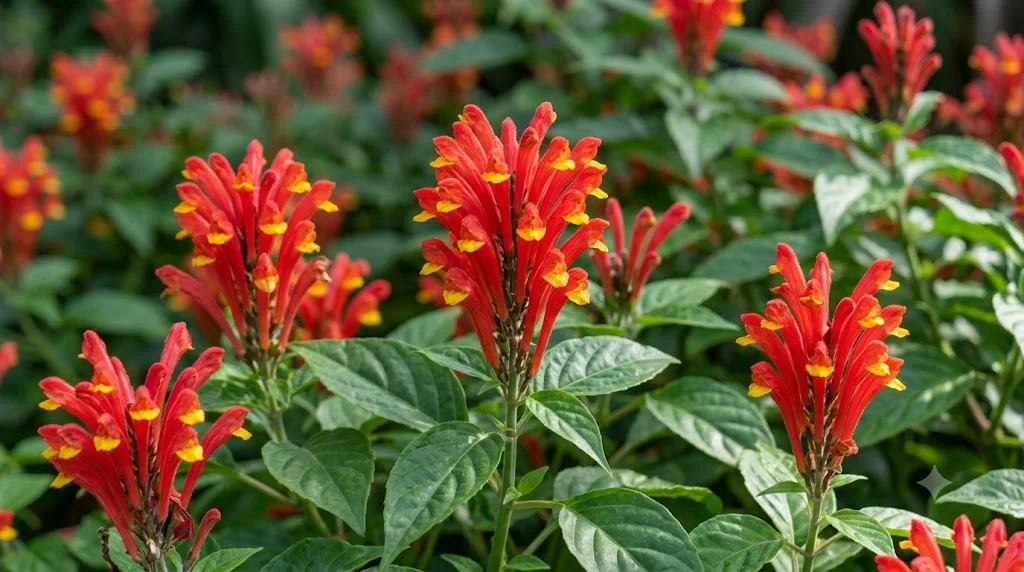

Costa Rican skullcap is not unusually fragile, but warm indoor conditions can favor several sap-feeding pests and moisture-related diseases. Problems often begin quietly on the undersides of leaves, at stem joints, or below the soil surface. Regular inspection is therefore more effective than waiting for visible decline. Healthy roots, clean foliage, moderate humidity, and good air circulation form the foundation of prevention.
Recognizing common sap-feeding pests
Spider mites are among the most frequent pests on plants kept in dry, warm rooms. They cause pale speckling, dull foliage, fine webbing, and gradual leaf drop. The mites are extremely small and are usually concentrated on leaf undersides. Holding a white sheet beneath the foliage and tapping the leaves can help reveal moving dots.
Aphids gather on soft new shoots, flower buds, and tender leaf stems. They distort fresh growth by removing sap and may leave sticky honeydew on lower leaves. Ant activity around outdoor plants can indicate an aphid colony. Small infestations can often be removed with a firm stream of water.
Whiteflies rise in a small cloud when an infested plant is disturbed. Their immature stages remain attached to leaf undersides and are less obvious than the flying adults. Feeding causes yellowing, weakness, and sticky deposits. Repeated treatment is necessary because eggs and immature stages may survive a single application.
Mealybugs appear as white, cotton-like clusters in leaf axils and along stems. They reproduce in protected crevices and can be difficult to eliminate once established. Sticky honeydew and black sooty mould may develop beneath feeding sites. Early removal with a cotton swab and suitable insecticidal treatment can prevent a larger infestation.
More articles on this topic
Managing insect infestations safely
Isolate an infested plant as soon as pests are discovered. This prevents mobile insects from spreading to nearby houseplants. Inspect all surrounding plants because the original source may not be the specimen showing the strongest symptoms. Isolation should continue until several inspections reveal no living pests.
Wash the foliage carefully, paying special attention to leaf undersides and stem joints. A gentle shower removes many adult insects, mites, shed skins, and sticky residues. Protect the potting medium from becoming saturated during repeated washing. Allow the plant to dry in a warm place with good air movement.
Insecticidal soap or horticultural oil can be effective when applied thoroughly. The spray must contact the pest directly, so incomplete coverage gives poor control. Test the product on a small area first because tender foliage may react under hot or sunny conditions. Treatments often need to be repeated at intervals specified on the product label.
Severely infested shoot tips can be pruned and discarded in a sealed bag. Clean the cutting tools before using them on another plant. Continue inspecting new growth because surviving insects often return to the youngest tissues. Combining cleaning, isolation, pruning, and repeated treatment is more reliable than relying on one measure alone.
More articles on this topic
Preventing and treating root diseases
Root rot develops when the growing medium remains wet and poorly aerated for extended periods. Affected plants may wilt despite damp soil because damaged roots can no longer absorb water. Lower leaves often yellow, and growth becomes weak or stops completely. An unpleasant smell from the root ball is a serious warning sign.
Remove the plant from its container when root decay is suspected. Healthy roots feel firm and are usually pale, while rotten roots are dark, soft, and easily stripped from the centre. Cut away damaged tissue with sterilized scissors. If most of the root system has been lost, taking healthy stem cuttings may be more successful than attempting to save the original plant.
Repot the remaining healthy roots into fresh, airy medium. Use a clean container with unobstructed drainage holes. Do not reuse contaminated, waterlogged potting mix. Water sparingly at first and keep the recovering plant warm in bright indirect light.
Prevention depends on combining good drainage with appropriate watering frequency. A container should never remain in standing water after irrigation. Cool conditions make overwatering more dangerous because evaporation and root activity both decline. Inspecting the soil before watering is the most practical form of root disease prevention.
Identifying fungal and bacterial leaf problems
Leaf spots may appear as brown, black, or water-soaked areas with yellow margins. They often develop after foliage remains wet in cool or poorly ventilated conditions. Crowded plants are particularly vulnerable because leaves dry slowly. Damaged tissue should be removed before spotting spreads extensively.
Botrytis, commonly called grey mould, can affect ageing flowers, soft stems, and injured leaves. A fuzzy grey coating may develop on dying tissue during humid conditions. Spent blooms should be removed promptly because they can trap moisture and support fungal growth. Improved ventilation and drier foliage help stop further development.
Powdery mildew may form a pale, dusty coating on leaf surfaces. It can occur even when leaves are not constantly wet, particularly where air movement is poor and temperatures fluctuate. Heavily affected leaves should be removed. Increasing spacing and avoiding excessive nitrogen fertilizer can reduce susceptibility.
Bacterial problems may produce rapidly expanding, water-soaked lesions or soft stem tissue. There are few practical treatments once infection becomes established inside the plant. Infected material should be removed with sterilized tools, and severely affected plants may need to be discarded. Avoid splashing water from diseased foliage onto healthy specimens.
Building a preventive care routine
Inspect the plant at least once a week during active growth. Look beneath leaves, along the stems, around the crown, and across the surface of the growing medium. A hand lens can help reveal mites, eggs, and early insect colonies. Quick detection makes control easier and reduces the need for aggressive treatment.
Keep the foliage clean by removing dust and dead plant material. Fallen flowers and yellow leaves should not be allowed to accumulate on damp soil. Organic debris can provide shelter for pests and support fungal growth. Clean growing areas also make new symptoms easier to notice.
Provide spacing between plants so air can move gently through the canopy. Constant strong drafts are unnecessary, but stagnant, humid air should be avoided. Pruning overcrowded inner stems improves ventilation without exposing the plant to harsh conditions. Balanced growth is naturally more resistant than dense, soft growth caused by excessive feeding.
Quarantine newly acquired plants before placing them with an established collection. A period of separate observation allows hidden pests to become visible. Check the plant several times and clean the leaves before integration. This simple habit prevents many serious indoor infestations.