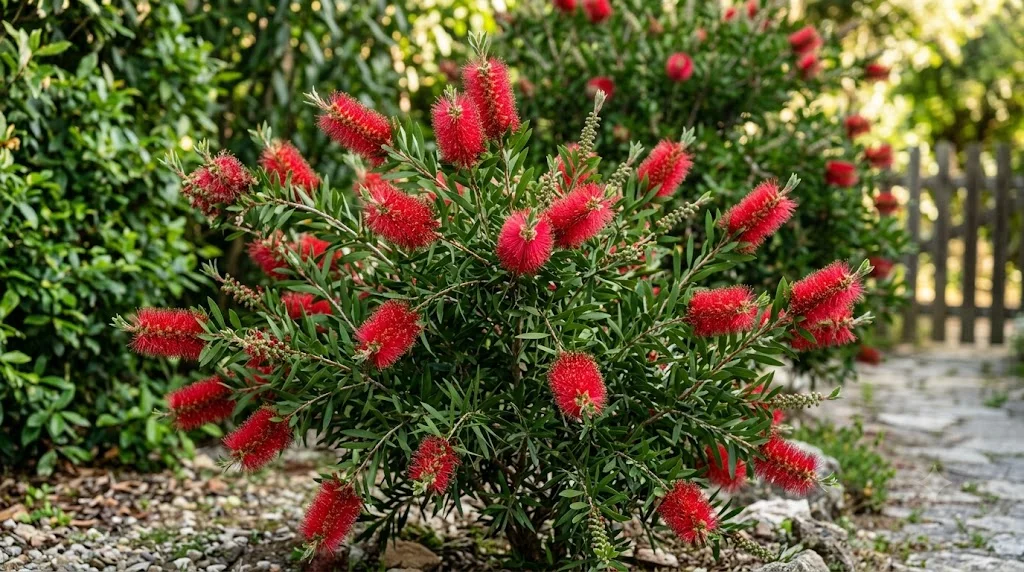

Lemon bottlebrush is generally robust, but stressful conditions can weaken its natural resistance to pests and disease. Most serious problems begin with poor drainage, insufficient light, overcrowded growth, or unsuitable winter care. Early detection allows affected plants to recover without aggressive treatment. Regular inspection of leaves, stems, shoot tips, and the root zone is therefore an essential part of preventive care.
Preventing root and crown diseases
Root rot is one of the most damaging disorders affecting lemon bottlebrush. It develops when roots remain in cold, saturated, poorly aerated soil for extended periods. Early symptoms may include dull foliage, yellowing leaves, stalled growth, and wilting despite wet compost. Advanced decay can cause branch dieback and eventual plant collapse.
Prevention begins with a free-draining soil or potting mixture. Containers must have unobstructed drainage holes and should never stand continuously in collected water. Outdoor planting sites that flood after rain should be improved or avoided. Watering frequency must always reflect temperature, season, and actual soil moisture.
A plant with early root damage may recover if conditions are corrected promptly. Remove it from the container, inspect the roots, and cut away soft, dark, or foul-smelling tissue with sterilised tools. Repot the remaining healthy root system in fresh, porous compost. Water cautiously until new growth indicates renewed root activity.
Crown and collar decay can occur when mulch, soil, or wet compost remains piled against the lower stems. The affected bark may darken, soften, or split near soil level. Keeping the stem base exposed and dry reduces the risk considerably. Severely girdled stems rarely recover and may need to be removed.
More articles on this topic
Managing fungal leaf and shoot problems
Leaf spots may appear as brown, grey, or black lesions under persistently damp conditions. Crowded foliage, poor air movement, and overhead watering increase their likelihood. A small number of affected leaves rarely threatens a vigorous plant. Widespread infection, however, can reduce photosynthesis and weaken new growth.
Remove heavily marked leaves and fallen debris from around the plant. Avoid composting infected material when the disease is active and difficult to identify. Improve spacing and air movement through selective pruning. Water at soil level so that foliage dries quickly after irrigation.
Shoot blight can cause young tips to darken, wilt, or die back suddenly. Cold damage, root problems, and fungal infection may produce similar symptoms, so diagnosis should consider recent weather and soil conditions. Cut affected shoots back to firm, healthy tissue. Sterilise tools between cuts when infection is suspected.
Fungicide should not be the first response to every mark or damaged leaf. Cultural correction is often more effective because it removes the conditions allowing disease to develop. A product may be justified when a confirmed fungal problem continues to spread despite improved care. Any treatment must be approved for ornamental plants and used exactly according to its label.
More articles on this topic
Recognising scale insects and mealybugs
Scale insects attach themselves to stems, leaf undersides, and branch joints. They may resemble small brown shells, pale discs, or waxy bumps rather than active insects. Feeding removes plant sap and can cause yellowing, weakened shoots, and gradual decline. Sticky honeydew and black sooty mould often reveal an infestation before the insects are noticed.
Light infestations can be removed manually with a soft cloth or cotton swab. Pruning out heavily colonised twigs reduces the number of insects quickly. Horticultural soap or an appropriate oil may control exposed stages when coverage is thorough. Several treatments may be needed because eggs and protected adults can survive a single application.
Mealybugs are covered with white, cotton-like wax and often gather in sheltered crevices. They favour branch junctions, leaf axils, and the area around the root collar. Indoor and overwintered plants are particularly vulnerable because natural predators are absent. Their honeydew also supports the growth of unattractive sooty mould.
Isolate infested container plants from other ornamentals. Remove visible colonies and inspect hidden areas carefully. Repeated treatment is more reliable than one heavy application because newly hatched insects continue to appear. Severe root mealybug infestations may require washing the roots and replacing all contaminated compost.
Controlling mites and other sap-feeding pests
Spider mites thrive in warm, dry, sheltered conditions. They are extremely small, but their feeding creates pale stippling or a dusty appearance on leaves. Fine webbing may develop between leaves and stems as numbers increase. Indoor plants near heating systems are at greatest risk.
Raising local humidity slightly and improving air circulation can make conditions less favourable. Rinse the foliage gently, paying attention to the undersides of leaves. Insecticidal soap or a registered miticide may be needed for persistent infestations. Treatments must reach hidden leaf surfaces and are usually repeated at intervals.
Aphids sometimes gather on soft young shoots and developing flower spikes. They distort fresh growth and produce sticky honeydew. A strong stream of water can remove small colonies without chemicals. Beneficial insects often control outdoor populations when broad-spectrum insecticides are avoided.
Thrips may scar leaves and flowers, causing silvery streaks, brown patches, or distorted buds. Their narrow bodies are difficult to see without close inspection. Blue or yellow sticky traps can help confirm their presence in protected environments. Removing badly damaged flowers and applying a suitable targeted treatment can reduce the population.
Distinguishing pests from environmental damage
Not every damaged leaf results from a pest or infectious disease. Frost injury often causes sudden browning of exposed foliage and blackened shoot tips. Sun scorch produces bleached or crisp patches, particularly after a plant is moved abruptly from shade into strong light. Drought stress usually affects the entire plant rather than creating isolated feeding marks.
Nutrient deficiencies can imitate pest damage by producing yellow, pale, or mottled leaves. Root stress must be considered before applying insecticides or fungicides. Inspect the soil, drainage, recent feeding, and temperature history alongside the foliage. Treating the wrong cause may delay recovery and add further stress.
Sooty mould is a dark surface fungus that grows on honeydew rather than feeding directly on living tissue. Its presence almost always indicates scale insects, aphids, mealybugs, or another sap-feeding pest. Cleaning the leaves improves appearance, but the mould will return unless the insects are controlled. Once honeydew production stops, new foliage usually emerges clean.
A hand lens is a valuable tool for accurate diagnosis. Examine both leaf surfaces, stem joints, buds, and the lower trunk. Keep affected plants separate while the cause is being investigated. Careful observation prevents unnecessary chemical use and supports more effective, targeted management.