
Perennial baby’s breath needs a careful balance between sufficient moisture and a root zone that never remains persistently wet. Its deep taproot makes established plants relatively drought tolerant, but young specimens still require regular attention while they settle into the soil. Feeding should be equally restrained because excessive fertility produces weak, leafy growth rather than an elegant mass of flowers. The most successful routine responds to soil type, weather, growth stage, and the condition of the plant instead of following a rigid schedule.
Watering during establishment
Newly planted specimens require consistent moisture around the original root ball during their first growing season. The surrounding soil may appear damp while the peat-based nursery compost inside the root ball has already dried. Water should therefore penetrate deeply enough to moisten both areas evenly. Superficial sprinkling encourages shallow rooting and provides little protection during hot weather.
Allow the upper layer of soil to begin drying between waterings. Constantly wet conditions deprive the developing roots of oxygen and increase the risk of crown and root decay. In free-draining soil, young plants may need more frequent irrigation during warm, windy periods. Heavy soil demands longer intervals and smaller amounts.
Apply water slowly at the base of the plant rather than spraying the entire canopy. A gentle flow gives the soil time to absorb moisture without washing it away from the crown. Wetting the flowers and stems late in the day can prolong humidity around the plant. Morning irrigation is preferable when foliage is likely to become wet.
Monitor the plant itself as well as the soil. Temporary softening of the fine stems during the hottest part of the afternoon does not always indicate severe drought. Persistent wilting in the morning, dull foliage, and dry soil at root depth are stronger warning signs. Watering should be based on several observations rather than a single visual symptom.
More articles on this topic
Watering established plants
Once the taproot has developed, perennial baby’s breath can obtain moisture from deeper soil layers. Established plants usually perform better with occasional thorough watering than with frequent light irrigation. Deep watering encourages continued downward root growth and improves resilience. The soil surface should dry between applications.
During prolonged drought, insufficient moisture can shorten the flowering period and reduce the number of side branches. Plants grown in very sandy soil may need supplemental water sooner than those in loam. Irrigation is especially valuable while flower buds are expanding. Severe drying at this stage may result in smaller blooms and premature fading.
Rainfall should be considered before additional water is applied. A brief summer shower may wet only the surface and contribute little moisture to the deep root zone. Conversely, several days of steady rain can leave heavy soil saturated long after the sky clears. Checking the soil below the top few centimeters provides a more accurate picture.
Overwatering often produces subtle symptoms before obvious rot develops. Growth may become pale, soft, or unexpectedly weak despite adequate nutrients. Lower leaves can yellow, and the crown may lose firmness. Reducing irrigation will help only if drainage is still functional and significant root decay has not occurred.
More articles on this topic
Adapting irrigation to soil and climate
Sandy and gravelly soils drain quickly and contain fewer moisture reserves. Plants in these conditions benefit from slow, deep watering that reaches the full depth of the active roots. A shallow basin formed at a safe distance from the crown can help guide water into the soil. The crown itself should not sit in a depression.
Clay soil requires a different approach because water moves slowly and may remain trapped around the root system. Irrigation should be less frequent, and each application must be assessed carefully. If water stands on the surface, structural drainage improvement is more urgent than further watering. Raised planting areas can prevent recurring saturation.
Containers are generally less suitable for long-term cultivation because the taproot needs depth and stable moisture conditions. When container growing is unavoidable, use a tall pot with large drainage openings and a mineral-rich, free-draining mix. The compost will dry faster than garden soil during warm weather. It must still be allowed to lose some moisture between waterings.
Hot, windy weather increases water loss even when air humidity is relatively low. Sheltered plants may dry more slowly, while exposed specimens can lose moisture rapidly through their extensive flowering stems. Seasonal watering routines should therefore remain flexible. A plant may need supplemental water in one summer and almost none in another.
Choosing and applying fertilizer
Perennial baby’s breath is not a heavy feeder and often flowers best in moderately lean soil. A small amount of balanced, slow-release fertilizer in spring is usually sufficient where the soil is poor. The product should be incorporated lightly around the outer root zone without disturbing the crown. Strong fertilizer should never be placed directly against the plant base.
Excess nitrogen creates lush, soft stems that are more likely to collapse in wind and rain. It may also delay flowering and reduce the refined branching structure. High-nitrogen lawn fertilizer is particularly unsuitable. If growth is already vigorous and dark green, additional feeding is unnecessary.
In average garden soil, a thin spring application of mature compost may provide all the nutrients required. The compost should be spread sparingly and kept away from the crown. Thick organic layers hold moisture and may create unsuitable winter conditions. Mineral mulch can be replaced afterward if it is part of the planting design.
Plants grown primarily for cutting may remove more nutrients from the soil through repeated harvest. Even then, feeding should remain moderate and based on growth response. A light second application after the first major cutting may support renewed branching in long-season climates. Fertilization late in the year should be avoided because soft new growth is vulnerable to cold.
Diagnosing nutrient and watering problems
Yellow foliage is often blamed on nutrient deficiency, but root stress from excess moisture is a common cause. Damaged roots cannot absorb minerals efficiently even when the soil contains adequate fertility. Applying more fertilizer under these conditions can worsen the imbalance. Drainage, soil moisture, and crown condition should be checked first.
Pale new growth may indicate an unsuitable soil reaction that limits nutrient availability. Strongly acidic conditions are less favorable for perennial baby’s breath and can interfere with normal development. A soil test can distinguish pH-related issues from simple nutrient shortage. Correcting the soil reaction gradually is safer than repeated feeding.
Brown leaf margins and brittle stems can result from drought, salt accumulation, or excessive fertilizer concentration. These symptoms are particularly likely in containers or recently planted specimens. Deep flushing may help container plants when drainage is excellent. Garden plants should be watered carefully and no further fertilizer applied until growth normalizes.
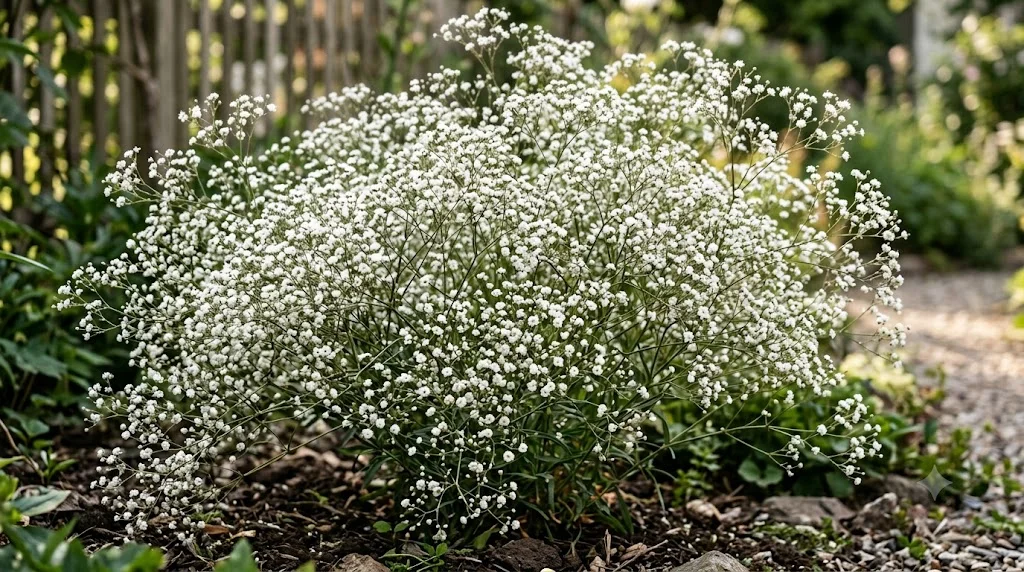
The most reliable sign of correct care is balanced growth with firm branching, healthy gray-green foliage, and abundant buds. Exceptionally rapid stem extension is not necessarily desirable. Perennial baby’s breath should look light and refined rather than lush and coarse. Water and fertilizer are successful when they support this natural character without forcing it.