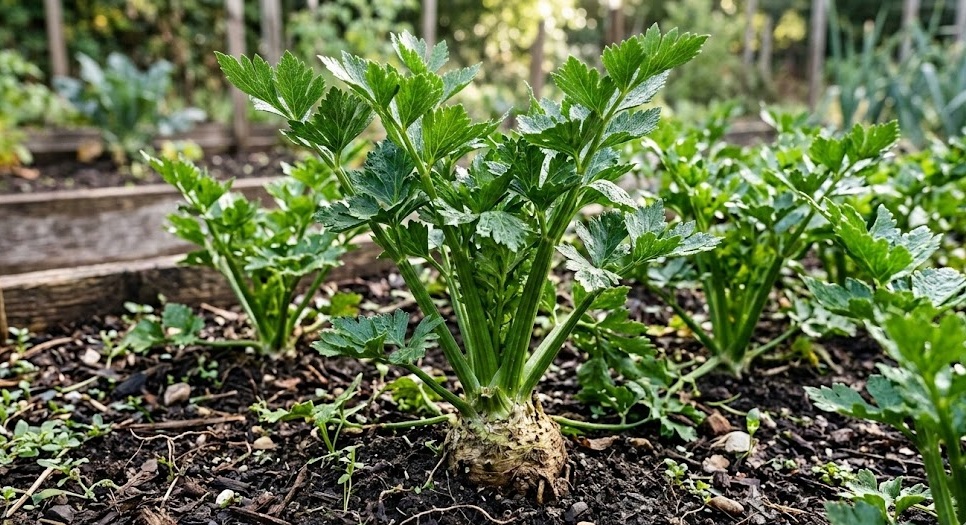

Watering and fertilizing are the two most critical tasks you will perform to ensure a high-quality celery harvest. Because celery originally evolved as a marshland plant, it has a very high demand for consistent moisture and rich nutrients. If you allow the soil to dry out even once, the stalks can become tough, hollow, and unpleasantly bitter to the taste. A professional approach involves creating a rigorous schedule that mimics the plant’s natural, water-rich habitat while providing the minerals it needs to grow.
The root system of celery is relatively shallow, which means it cannot reach deep into the earth for hidden water reserves. You must ensure that the top layer of soil, where the majority of the roots reside, is always damp to the touch. During periods of high heat, this may require watering the plants multiple times a day to prevent wilting. Consistent hydration is the secret to the juicy, crunchy texture that is highly valued in culinary applications.
Drip irrigation is often considered the gold standard for watering celery in a professional setting. This system delivers water directly to the base of the plant, minimizing waste and keeping the foliage dry. By keeping the leaves dry, you significantly reduce the risk of fungal diseases that thrive in damp, humid conditions. It also allows for a slow, steady release of moisture that prevents the soil from becoming compacted or eroded.
If you are watering by hand, it is best to do so early in the morning before the sun is at its strongest. This allows any water that does get on the leaves to evaporate quickly throughout the day. You should aim to soak the ground thoroughly so that the moisture reaches the full depth of the root zone. Frequent light waterings are generally less effective than deep, thorough sessions that encourage the roots to grow more robustly.
Nutrient requirements and soil enrichment
Celery is often described as a “heavy feeder” because it consumes large quantities of nitrogen, phosphorus, and potassium. Before you even plant, you should enrich the soil with significant amounts of well-composted organic matter. This provides a slow-release source of nutrients that will sustain the plants through their long growing season. Professional growers often test their soil months in advance to ensure the mineral balance is perfect for this demanding crop.
More articles on this topic
Nitrogen is the primary driver for leaf and stalk development, which are the main parts of the celery plant we consume. You should apply a nitrogen-rich fertilizer every two to three weeks to maintain a steady rate of growth. If the leaves start to turn a pale green or yellow, it is often a sign that the plant needs a quick boost of nitrogen. Liquid fish emulsion or compost tea are excellent organic choices for providing immediate nourishment.
Phosphorus and potassium are also essential for overall plant health and the development of a strong root system. Potassium, in particular, helps the plant manage its internal water levels and improves its resistance to environmental stress. A balanced fertilizer approach ensures that the plant does not just grow tall, but also grows strong and resilient. Monitoring the growth of the stalks can help you determine if the nutrient ratios are correct.
In addition to the main macronutrients, celery has a specific need for certain micronutrients like boron and calcium. A deficiency in calcium can lead to “blackheart,” a condition where the inner leaves of the celery turn black and die. Boron deficiency often causes the stalks to crack and become distorted, ruining the quality of the harvest. Using a complete fertilizer that includes these trace elements is a professional way to avoid these common physiological disorders.
Mulching for moisture retention
Applying a thick layer of organic mulch around your celery plants is one of the most effective ways to manage water. Mulch acts as an insulating blanket that keeps the soil cool and prevents evaporation from the surface. This is especially important during the peak of summer when the sun can quickly bake the ground dry. Materials like straw, grass clippings, or wood chips are all excellent choices for this purpose.
More articles on this topic
Mulch also helps to maintain a consistent soil structure by preventing the surface from crusting over after heavy rains. When the soil remains loose and open, water can penetrate more easily to reach the roots where it is needed most. It also prevents soil from splashing onto the stalks, which keeps the plants cleaner and reduces the risk of disease. A clean crop is much easier to harvest and process at the end of the season.
As the mulch slowly decomposes, it adds even more organic matter back into the soil, further improving its quality. This creates a cycle of health where the soil becomes better and better over time. You should replenish the mulch layer as needed throughout the season to ensure it remains at least five to eight centimeters thick. This simple professional habit pays huge dividends in terms of plant health and reduced labor.
In very wet climates, you must be careful not to pack the mulch too tightly against the stems of the celery. This can create a pocket of moisture that might lead to rot or attract slugs and snails. Leave a small gap of about an inch between the mulch and the base of the plant to allow for some air circulation. This small adjustment ensures that the mulch provides all the benefits without any of the potential drawbacks.
Fertilizing schedules and techniques
A professional fertilizing schedule starts with a baseline application at the time of planting and continues through the harvest. You should avoid the “one and done” approach, as celery needs a constant supply of nutrients rather than one large dose. Side-dressing the plants with granular fertilizer or using a liquid drench are both effective methods. The goal is to keep the nutrient levels in the soil stable so the plant never experiences a growth plateau.
Foliar feeding is another advanced technique where you spray a nutrient solution directly onto the leaves. This allows the plant to absorb minerals quickly through its stomata, providing a fast response to any deficiencies. This is particularly useful for delivering micronutrients or for giving the plants a boost during periods of rapid growth. Always apply foliar sprays in the early morning or late evening to avoid burning the leaves in the sun.
When using granular fertilizers, you should scratch them gently into the surface of the soil and water them in immediately. This ensures that the nutrients are moved down into the root zone where they can be utilized by the plant. Be careful not to let the fertilizer touch the stems or leaves directly, as the concentrated salts can cause chemical burns. Precision in application is a hallmark of a professional horticulturalist.
As the plants reach maturity, you may want to taper off the nitrogen slightly to focus on stalk density and flavor. Too much nitrogen late in the season can sometimes lead to soft, watery growth that does not store well. Transitioning to a fertilizer with a slightly higher potassium content can help the stalks firm up and improve their sweetness. This final adjustment in the feeding schedule prepares the crop for a successful harvest.
Environmental factors and nutrient uptake
The temperature of the soil and the air can significantly affect how well your celery absorbs nutrients. In very cold soil, the activity of beneficial microbes slows down, making it harder for the plant to access organic nitrogen. You may need to use a more readily available synthetic or liquid organic fertilizer during unusually cool springs. Once the soil warms up, the natural biological processes will resume their role in feeding the crop.
Water quality is another factor that professional growers often consider when managing their celery. If your water is highly alkaline or contains high levels of certain salts, it can interfere with nutrient availability. Regularly checking the pH of your irrigation water can help you make adjustments to your fertilizing routine. Neutralizing the water or adding specific buffers can ensure that your plants are getting exactly what they need.
The presence of competing weeds can also sap the nutrients that were intended for your celery crop. This is why weed control is so closely linked to a successful fertilatization strategy in any professional garden. By keeping the area clean, you ensure that every gram of fertilizer goes directly toward producing a larger, healthier harvest. A focused approach to resource management is essential for maximizing the efficiency of your inputs.
Finally, always remember that healthy soil is the best way to deliver nutrients to your plants in the long term. While supplements are necessary, they work best when the soil has a high capacity to hold and exchange minerals. Continuing to add compost and organic matter every year will build a resilient system that requires less intervention over time. This sustainable approach is the hallmark of a truly expert gardener or agricultural professional.