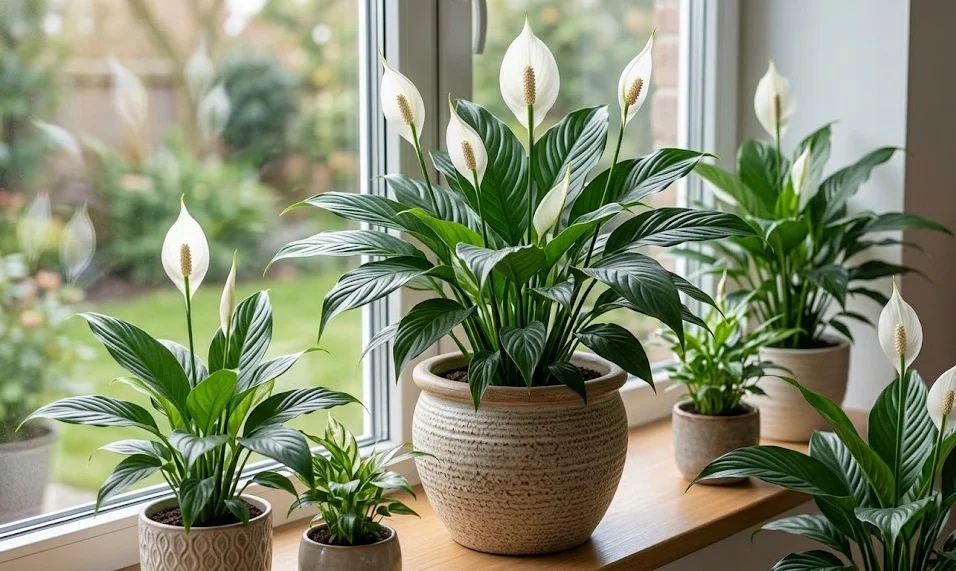

Peace lilies do not require a cold dormant period, but winter still changes their care needs significantly. Shorter days, cooler windowsills, and dry heated air can slow growth and increase stress. Successful overwintering means maintaining warmth and stability while reducing water and fertilizer. The aim is to carry the plant through the low-light season with healthy roots and intact foliage.
Understanding winter growth patterns
During winter, most indoor peace lilies grow more slowly because natural light is weaker and days are shorter. Even in a warm home, the plant receives less energy for new leaves and flowers. This reduced growth changes how quickly it uses water and nutrients. A summer care schedule may become too heavy in winter.
Some yellowing of older leaves can occur as the plant adjusts. This does not always indicate a serious problem. However, widespread yellowing, persistent wilting, or soft stems require closer inspection. Winter issues often begin with overwatering in low light.
Flowering may also decrease during winter. Peace lilies usually bloom best when light levels are strong enough to support energy production. A plant in a dim winter room may remain leafy but produce no spathes. This is normal unless the plant also shows signs of decline.
The goal in winter is not to force rapid growth. Instead, care should preserve root health and prevent stress. A stable plant in winter will respond quickly when spring light returns. Patience is part of seasonal plant management.
More articles on this topic
Adjusting watering and feeding
Watering should be reduced in winter because the potting mix dries more slowly. Check the soil before watering rather than following a fixed interval. The top portion should dry slightly, while the root ball should not become completely parched. This balance prevents both rot and drought stress.
A peace lily near a radiator may dry faster than one in a cooler room. This is why observation matters more than the calendar. Warm dry air can increase leaf water loss while the soil remains unevenly moist. In that situation, humidity management may be more useful than simply watering more.
Fertilizer is usually unnecessary during winter unless the plant is under strong grow lights and actively producing new growth. Feeding a slow plant can leave mineral salts in the soil. These salts may cause brown leaf tips and root stress. It is safer to resume feeding lightly in spring.
If fertilizer was applied heavily during the growing season, winter is a good time to flush the soil gently. This should be done only if the pot drains well and the room is warm enough for the mix to dry afterward. Flushing removes accumulated salts from the root zone. Afterward, allow the plant to settle without additional feeding.
More articles on this topic
Managing temperature, drafts, and humidity
Peace lilies prefer warm indoor conditions and dislike cold drafts. They should not be pressed against cold window glass or placed near doors that open frequently in winter. Chilled roots and leaves can become stressed even if the room generally feels comfortable. Moving the plant slightly inward from the window may protect it.
Heating systems create another challenge. Forced air, radiators, and fireplaces can reduce humidity and dry leaf edges. Brown tips are common during the heating season. Keeping the plant away from direct heat flow helps reduce this damage.
Humidity can be improved with a room humidifier, plant grouping, or a tray filled with pebbles and water below the pot. The pot should sit above the water line, not in it. These methods raise local humidity without keeping the soil constantly wet. Consistent humidity supports better leaf quality.
Avoid drastic temperature differences between day and night. Peace lilies tolerate normal household variation, but sudden cold exposure can cause wilting or blackened patches. A stable location is more important than chasing maximum light at a freezing window. Comfort-level warmth is usually ideal.
Winter cleaning and monitoring
Winter is a good time to clean peace lily leaves. Dust accumulates indoors when windows are closed and air circulation is limited. A damp cloth removes dust and improves light absorption. Clean leaves make better use of the limited winter light available.
Inspect the plant closely while cleaning. Check the undersides of leaves, crown areas, and soil surface for pests. Spider mites may become more common in dry indoor air. Fungus gnats may appear if the soil remains wet too long.
Remove old yellowing leaves and spent flower stems with clean scissors. This keeps the plant tidy and reduces decaying material around the base. Do not cut healthy green leaves simply to reduce plant size in winter. The plant needs functional foliage to produce energy.
By late winter, watch for signs of renewed growth. Fresh leaves indicate that the plant is preparing for a more active season. At that point, watering may gradually increase as the plant uses more moisture. Fertilizing should resume only lightly once growth is clearly active.