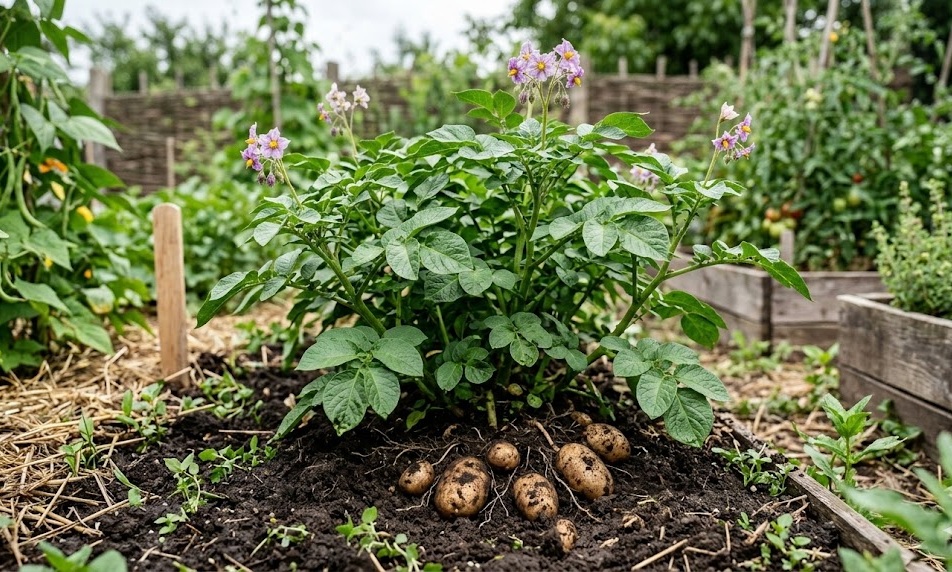

Understanding the light requirements of potatoes is fundamental to maximizing the photosynthetic efficiency and overall yield of your garden. As members of the Solanaceae family, potatoes are essentially sun-loving plants that require a significant amount of direct energy to produce their complex carbohydrate stores. You should carefully consider the placement of your potato patch to ensure it receives the maximum possible exposure throughout the long summer days. Without adequate light, the plant’s biological processes will slow down, resulting in weak stems and disappointing tuber development.
Full sun exposure, defined as at least six to eight hours of direct sunlight per day, is the professional standard for potato cultivation. During this time, the leaves are working at their peak to convert solar energy into chemical energy through the process of photosynthesis. This energy is then transported down the stems and stored in the tubers as starch, which is the primary goal of the grower. Any reduction in light quality or duration will directly correlate with a decrease in the final weight of your harvest.
The intensity of the light also plays a role in the plant’s structural development and its ability to resist certain types of environmental stress. Strong, direct light encourages the growth of thick, sturdy stems and a dense canopy of dark green leaves that can better withstand wind and rain. In contrast, potatoes grown in low-light conditions often become “leggy,” meaning they have long, weak stems that easily flop over and become susceptible to soil-borne diseases. Ensuring your plants have a bright, open environment is the first step toward agricultural excellence.
While the foliage needs sun, you must remember that the actual tubers are extremely sensitive to light and must remain completely covered. The dual nature of the potato’s light requirements—maximum exposure for the leaves and total darkness for the roots—is what makes techniques like hilling so essential. You are essentially managing two different environments simultaneously to keep the plant productive and the crop safe. A professional grower is always mindful of this balance between light and shade within the potato row.
The necessity of full sun for carbohydrate production
Photosynthesis is the engine that drives the growth of every potato plant, and light is the fuel that keeps that engine running. You should aim for a location that is free from the shadows of large trees, buildings, or other tall garden structures that could block the sun during peak hours. Even partial shade for a few hours a day can lead to a significant drop in the plant’s ability to produce sugars. When it comes to potatoes, more light almost always translates to a more robust and energy-rich crop.
More articles on this topic
The quality of the light, particularly the blue and red wavelengths, is what triggers the various growth stages of the potato plant. Blue light is essential for vegetative growth and leaf expansion, while red light helps regulate the transition to flowering and tuber initiation. By providing full, unfiltered sunlight, you ensure that the plant receives the entire spectrum of light it needs for its complex biological clock. This natural synchronization with the sun is what allows the plant to reach its full genetic potential.
In regions with shorter growing seasons or more frequent cloud cover, you may need to use reflective mulches or optimize row orientation to maximize light capture. Planting your rows in a north-south direction ensures that both sides of the plant receive equal amounts of sunlight as the sun moves across the sky. This professional trick prevents one side of the canopy from shading the other, leading to more uniform growth throughout the patch. Every bit of extra light you can direct toward the leaves will pay off during the final harvest.
You should also consider the density of your planting and how it affects the light penetration through the entire canopy. If the plants are too crowded, the upper leaves will shade the lower ones, reducing the overall efficiency of the plant. Proper spacing allows sunlight to reach deeper into the foliage, keeping the lower leaves active and productive for a longer period. Managing the “light architecture” of your garden is a hallmark of an expert who understands the physics of plant growth.
The impact of shade and low-light stress
When potatoes are forced to grow in shady conditions, they undergo a series of physiological changes collectively known as “shade avoidance syndrome.” You will notice that the plants grow taller and thinner as they attempt to reach for more light, often at the expense of root and tuber development. These elongated stems are much more fragile and lack the structural integrity needed to support a heavy crop of foliage. Low-light stress essentially forces the plant into a survival mode rather than a high-productivity mode.
More articles on this topic
Shade also creates a cooler, more humid microclimate around the foliage, which can significantly increase the risk of fungal infections like blight. Without the drying effect of the sun, dew and rainwater linger on the leaves much longer, providing the perfect breeding ground for spores. You should avoid planting potatoes in low-lying, shady areas where air and light are restricted. A bright, airy location is naturally much more resistant to many of the common pathogens that plague the potato grower.
The internal quality of the tubers can also suffer when the parent plant is deprived of adequate sunlight throughout the season. Potatoes grown in the shade often have a lower specific gravity, meaning they have less starch and more water, which affects their cooking texture and storage life. They may also be more prone to certain physiological disorders because the plant lacked the energy to build strong cell walls. The sun doesn’t just make the potatoes bigger; it makes them better in every nutritional and culinary sense.
If your garden has unavoidable shade, you might try selecting “early” varieties that can complete most of their growth before the surrounding trees reach full leaf-out. These varieties are often more efficient at making use of the bright spring light and can be harvested before the deep shade of late summer becomes an issue. However, you should still expect lower yields than you would get in a full-sun location. Being realistic about your light limitations is an important part of professional garden planning.
Photoperiodism and the science of tuberization
Photoperiodism is the biological response of a plant to the relative lengths of light and dark periods in a twenty-four-hour cycle. In potatoes, the length of the day acts as a critical signal that tells the plant when to stop growing leaves and start forming tubers. Most modern potato varieties are “day-neutral,” meaning they will form tubers regardless of the day length, but they still respond strongly to light intensity. Understanding this internal clock helps you time your planting to align with the most productive light cycles of the year.
The signal to begin tuberization is actually produced in the leaves and then transported down to the underground stolons. This process is highly sensitive to light levels and can be delayed or disrupted if the plant is under stress or receiving inconsistent light. You should ensure that your plants have a healthy, vibrant canopy during the long days of early summer to maximize this signal. The more “solar panels” the plant has in the form of healthy leaves, the stronger the push for tuber development will be.
High light intensity combined with moderate temperatures creates the ideal environment for this hormonal transition from vegetative to reproductive growth. You will often see a surge in growth during clear, bright periods following a stretch of cloudy weather as the plant capitalizes on the increased energy. Professional growers often use this understanding to time their fertilization and watering to support the plant during these high-energy bursts. Aligning your care routine with the natural pulses of light and energy is a sophisticated agricultural practice.
Finally, you should be aware that excessive light at the soil level can actually inhibit tuber growth if the ground becomes too hot. While the leaves love the sun, the soil needs to stay relatively cool for the stolons to function correctly and for the tubers to bulk up. This is another reason why hilling and mulching are so important in a high-sun environment. You are essentially using the light to power the top of the plant while using physical barriers to protect the bottom from the associated heat.