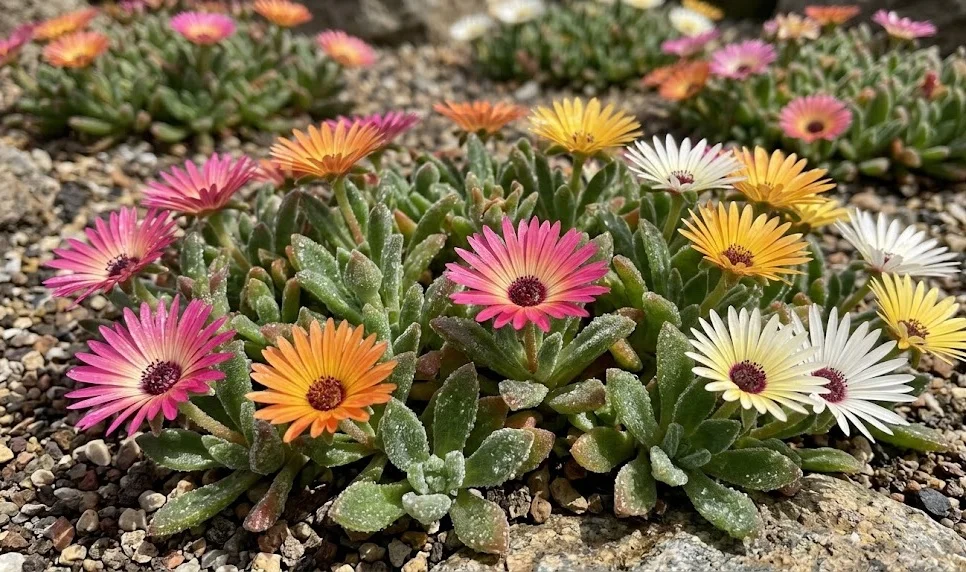

Livingstone daisy is usually grown as an annual, so overwintering is not always necessary or worthwhile. In cold climates, frost normally ends the plant’s outdoor season, and fresh seed-grown plants are often the most reliable option the following year. In mild regions or protected spaces, however, selected plants may be carried through winter with careful moisture control. The key is to understand that winter survival depends less on warmth alone and more on keeping the roots dry, bright, and free from stagnant conditions.
The plant does not behave like a hardy perennial in most temperate gardens. It is sensitive to frost and cold wet soil. Even if the top growth survives brief cool periods, the root system may fail in prolonged damp conditions. For this reason, overwintering should be attempted only with healthy, compact plants.
Container plants offer the best chance of winter protection. They can be moved away from heavy rain and frost, while bedded plants are exposed to whatever the weather brings. A pot also allows better control over the growing medium. Free drainage is especially important during the low-light months.
Overwintering should be approached as preservation, not active growth. The plant should not be pushed with fertilizer or excessive watering. Slow, firm growth is better than soft winter shoots. A plant that remains compact and dry has the best chance of reaching spring.
Deciding whether overwintering is worthwhile
In cold regions, starting again from seed is usually easier. Seed is inexpensive, and young plants often grow quickly once warmth returns. Overwintered plants may become woody, uneven, or disease-prone after months indoors. For many gardeners, seed propagation gives a cleaner and more vigorous spring display.
More articles on this topic
Overwintering may be worthwhile when a particular color form is valued. It can also be useful where the growing season is short and early flowering is desired. A protected plant may bloom sooner than a newly sown one. However, the extra care should be justified by the result.
Healthy plants are the only sensible candidates. Plants with rot, pests, yellowing crowns, or weak stretched stems should not be kept. Bringing troubled plants into winter quarters often spreads problems to other plants. Select only compact specimens with firm leaves and clean bases.
Timing matters before the first frost. Plants should be moved or prepared while they are still in good condition. Waiting until after frost damage reduces survival chances. Early preparation allows the plant to adjust gradually to lower light and cooler temperatures.
Preparing plants for winter protection
Before moving a plant under cover, inspect it carefully. Remove faded flowers, dead leaves, and any soft stems. Look under leaves for aphids or other small pests. A clean plant is much easier to manage through winter.
More articles on this topic
Reduce watering gradually as temperatures fall. Sudden drought is not necessary, but the plant should enter winter on the dry side. Wet compost becomes risky when light levels drop. Roots use less water in cool conditions, so the growing medium stays wet longer.
Do not feed the plant before winter. Fertilizer encourages fresh soft growth that is easily damaged by low light and cool nights. The aim is to keep the plant alive and firm, not lush. Feeding can resume lightly only when spring growth clearly begins.
If the plant is in heavy compost, repotting may help before winter. Use a gritty, free-draining mix and avoid a pot that is too large. Oversized pots hold more water than the roots can use. A snug container with drainage holes is safer.
Indoor and sheltered overwintering conditions
The best winter location is bright, cool, and frost-free. A cold greenhouse, conservatory, enclosed porch, or bright windowsill can work if humidity is controlled. Warm rooms with poor light often produce weak, stretched growth. Cool brightness is better than warmth without sun.
Ventilation is essential. Stagnant air encourages fungal problems, especially when plants are grouped closely. On mild days, a greenhouse or porch can be aired briefly. Good airflow helps the soil surface and crown dry after watering.
Water sparingly through winter. The compost should be allowed to dry noticeably before more water is added. When watering is needed, apply a small amount to the soil rather than soaking the whole pot. Never leave the pot standing in water.
Monitor the plant every week. Check for soft tissue, yellow leaves, aphids, and mold on the compost surface. Early removal of affected parts can prevent larger losses. Winter problems usually develop slowly at first and then accelerate if ignored.
Returning plants to spring growth
As days lengthen, the plant may begin to produce fresh shoots. At this stage, watering can be increased gradually. Do not suddenly return to heavy watering, because roots may still be limited. The plant should be encouraged back into growth step by step.
Light pruning can improve shape before the new season. Remove weak, stretched, or damaged stems. Avoid cutting too hard into unhealthy or woody growth. A gentle trim is usually enough to stimulate a cleaner outline.
Hardening off is necessary before plants return outdoors. Even a plant that survived winter under glass can be shocked by wind, cold nights, and direct outdoor sun. Move it outside for short periods during mild days and bring it back if nights are cold. Increase exposure gradually over one to two weeks.
Planting outdoors should wait until frost risk has passed. The soil should be warm and free draining. Once the plant is growing strongly, it can be managed like a seasonal specimen again. In many cases, combining overwintered plants with fresh seedlings gives the best display.