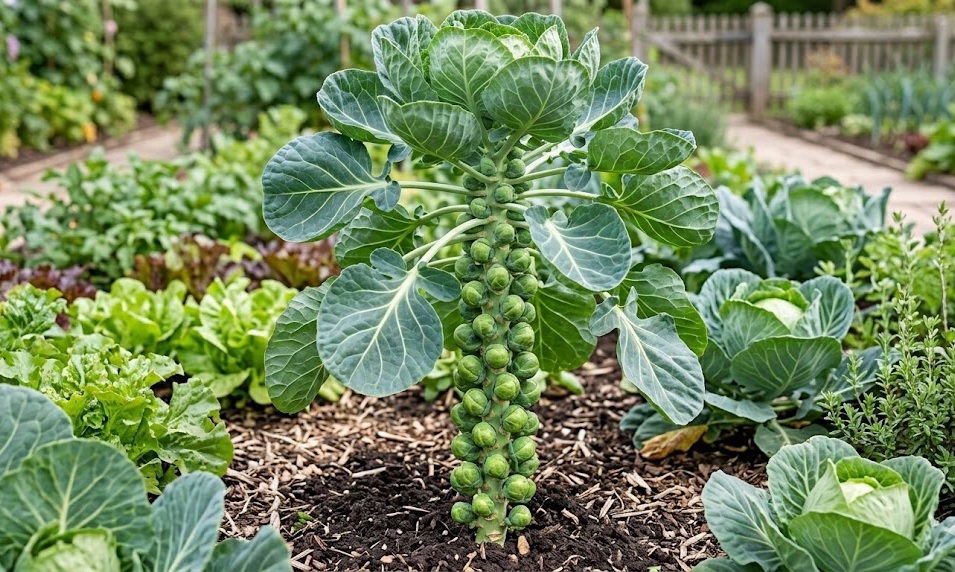

The management of water and nutrients is perhaps the most critical factor in determining the density and flavor of your Brussels sprouts harvest. Because these plants are heavy feeders with a long residency in the garden, they require a sustained and balanced supply of minerals to support their massive structure. You must be prepared to monitor soil moisture levels constantly, as even brief periods of drought can lead to bitter sprouts or stunted growth. Mastering the art of irrigation and fertilization will transform your garden into a high-yielding professional agricultural space.
Irrigation should be approached with a focus on deep and consistent hydration rather than frequent light watering. You want to encourage the roots to grow deep into the soil where they can access moisture during the hottest parts of the day. A steady supply of water is essential for the transport of nutrients from the soil into the vascular system of the plant. Without adequate hydration, the plant cannot perform the photosynthesis required to build the complex sugars that make sprouts taste delicious.
Fertilization is not a one-time event but rather a seasonal strategy that evolves as the plant moves through different growth phases. Early in the season, you should focus on nitrogen-rich amendments to help the plant build its large, solar-collecting leaves. As the sprouts begin to form along the stalk, the nutritional demand shifts toward phosphorus and potassium to support dense button development. Using a combination of slow-release organic matter and targeted liquid feeds provides the most comprehensive nutritional profile.
The relationship between water and fertilizer is synergistic, as the water acts as the primary vehicle for nutrient delivery to the roots. If the soil is too dry, the plants cannot absorb the minerals you have provided, regardless of how rich the soil might be. Conversely, over-watering can leach essential nutrients out of the root zone and away from the hungry plants. Striking the perfect balance between these two elements is the hallmark of an expert gardener who understands the biology of the crop.
Establishing an effective irrigation frequency
Developing a watering schedule depends heavily on your local soil type and the prevailing weather conditions in your area. Sandy soils drain quickly and may require more frequent attention, while clay-based soils hold moisture for much longer periods. You should aim to keep the soil consistently moist, similar to the feel of a wrung-out sponge, throughout the entire growing season. Checking the moisture levels by digging a few centimeters into the soil is more reliable than simply looking at the surface.
More articles on this topic
During the peak of summer heat, your plants will transpire massive amounts of water through their large leaves, increasing their daily demand. You may find it necessary to water more deeply or more frequently during these periods to prevent the plants from wilting. Wilting is a sign of extreme stress that can stall the development of the sprouts and make them more susceptible to pests. A proactive approach to watering during heatwaves is essential for maintaining the momentum of the growing cycle.
As the weather cools in the autumn, the evaporation rates will drop and the plants will naturally require less frequent irrigation. You should adjust your schedule accordingly to prevent the soil from becoming waterlogged, which can lead to root rot in the cooler months. However, you must not stop watering altogether, especially if the autumn is particularly dry or windy. The plants still need hydration to finish developing the sprouts and to survive the first few frosts of the season.
The time of day you choose to water can also have a significant impact on the health and efficiency of your irrigation. Watering in the early morning is generally considered the best practice, as it allows the foliage to dry before the sun gets too intense. This reduces the risk of fungal diseases while ensuring that the plants have a full reservoir of moisture to draw from during the heat of the day. Avoiding evening watering helps keep the garden environment drier overnight, which is better for overall plant health.
Advanced water delivery methods for efficiency
Drip irrigation systems are often the preferred choice for professional gardeners because they deliver water directly to the root zone with minimal waste. This method reduces evaporation and keeps the foliage dry, which is a major factor in preventing the spread of soil-borne diseases. You can set these systems on a timer to ensure that your crop receives a precise amount of water at the same time every day. This level of consistency is difficult to achieve with manual watering and leads to much more uniform sprout development.
More articles on this topic
Soaker hoses are another excellent option for those looking for a more affordable and flexible irrigation solution. These porous hoses allow water to seep slowly into the soil along the entire length of the planting row, ensuring that every plant gets its share. You should bury the hoses under a layer of mulch to maximize their efficiency and prevent the water from evaporating before it reaches the roots. This setup creates a stable and hydrated environment that encourages deep root penetration and plant stability.
If you choose to use overhead sprinklers, you must be more mindful of the timing and duration of your watering sessions. High-impact water droplets can sometimes compact the soil surface or damage the large, tender leaves of the young brassicas. You should only use sprinklers in the early morning so that the leaves have several hours to dry in the sun. While this method is convenient for large areas, it is generally less efficient than delivery systems that focus on the soil surface.
Hand-watering remains a viable option for small-scale gardens or for providing supplemental hydration to individual plants that look stressed. Using a watering can or a hose with a gentle spray nozzle allows you to direct the water exactly where it is needed most. This hands-on approach also gives you a daily opportunity to inspect your plants for signs of pests or nutritional deficiencies. No matter which method you choose, the goal is always to provide a consistent and reliable source of hydration.
Understanding the nutrient requirements of brassicas
Brussels sprouts are known as “heavy feeders” because they extract a significant amount of minerals from the soil over their long life cycle. Nitrogen is the most important nutrient during the initial vegetative phase, as it powers the growth of the massive stem and leaves. You should ensure that your soil is rich in organic matter like compost or well-rotted manure before you even put the plants in the ground. This baseline fertility provides a slow and steady supply of nutrients that supports the plant through its early development.
Boron is a micronutrient that is particularly important for all members of the cabbage family, including your sprouts. A deficiency in boron can lead to hollow stems and small, poorly formed buttons that lack the desired crunch. You can address this by using a balanced fertilizer that includes a full range of micronutrients or by applying a specialized foliar spray. Regular soil testing is the only way to know for sure if your soil has the correct balance of these trace elements.
Phosphorus and potassium become more important as the plant transitions from growing leaves to producing the actual sprouts. These elements help strengthen the cellular structure of the plant and improve its overall resistance to environmental stress and disease. You should look for a fertilizer with a slightly higher middle and last number on the N-P-K scale during the mid-season. Providing the right nutrients at the right time ensures that the plant’s energy is directed toward the harvest you actually want to eat.
Calcium is another vital nutrient that helps prevent internal browning and improves the shelf life of the harvested sprouts. If your soil pH is too low, the plants may have difficulty absorbing the calcium they need, even if it is present in the soil. Maintaining a pH level between six and seven is the best way to ensure that all nutrients remain available to the roots. Understanding these chemical relationships is part of the professional expertise required to grow world-class vegetables.
Organic versus synthetic fertilizer strategies
Organic fertilizers are favored by many expert gardeners because they improve the overall health and structure of the soil over time. Materials like blood meal, bone meal, and composted poultry manure provide a diverse range of nutrients that are released slowly as microbes break them down. This slow-release nature prevents the “flush” of soft growth that can sometimes occur with highly concentrated synthetic products. Building a living, fertile soil is a long-term investment that pays off in healthier plants and better-tasting produce.
Synthetic fertilizers offer the advantage of precision and immediate availability, which can be useful for correcting visible nutrient deficiencies quickly. These products are formulated with exact ratios of nitrogen, phosphorus, and potassium, allowing you to tailor your feeding to the specific needs of the crop. However, you must be careful not to over-apply these concentrated salts, as they can damage the soil biology and even burn the plant roots. Using synthetic options as a supplement to an organic base is often a very effective hybrid strategy.
Liquid fertilizers are excellent for providing a quick boost of nutrients during critical growth stages or periods of stress. Foliar feeding, where you spray a diluted nutrient solution directly onto the leaves, allows for rapid absorption through the stomata. This can be especially helpful for delivering micronutrients like boron or magnesium that might be tied up in the soil. Liquid kelp or fish emulsion are popular organic choices for this type of supplemental feeding throughout the season.
The choice between organic and synthetic often comes down to your personal gardening philosophy and the specific needs of your soil. Many professional growers find that a diverse approach using both slow-release compost and targeted liquid supplements yields the best results. Regardless of the product you use, the most important thing is to follow the application instructions carefully to avoid over-fertilizing. Consistent, balanced nutrition is far more effective than sporadic, heavy applications of any fertilizer.
Perfecting the timing of nutrient applications
The first major application of fertilizer should happen at the time of planting to give the young brassicas a strong start in their new environment. You can mix a balanced organic fertilizer into the planting hole or apply it as a side-dressing immediately after transplanting. This early boost helps the plants overcome transplant shock and begin building the root system they will need for the rest of the year. Starting with a fertile base reduces the need for aggressive fertilization later in the season.
Mid-season fertilization, often referred to as “side-dressing,” should occur when the plants are about halfway through their expected growing period. You should apply a balanced fertilizer along the rows and gently work it into the top layer of soil before watering it in deeply. This second application provides the necessary resources for the plant to start forming the sprouts in the leaf axils. Timing this application to coincide with the natural growth surge of the plant maximizes the efficiency of the nutrients.
Late-season fertilization should be approached with caution, as too much nitrogen can lead to loose, “leafy” sprouts that do not hold their shape well. You should avoid heavy feeding once the sprouts are about half their mature size to allow them to firm up properly. Instead, you might focus on a final application of potassium-rich amendment to improve the cold hardiness of the plants. Understanding when to stop feeding is just as important as knowing when to start in the professional garden.
Monitoring the appearance of your plants is the best way to determine if your timing is correct or if adjustments are needed. If the lower leaves are turning yellow, the plant may need a quick boost of nitrogen; if the growth seems stunted, it may require more overall fertility. Learning to read the signals your plants are sending allows you to become a more responsive and effective gardener. Your ability to provide the right care at the exact moment it is needed is what defines your expertise in the field.