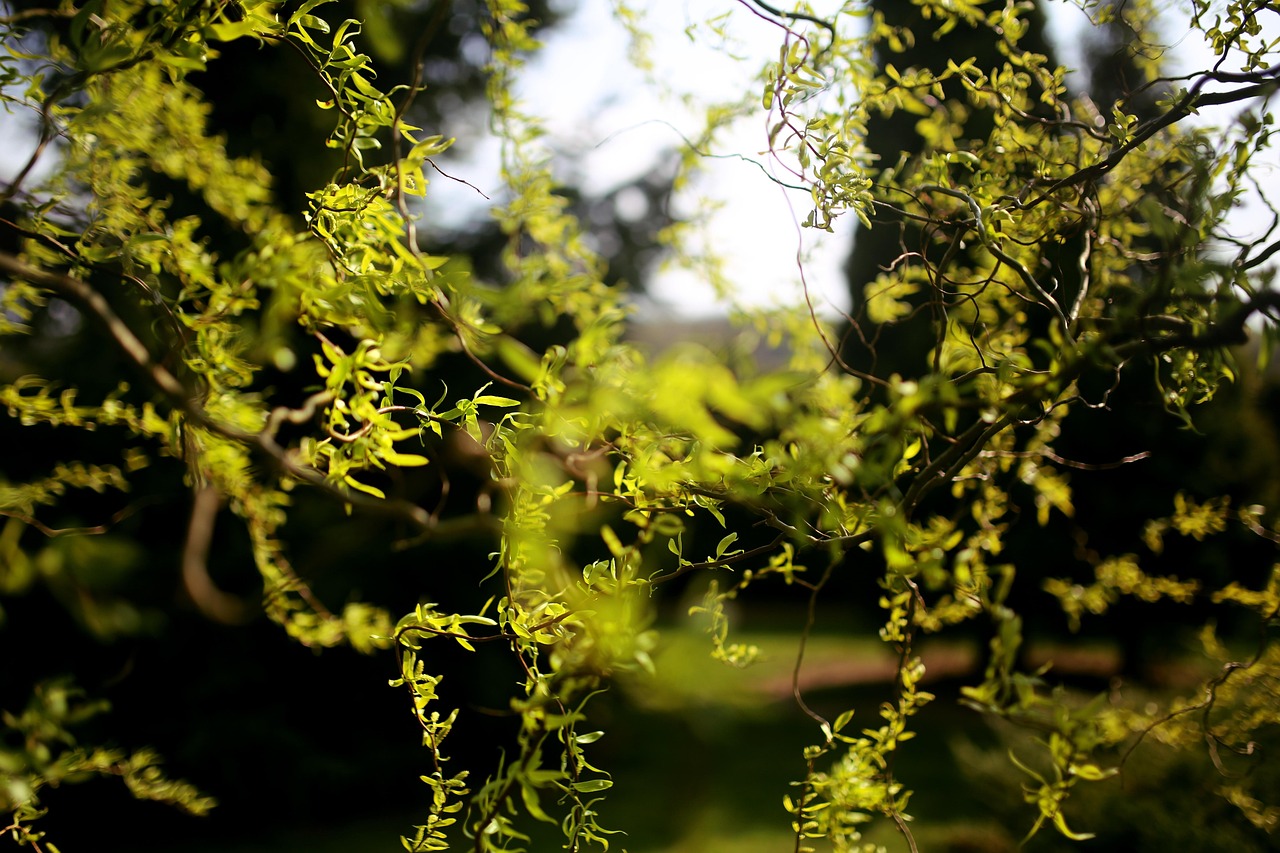

The way a corkscrew willow interacts with sunlight is one of the most important factors in its overall health and appearance. You will find that these trees are sun-loving creatures that require plenty of direct light to maintain their vigorous growth and unique form. It is essential to place your tree in a location where it can soak up the rays for the majority of the day. By understanding and meeting these light requirements, you can ensure that your willow produces the densest foliage and the most dramatic branch patterns.
In its natural state, the willow is often found in open areas where it is not overshadowed by larger, more dominant forest trees. This evolutionary history has made the species highly dependent on full sun exposure for its energy needs. Photosynthesis is the engine that drives the rapid expansion of the trunk and the production of those iconic curly leaves. Without enough light, the tree’s metabolism slows down, leading to weak growth and a much higher susceptibility to various pests and diseases.
A minimum of six to eight hours of direct sunlight each day is considered the “gold standard” for a thriving corkscrew willow. If the tree receives less than this, you might notice that the branches become “leggy” as they stretch toward the nearest light source. This stretching weakens the structural integrity of the wood and can ruin the compact, artistic shape that most gardeners desire. Positioning the tree on the south or west side of your property is usually the best way to maximize its daily light intake.
While the tree is very resilient once established, its light needs are most critical during the first few years of its life. A young sapling that is stuck in the shade of a wall or a larger neighbor will struggle to build the energy reserves it needs to grow. You should carefully observe the path of the sun across your garden throughout the different seasons before you decide on a permanent planting spot. What looks like a sunny spot in the height of summer might be in deep shade during the spring or autumn.
Managing light exposure and shade tolerance
While the corkscrew willow prefers full sun, it can tolerate a small amount of partial shade if other conditions are ideal. However, “tolerance” does not mean “thriving,” and you should expect some changes in the tree’s appearance if it is not in a prime location. In shadier spots, the foliage may be less dense, and the characteristic curl of the branches might be less pronounced. The overall growth rate will also be significantly slower, which might be a benefit in a very small garden but is usually seen as a drawback.
More articles on this topic
The intensity of the sunlight can also play a role in how the tree develops its seasonal colors. Willows that receive plenty of light often have a more vibrant green hue during the summer and a more striking golden yellow in the autumn. In contrast, trees grown in significant shade might have duller, more washed-out colors that lack the same visual impact. If you want the full “show” that this tree is capable of providing, giving it as much light as possible is the way to go.
Morning sun is particularly beneficial for the health of the tree because it helps to dry off the overnight dew quickly. As we have discussed, wet foliage is a primary risk factor for fungal diseases like powdery mildew or willow scab. By placing the tree where it gets the first rays of the morning sun, you are naturally reducing the window of time that pathogens have to infect the leaves. This simple environmental trick can save you a lot of time and effort in disease management later in the season.
If you find that your tree is becoming too shaded by other maturing plants in your garden, you might need to take action to restore its light levels. This could involve pruning back neighboring shrubs or even thinning the canopy of a nearby large tree. Sometimes, just removing a few lower branches from a dominant neighbor can let enough light through to make a huge difference. Maintaining a balance of light in a maturing garden is an ongoing process for every dedicated gardener.
Light and the seasonal growth cycle
The changing angle of the sun throughout the year will naturally affect how much energy your willow can produce. In the late spring and early summer, when the sun is highest in the sky, the tree is in its peak production phase. This is when you will see the most dramatic lengthening of the branches and the filling in of the canopy. Ensuring the tree has unobstructed access to this high-intensity light is vital for its mid-season vigor.
More articles on this topic
As autumn approaches and the days grow shorter, the tree begins to prepare for its dormant period by shifting its energy use. The reduced light levels signal to the plant that it is time to stop growing and start storing nutrients in the roots and trunk. You can almost see the tree “settling down” as the light changes and the leaves begin their colorful transformation. This natural rhythm is a beautiful part of the tree’s life cycle and is driven entirely by its perception of light.
During the winter months, even though the tree has no leaves, light still plays a subtle role in its survival. The bare, twisted branches can absorb a small amount of heat from the sun, which can help prevent the wood from becoming excessively brittle in extreme cold. The visual impact of the tree is also at its peak during this time, as the low winter sun casts long, dramatic shadows through the curly branches. Watching the interplay of light and shadow on the snow under your willow is a true winter delight.
Finally, remember that light is not just a physical requirement but the very source of the beauty we admire in the garden. The way the sunlight filters through the curly leaves or illuminates the golden bark is what makes the corkscrew willow such a prized specimen. By choosing the right spot and managing the surrounding environment, you are giving your tree the best possible stage to perform on. A well-lit willow is a happy willow, and it will reward your thoughtfulness with a spectacular display for many years.