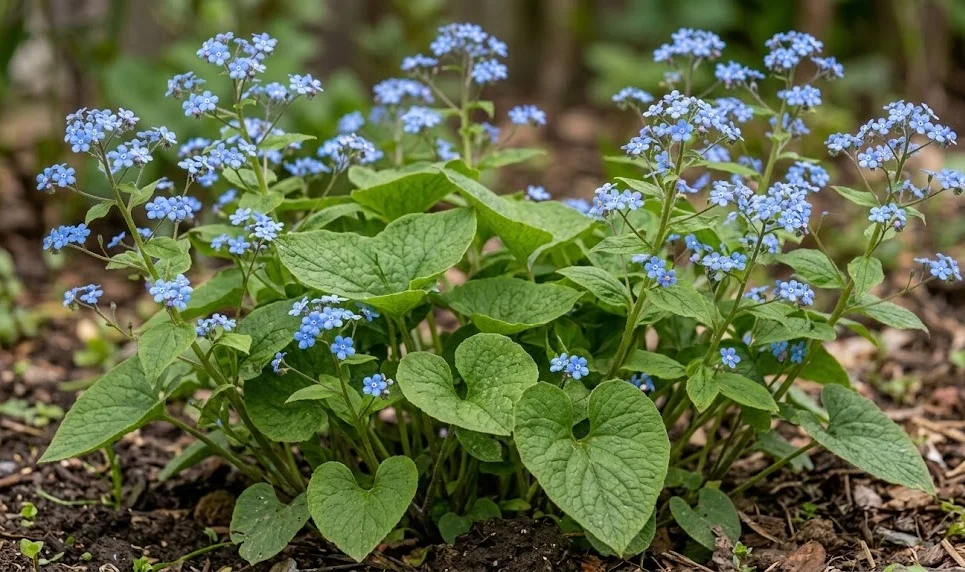

Maintaining the tidy appearance and health of this perennial involves a few simple pruning tasks throughout the growing season. You should not expect to do any heavy structural pruning, as the plant naturally grows in a neat, clumping habit. The goal of your trimming is to remove dead material, manage the flower stalks, and occasionally rejuvenate the large, heart-shaped leaves. With the right timing and tools, you can keep your plants looking their absolute best with very little effort.
In the early spring, your first task is to clear away the remains of the previous year’s foliage to make room for new growth. You should use a pair of sharp, clean garden shears to cut the dead, brown leaves back to the level of the soil. Be careful to work around the new green buds that are starting to emerge from the center of the crown. This cleanup helps to prevent disease and allows the plant to put all its energy into the fresh spring leaves and flowers.
Once the beautiful blue flowers have finished blooming in late spring or early summer, you can choose to prune the spent flower stalks. You should cut the stalks all the way back to the base of the plant where they emerge from the foliage. This process, known as deadheading, prevents the plant from putting energy into seed production and keeps it looking much neater. Many gardeners find that removing the old stalks makes the large, decorative leaves stand out even more in the garden.
You might notice that some of the older leaves start to look a bit tattered or yellow as the summer progresses in your garden. You can selectively remove these individual leaves to maintain a fresh and vibrant appearance for the entire clump. Always use a sharp tool to make a clean cut near the base of the leaf stem rather than pulling on the plant. Removing a few tired leaves can encourage the plant to produce a new flush of fresh foliage from the center.
Rejuvenating and managing older plants
If a plant becomes particularly messy or scorched during a hot summer, you can perform a more drastic rejuvenation pruning. You should cut all the leaves back to within a few centimeters of the ground and provide the plant with plenty of water. This may seem extreme, but the plant will often respond by sending up a brand-new set of clean, healthy leaves in a few weeks. This technique is particularly useful for varieties that have become leggy or have suffered significant pest damage.
More articles on this topic
You should always time this type of hard pruning carefully to ensure the plant has enough time to recover before the winter arrives. Performing a rejuvenation cut in mid-summer gives the plant several months of growing time to rebuild its energy stores in the rhizomes. Avoid doing this in the late autumn, as the new growth will be too tender to survive the first frost of the season. A well-timed cut can take a struggling plant and make it look like a prize-winning specimen again.
Thinning out the center of a very large and dense clump can also help improve the health and longevity of your plants. You should remove some of the older, crowded leaves to increase the air circulation through the middle of the foliage. This simple act reduces the risk of fungal problems and allows more light to reach the developing new growth at the crown. Keeping the plant “breathing” is a professional secret for maintaining large, healthy specimens over many years.
When pruning variegated cultivars, you should keep an eye out for any leaves that have reverted to a solid green color. You must remove these green shoots immediately and completely to prevent them from taking over the more delicate variegated sections. Solid green growth is more vigorous and can quickly outcompete the desired patterns if left unchecked in the garden. Constant vigilance will ensure that your specialized varieties remain true to their intended ornamental look.
Professional tools and timing for pruning
Using high-quality, sharp tools is the most important rule for any pruning task you perform in your landscape. You should invest in a good pair of bypass pruners or garden snips that make clean, precise cuts without crushing the plant tissue. Dull tools can tear the stems, leaving the plant vulnerable to infections and causing unsightly brown edges on the cut surfaces. Always clean your tools with alcohol or a mild bleach solution after working with any plants that show signs of disease.
More articles on this topic
The timing of your pruning can also be influenced by whether you want the plant to self-seed in your garden beds. If you enjoy seeing new seedlings pop up, you should leave a few flower stalks in place until the seeds have ripened and fallen. However, keep in mind that the seedlings may not always look exactly like the parent plant, especially with hybrid cultivars. For a more controlled and professional look, most gardeners prefer to remove all the spent flowers before seeds can form.
As autumn transitions into winter, you have a choice to make regarding the final cleanup of the season for your perennials. You can cut the entire plant back to the ground once the foliage has died off after the first several hard frosts. Alternatively, you can leave the dead leaves in place to provide a bit of natural protection for the crown during the coldest months. Both methods are successful, and the choice often depends on your personal preference for a tidy or a more natural-looking winter garden.
Ultimately, pruning is a way for you to interact with your plants and guide their growth to suit your specific garden design. You should not be afraid to trim your Caucasian forget-me-not, as it is a resilient species that handles pruning very well. Each small task you perform contributes to the overall health and beauty of the plant throughout the entire growing season. With a bit of practice, you will develop a feel for exactly when and how to prune for the best possible results.